An election result like no other: How Bangladesh neutralised the agenda of the US deep state, which once carried out regime change operation, and sidelined its puppet Muhammad Yunus
The election in Bangladesh is over. Hopefully by now, conspirators sitting in Washington, London, Beijing and Islamabad have learned their lesson. The people of Bangladesh have largely rejected Jamaat-e-Islami, an offshoot of the Muslim Brotherhood and a loyal lapdog of the United States, China and Pakistan. Following the meticulously designed regime change plot of 2024, Washington, Beijing and Islamabad succeeded in turning Bangladesh into their subservient country through their mercenaries, with Muhammad Yunus as the head of the illegitimate interim regime. Since then, at the overt and covert backing of those nations, Bangladesh is witnessing the terrifying rise of religious extremism, terrorism, jihadism and mob violence. It not only destroyed the country’s economy and education system, but also turned the youths into mere zombies who indulged in destructive acts without thinking about the consequences and even their own futures. Due to such rampant anarchy and chaos, Bangladesh’s global image was greatly tarnished, and most nations began seeing the country with grave suspicion. Bangladesh earned a similar bad name to Pakistan, leading to the rejection of visas for its citizens, especially students and the younger generation. Females in the country have been facing numerous forms of intimidation and threats from the religious extremists and jihadists. There was a growing fear among them of becoming an object of disrespect and isolation, as it happens in Pakistan and other Muslim nations. Muhammad Yunus could not hold onto power indefinitely People may ask – with almost univocal support and patronisation of the US and Britain, as well as consistent support from China and Pakistan, why Muhammad Yunus opted for holding the election on 12th February, when he had sufficient power? Why did he not opt for remaining in power indefinitely by proclaiming himself as the Supreme Leader and turning the country into a Caliphate? The answer to this question is simple. For Muhammad Yunus, it became a “mission impossible” to remain in power when the Bangladesh Nationalist Party (BNP), which has a massive size of supporters, and a solid vote bank of 35-40 percent began repeatedly pressing the Yunus regime to hold the elections. Muhammad Yunus and his Islamist-jihadist cabal clearly realised that they could not delay holding the elections for an indefinite period. It was evident that BNP would hit street and mobilise the masses and garner open or silent support from Awami League and other leftist-secularist forces, including the Hindus. And in that case, Yunus would face a pathetic fall and would potentially face trial for committing a series of crimes that would result in capital punishment for him and the members of his vicious nexus. The failure of the US deep State Meanwhile, Yunus also realised that his masters in the US in particular have seriously miscalculated the power of Bangali. This is despite Washington’s vantage point, its blend of military power, economic leverage, intelligence networks, and ideological messaging. Again and again, American doctrine has not merely failed but backfired. We have previously witnessed it in countries such as Vietnam, Iran, Afghanistan, Pakistan, Venezuela, Egypt, and now in Bangladesh. For policymakers in the US Deep State as well as Pakistani Inter-Service Intelligence (ISI), they have appeared to view Bangladesh through an ideological lens rather than a geopolitical and populist one. By undermining the power of Bangalis and treating Jamaat-e-Islami Bangladesh (JIB) – a party with ideological roots linked to the Muslim Brotherhood – as a potential strategic partner, Washington and Islamabad committed a series of political blunders. And finally, the disastrous Bangladesh plot of Pakistani ISI and its Western masters had to bite the dust. On February 12, Bangladesh did not merely vote – it resisted. For months, an unsettling narrative was building inside the country. Political instability following the 2024 upheaval had created space for ideological adventurism. International actors were watching closely. Islamist organisations were reorganising. And technocratic figures with limited grassroots legitimacy were being projected as acceptable transitional authorities. The ghost of 1971 still shapes Bangladesh Many in Bangladesh feared the country was being quietly steered toward an experiment: a hybrid arrangement where globalist technocracy would coexist with political Islam, with Jamaat-e-Islami positioned as a pivotal force. The electorate dismantled that experiment. The decisive rejection of Jamaat-e-Islami and the strong mandate for the Bangladesh Nationalist Party (BNP) was not accidental. It was a calculated message from a population that understands its history and recognises ideological danger when it sees it. To understand the electoral result of 12th February 2026, one must understand 1971. Bangladesh was born out of resist
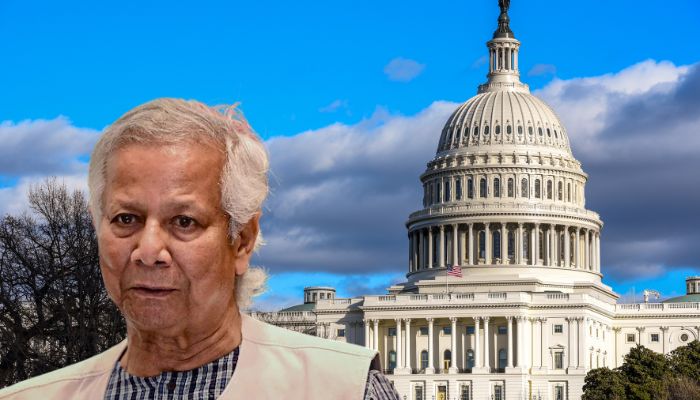

The election in Bangladesh is over. Hopefully by now, conspirators sitting in Washington, London, Beijing and Islamabad have learned their lesson. The people of Bangladesh have largely rejected Jamaat-e-Islami, an offshoot of the Muslim Brotherhood and a loyal lapdog of the United States, China and Pakistan.
Following the meticulously designed regime change plot of 2024, Washington, Beijing and Islamabad succeeded in turning Bangladesh into their subservient country through their mercenaries, with Muhammad Yunus as the head of the illegitimate interim regime.
Since then, at the overt and covert backing of those nations, Bangladesh is witnessing the terrifying rise of religious extremism, terrorism, jihadism and mob violence. It not only destroyed the country’s economy and education system, but also turned the youths into mere zombies who indulged in destructive acts without thinking about the consequences and even their own futures.
Due to such rampant anarchy and chaos, Bangladesh’s global image was greatly tarnished, and most nations began seeing the country with grave suspicion. Bangladesh earned a similar bad name to Pakistan, leading to the rejection of visas for its citizens, especially students and the younger generation. Females in the country have been facing numerous forms of intimidation and threats from the religious extremists and jihadists. There was a growing fear among them of becoming an object of disrespect and isolation, as it happens in Pakistan and other Muslim nations.
Muhammad Yunus could not hold onto power indefinitely
People may ask – with almost univocal support and patronisation of the US and Britain, as well as consistent support from China and Pakistan, why Muhammad Yunus opted for holding the election on 12th February, when he had sufficient power? Why did he not opt for remaining in power indefinitely by proclaiming himself as the Supreme Leader and turning the country into a Caliphate?
The answer to this question is simple. For Muhammad Yunus, it became a “mission impossible” to remain in power when the Bangladesh Nationalist Party (BNP), which has a massive size of supporters, and a solid vote bank of 35-40 percent began repeatedly pressing the Yunus regime to hold the elections. Muhammad Yunus and his Islamist-jihadist cabal clearly realised that they could not delay holding the elections for an indefinite period.
It was evident that BNP would hit street and mobilise the masses and garner open or silent support from Awami League and other leftist-secularist forces, including the Hindus. And in that case, Yunus would face a pathetic fall and would potentially face trial for committing a series of crimes that would result in capital punishment for him and the members of his vicious nexus.
The failure of the US deep State
Meanwhile, Yunus also realised that his masters in the US in particular have seriously miscalculated the power of Bangali. This is despite Washington’s vantage point, its blend of military power, economic leverage, intelligence networks, and ideological messaging. Again and again, American doctrine has not merely failed but backfired. We have previously witnessed it in countries such as Vietnam, Iran, Afghanistan, Pakistan, Venezuela, Egypt, and now in Bangladesh.
For policymakers in the US Deep State as well as Pakistani Inter-Service Intelligence (ISI), they have appeared to view Bangladesh through an ideological lens rather than a geopolitical and populist one. By undermining the power of Bangalis and treating Jamaat-e-Islami Bangladesh (JIB) – a party with ideological roots linked to the Muslim Brotherhood – as a potential strategic partner, Washington and Islamabad committed a series of political blunders.
And finally, the disastrous Bangladesh plot of Pakistani ISI and its Western masters had to bite the dust. On February 12, Bangladesh did not merely vote – it resisted. For months, an unsettling narrative was building inside the country. Political instability following the 2024 upheaval had created space for ideological adventurism. International actors were watching closely. Islamist organisations were reorganising. And technocratic figures with limited grassroots legitimacy were being projected as acceptable transitional authorities.
The ghost of 1971 still shapes Bangladesh
Many in Bangladesh feared the country was being quietly steered toward an experiment: a hybrid arrangement where globalist technocracy would coexist with political Islam, with Jamaat-e-Islami positioned as a pivotal force. The electorate dismantled that experiment.
The decisive rejection of Jamaat-e-Islami and the strong mandate for the Bangladesh Nationalist Party (BNP) was not accidental. It was a calculated message from a population that understands its history and recognises ideological danger when it sees it.
To understand the electoral result of 12th February 2026, one must understand 1971. Bangladesh was born out of resistance to Pakistan’s ideological and political domination and Rawalpindi’s repeated attempts to erase the very Bangali values and secularism. The Liberation War was not merely a territorial struggle – it was a revolt against religious majoritarian authoritarianism imposed from West Pakistan.
Jamaat-e-Islami carries that historical baggage. Its political lineage and wartime role remain deeply controversial. For many Bangladeshis, Jamaat is not just another party; it symbolises a worldview that once opposed the country’s very independence. This memory matters.
Bangladesh may be a Muslim-majority, but its identity is linguistic, cultural, and pluralistic. Bengali Islam evolved through Sufi traditions, syncretic practices, and a strong literary heritage. It was never meant to mirror the ideological rigidity seen in Pakistan. February 12 was, in many ways, a reaffirmation of that identity.
The illusion of Islamist momentum
Over the past eighteen months, Bangladesh witnessed sporadic mob violence, aggressive street mobilisations, attacks on Hindus and growing pressure from hardline clerical networks. Social media amplified religious outrage campaigns. Women reported increased intimidation in educational institutions. Minority communities quietly expressed concern about shrinking space.
These developments created a perception – both domestically and abroad – that Islamist forces were gaining unstoppable momentum. But perception does not equal numbers. Electorally, Jamaat’s support rarely crosses single digits. It is vocal, organised, and ideologically committed – but it does not represent mainstream Bangladeshi sentiment. The February 12 outcome exposed the gap between street noise and ballot strength.
Muhammad Yunus enjoys global esteem for pioneering microfinance. His Nobel Prize recognition made him a global icon of development economics. But political legitimacy in Bangladesh cannot be outsourced from Western applause. But behind this façade, Yunus has successfully hidden his real identity of a notoriously Islamist and India-hating individual. Moreover, his notoriously cruel mind was also wrapped through well-orchestrated multi-million-dollar propaganda in the global media.
Technocratic stature does not substitute for grassroots mobilization. Bangladesh’s electorate historically rallies behind leaders with organizational depth, patronage networks, and mass emotional connect – figures such as Sheikh Hasina or Tarique Rahman. Political success here requires structure, not symbolism. The idea that a globally admired technocrat could serve as a neutral stabilizing force while ideological actors consolidated power behind the scenes was always politically fragile. February 12 exposed that fragility.
The geopolitical undercurrent
Bangladesh is not an isolated political laboratory. It sits at the strategic crossroads of South and Southeast Asia. Almost entirely surrounded by India, with Myanmar to the east and the Bay of Bengal opening toward critical maritime routes, it occupies a pivotal location. For India, Bangladesh is not a distant neighbor – it is an unavoidable neighbor – a frontline state. Border security, counterterrorism coordination, transit routes to the Northeast, and protection of minorities are directly linked to Dhaka’s internal stability. Any ideological radicalization in Bangladesh would immediately spill across borders.
For decades, Islamabad’s strategic doctrine has sought leverage in eastern India through instability in Bangladesh. The shadow of Pakistan’s Inter-Services Intelligence continues to loom over regional security calculations. If Islamist forces had gained decisive political power in Dhaka, it would have created fertile ground for renewed proxy dynamics in the region. February 12 reduced that risk – at least temporarily.
Why political Islam failed to break through
The rejection of Jamaat is not simply a partisan shift. It reflects structural realities:
1. Cultural nationalism remains strong: Bangladesh’s identity is deeply rooted in the Bengali language and heritage. Cultural festivals, literature, and music are not peripheral – they are central to national consciousness.
2. Economic aspirations trump ideology: The country’s young population prioritizes employment, education, and global mobility. Hardline religious governance models threaten economic integration and foreign investment.
3. Women’s participation is a social pillar: Bangladesh’s garment industry, educational expansion, and microfinance networks rely heavily on female participation. Any regression toward restrictive social codes would destabilize core economic sectors.
4. Historical suspicion of Pakistan-linked ideology: Political narratives that appear to echo Islamabad’s past dominance trigger instinctive resistance.
These factors collectively explain why Islamist momentum, despite vocal activism, did not translate into electoral dominance.
The risk of “Jamaatization” of BNP government
However, the story does not end with the ballot. Rumors have circulated regarding Pakistani ISI’s efforts to insert Jamaat-aligned individuals into broader governing structures through coalition bargaining. Even a limited presence in sensitive ministries could gradually normalise ideological hardline positions within state machinery. Such a development would be strategically dangerous.
A government perceived as drifting toward clerical influence would face immediate credibility challenges – domestically and internationally. Investor confidence could weaken. Minority communities would grow anxious. India’s security establishment would recalibrate risk assessments. The electorate’s message on February 12 was clear: no ideological overreach. Ignoring that message would be politically reckless.
Lessons for external power brokers
Major powers often assume they can calibrate outcomes in smaller states through diplomatic signaling, financial leverage, and institutional endorsement. Bangladesh defies that assumption. Its political culture is volatile, emotional, and fiercely nationalistic. Attempts to engineer outcomes without respecting grassroots dynamics tend to backfire. The February 12 mandate should serve as a cautionary note: sovereignty is not negotiable currency in Dhaka. A strategic window for stability
For India, the outcome of February 12 elections offers an opportunity. A stable Bangladesh governed by a party with broad popular backing strengthens eastern regional security. Connectivity projects, counter-radicalisation efforts, and economic integration can proceed with greater confidence. But vigilance remains necessary.
Pakistani ISI and Islamist networks rarely disappear; they recalibrate. Ideological infrastructure built over decades does not dissolve overnight. Civil society institutions, security agencies, and political leadership must remain alert to gradual infiltration tactics.
The future of Muhammad Yunus
Now, in the wake of the February 12 elections, Muhammad Yunus finds himself at a precipice he can no longer ignore. His ambitions to cling to power in an increasingly hostile political landscape have mostly evaporated, leaving him vulnerable to the very tides he wanted to manipulate.
The electoral resounding rejection of his regime signifies a clear mandate against his leadership, and the Bangladesh Nationalist Party (BNP) is likely to offer him a safe exit to avoid further instability. It is plausible that Yunus, recognising the dwindling support and looming consequences of his failed plans, may ultimately seek refuge in a Western country, where he hopes to escape the repercussions of his actions and preserve his legacy—if one can still be salvaged. With Yunus ageing, the window for his political revival is all but closed.
Meanwhile, the Islamist forces that once rallied around him are likely to abandon their fading leader, turning their attention to grooming a more charismatic figurehead for their next notorious mission. This shift signals a potential recalibration of their strategies, as they seek to reestablish their foothold in the increasingly complex political terrain of Bangladesh. Such developments not only highlight Yunus’s diminishing relevance but also foreshadow the continuing challenges to Bangladesh’s sovereignty and identity from those who wish to impose their agendas. Regardless, the calculated retreat of Yunus would not only mark the end of his political aspirations but also serve as a stark warning to those who underestimate the resilience and agency of the Bangladeshi people.
February 12 was not merely a routine election. It was a stress test of Bangladesh’s ideological direction. Faced with competing pulls – political Islam, technocratic internationalism, and geopolitical maneuvering – voters chose continuity over experimentation. They chose sovereignty over dependency. They chose cultural identity over imported ideological frameworks. For those who believed Bangladesh could be quietly redirected toward a clerical future, the result was a sobering reminder. Bangladesh may be small in geography, but it is not small in political memory. The people remember 1971. They remember ideological domination. And when they sense history attempting to repeat itself – they respond. On February 12, they did. And the message traveled far beyond Dhaka.