From Pakistan to Vietnam: How the Strait of Hormuz crisis is triggering an energy shock across Asia
The global energy market has been shaken by a rapid geopolitical escalation in West Asia, disrupting one of the world’s most vital energy chokepoints. On February 28, 2026, the United States and Israel conducted combined airstrikes against Iran, which is known as Operation Epic Fury. The strikes led to the assassination of Iran’s supreme leader, Ayatollah Ali Khamenei, resulting in swift retribution from Tehran and sending shockwaves through global supply systems. In the immediate aftermath of the strikes, Iran effectively closed the Strait of Hormuz, a narrow maritime corridor connecting the Persian Gulf with the Gulf of Oman, through which nearly 20% of the world’s oil and a significant share of global LPG and LNG shipments pass. With the strait shut for nearly two weeks, tankers carrying oil, LPG and LNG from Gulf producers have been unable to move through one of the world’s busiest energy routes, triggering a major supply disruption. The world’s largest LNG export facility, Qatar’s Ras Laffan industrial complex, was attacked by Iranian drones. The plant, which produced roughly 300,000 barrels per day of LPG in 2025, was forced to halt operations after the attack, removing a substantial portion of global LPG supply from the market at a time when shipping routes were already blocked. As these twin shocks of disrupted shipping and halted production ripple through global markets, countries across Asia and beyond are scrambling to manage fuel shortages, activate emergency reserves and stabilise domestic energy supplies. This growing strain underscores how deeply many nations remain dependent on energy flows passing through a single strategic waterway. Why the Strait of Hormuz Matters The Strait of Hormuz is one of the most strategically important energy chokepoints in the world. It is Located between Iran and Oman. The narrow waterway connects the Persian Gulf to global shipping routes and serves as the primary export corridor for oil and gas produced in Gulf countries such as Saudi Arabia, Qatar, the UAE, Kuwait and Iraq. An estimated 20% of the World’s oil supply passes through the Strait every day. In addition to crude oil, the route also carries a significant share of global LPG and LNG shipments, particularly from major Gulf exporters like Qatar. In 2025 alone, Gulf producers exported roughly 1.5 million barrels per day of LPG along with millions of barrels of refined petroleum products through this route. With Iran effectively closing the Strait following the recent escalation, oil and LPG tanker traffic has been severely disrupted. The sudden halt in shipments has triggered supply concerns across several import-dependent economies, particularly in South and Southeast Asia, where many countries rely heavily on energy imports from the Gulf. Countries Facing Severe Energy Stress Energy supplies from the Gulf are slowing, and this is already causing major problems in some countries in South and Southeast Asia. Many countries depend on imported LPG and LNG, particularly given limited strategic reserves. As the Strait of Hormuz is disrupted, it is now the most vulnerable. India is one of the world’s largest LPG consumers and is facing disruptions that are putting pressure on its LPG market. India imports nearly two-thirds of its LPG requirements, and nearly 90% of those imports usually go through the Strait of Hormuz. There are concerns about the stability of supply nationwide because tanker movements have been disrupted. The reports say that India’s underground strategic storage facilities have enough supplies for about nine days. There are also extra supplies stored at refineries and distribution centres. In response, the government has directed oil refineries to maximise LPG production for domestic cooking gas while also releasing additional kerosene supplies to states as an alternative fuel. The crisis has also begun affecting businesses that rely heavily on LPG cylinders, particularly restaurants and small food establishments. Pakistan is facing one of the most immediate impacts of disruption. The country depends heavily on LNG imports from Gulf producers, with Qatar and the UAE accounting for nearly 99% of its LNG supply. With shipments disrupted and energy shortages looming, the government has introduced emergency measures to reduce fuel consumption. These include implementing a four-day workweek, work-from-home policies for government offices and a 50% reduction in fuel allowances for official vehicles. Nearly 60% of government vehicles will remain off the roads for two months, while federal and provincial cabinet members have agreed to forgo their salaries and allowances during this period. In addition, lawmakers will face salary cuts of up to 25%, and the government has imposed restrictions on non-essential spending and foreign travel. The education sector is also being affected, with universities shifting to online classes and schools closing for two weeks as pa
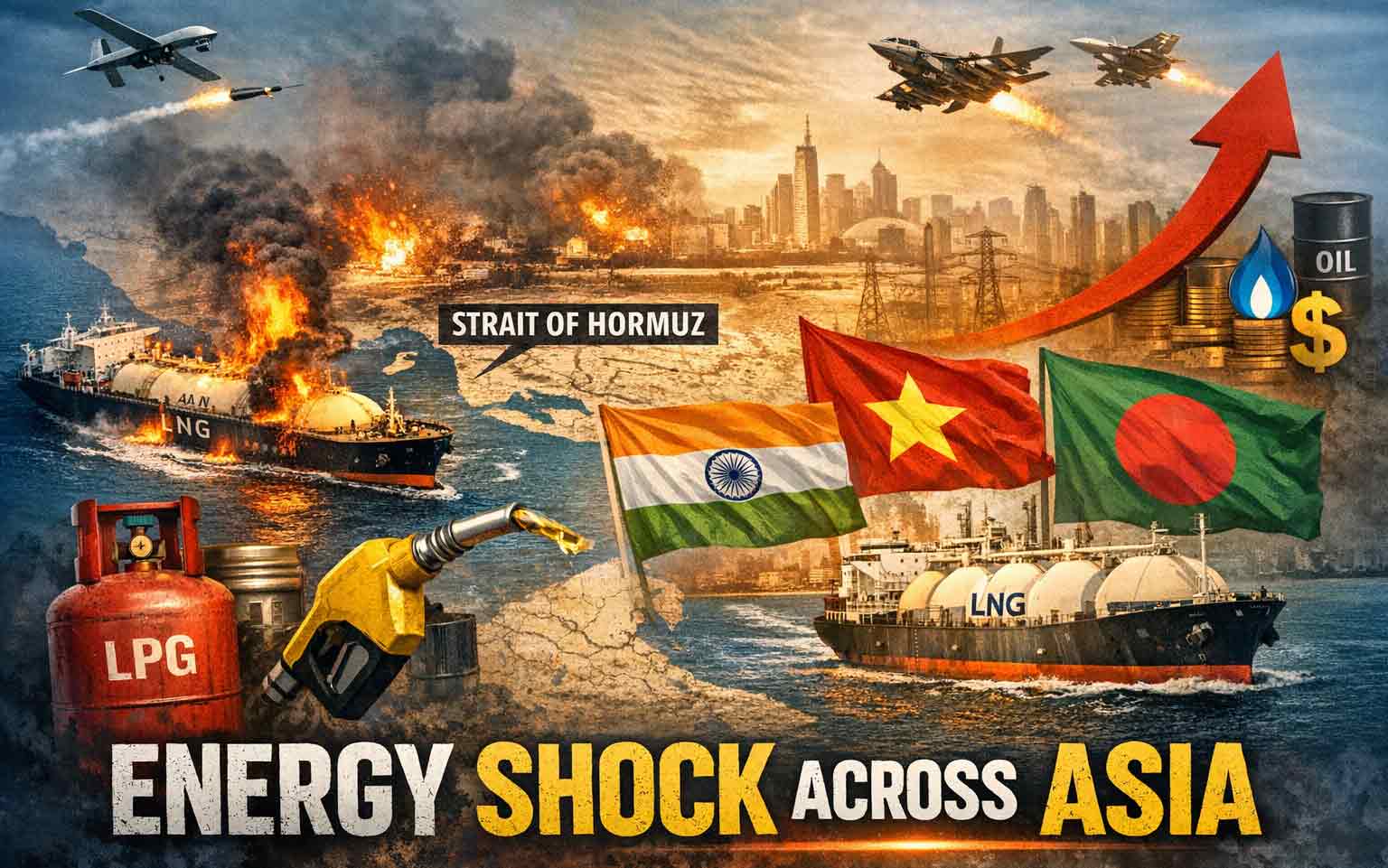
The global energy market has been shaken by a rapid geopolitical escalation in West Asia, disrupting one of the world’s most vital energy chokepoints. On February 28, 2026, the United States and Israel conducted combined airstrikes against Iran, which is known as Operation Epic Fury. The strikes led to the assassination of Iran’s supreme leader, Ayatollah Ali Khamenei, resulting in swift retribution from Tehran and sending shockwaves through global supply systems.
In the immediate aftermath of the strikes, Iran effectively closed the Strait of Hormuz, a narrow maritime corridor connecting the Persian Gulf with the Gulf of Oman, through which nearly 20% of the world’s oil and a significant share of global LPG and LNG shipments pass. With the strait shut for nearly two weeks, tankers carrying oil, LPG and LNG from Gulf producers have been unable to move through one of the world’s busiest energy routes, triggering a major supply disruption.
The world’s largest LNG export facility, Qatar’s Ras Laffan industrial complex, was attacked by Iranian drones. The plant, which produced roughly 300,000 barrels per day of LPG in 2025, was forced to halt operations after the attack, removing a substantial portion of global LPG supply from the market at a time when shipping routes were already blocked. As these twin shocks of disrupted shipping and halted production ripple through global markets, countries across Asia and beyond are scrambling to manage fuel shortages, activate emergency reserves and stabilise domestic energy supplies. This growing strain underscores how deeply many nations remain dependent on energy flows passing through a single strategic waterway.
Why the Strait of Hormuz Matters
The Strait of Hormuz is one of the most strategically important energy chokepoints in the world. It is Located between Iran and Oman. The narrow waterway connects the Persian Gulf to global shipping routes and serves as the primary export corridor for oil and gas produced in Gulf countries such as Saudi Arabia, Qatar, the UAE, Kuwait and Iraq. An estimated 20% of the World’s oil supply passes through the Strait every day. In addition to crude oil, the route also carries a significant share of global LPG and LNG shipments, particularly from major Gulf exporters like Qatar.
In 2025 alone, Gulf producers exported roughly 1.5 million barrels per day of LPG along with millions of barrels of refined petroleum products through this route. With Iran effectively closing the Strait following the recent escalation, oil and LPG tanker traffic has been severely disrupted. The sudden halt in shipments has triggered supply concerns across several import-dependent economies, particularly in South and Southeast Asia, where many countries rely heavily on energy imports from the Gulf.
Countries Facing Severe Energy Stress
Energy supplies from the Gulf are slowing, and this is already causing major problems in some countries in South and Southeast Asia. Many countries depend on imported LPG and LNG, particularly given limited strategic reserves. As the Strait of Hormuz is disrupted, it is now the most vulnerable.
India is one of the world’s largest LPG consumers and is facing disruptions that are putting pressure on its LPG market. India imports nearly two-thirds of its LPG requirements, and nearly 90% of those imports usually go through the Strait of Hormuz. There are concerns about the stability of supply nationwide because tanker movements have been disrupted. The reports say that India’s underground strategic storage facilities have enough supplies for about nine days. There are also extra supplies stored at refineries and distribution centres.
In response, the government has directed oil refineries to maximise LPG production for domestic cooking gas while also releasing additional kerosene supplies to states as an alternative fuel. The crisis has also begun affecting businesses that rely heavily on LPG cylinders, particularly restaurants and small food establishments.
Pakistan is facing one of the most immediate impacts of disruption. The country depends heavily on LNG imports from Gulf producers, with Qatar and the UAE accounting for nearly 99% of its LNG supply. With shipments disrupted and energy shortages looming, the government has introduced emergency measures to reduce fuel consumption. These include implementing a four-day workweek, work-from-home policies for government offices and a 50% reduction in fuel allowances for official vehicles.
Nearly 60% of government vehicles will remain off the roads for two months, while federal and provincial cabinet members have agreed to forgo their salaries and allowances during this period. In addition, lawmakers will face salary cuts of up to 25%, and the government has imposed restrictions on non-essential spending and foreign travel. The education sector is also being affected, with universities shifting to online classes and schools closing for two weeks as part of broader energy-saving measures. Pakistan’s finance minister has warned that rising crude prices could push the country’s oil import bill to around $600 million per month, underscoring the economic pressure caused by the ongoing crisis.
Bangladesh is also feeling the heat. It is also struggling to maintain energy supplies amid the conflict in the Middle East, which disrupts LNG shipments. Bangladesh also relies on imports for around 95% of its energy needs. It has to force the purchase of several spot LNG cargoes at significantly higher prices to stabilise domestic supply. Petrobangla, a government-run energy company, has purchased multiple LNG shipments from international traders after some suppliers suspended deliveries amid the ongoing Iran-Israel conflict.
The situation has already triggered fuel rationing for vehicles and restrictions on diesel sales. Several universities have been shut down as the government attempts to reduce energy consumption. Bangladeshi Officials have also warned that if the disruption continues, the country may have to rely even more heavily on the expensive spot LNG market, increasing its import burden and placing additional pressure on power generation and industry.
While Vietnam is not facing an immediate fuel shortage, it is already experiencing the ripple effects of the global energy disruption triggered by the Middle East. Authorities in Hà Nội have said that petrol and LPG supplies in the capital remain largely stable for now, but that market surveillance teams are deployed to prevent hoarding and ensure availability at retail outlets. However, Vietnam has announced plans to procure 4 million barrels of crude oil from non-Middle Eastern sources, but analysts say that the volume covers only about three-sixths of a day’s consumption, while existing reserves are estimated to last around 20 days.
Global price volatility is beginning to affect domestic markets, with fuel prices rising significantly and LPG becoming costlier due to higher transportation and import costs. The government has been closely monitoring supply conditions and encouraging energy-saving measures, including remote work arrangements, to reduce fuel consumption. At the same time, state-run energy company PV Gas has moved to secure additional LNG cargoes to stabilise power generation and industrial supply. Officials have also warned that if disruptions in Middle East shipping continue, sectors such as aviation could face fuel shortages in the coming months, highlighting Vietnam’s vulnerability to prolonged energy supply disruptions.
Across Southeast Asia, disruptions to energy supplies through the Strait of Hormuz are exposing the region’s limited strategic reserves. Many countries in the region maintain relatively small fuel buffers, making them vulnerable if the shipping blockade continues. Despite being an oil-producing country, Indonesia still imports more than one-third of its crude and maintains reserves of only 21–23 days. Thailand has somewhat larger reserves of about 65 days, and the government is attempting to secure an additional month of supply, while the Philippines holds around 50–60 days of reserves, mostly in privately held inventories.
Experts warn that if disruptions persist, countries across the region will struggle to replace Middle Eastern supplies because refinery configurations, shipping distances and limited alternative crude sources make rapid adjustments difficult. The crisis has already forced governments to explore emergency measures, including restricting fuel exports, increasing imports from alternative suppliers, and imposing energy-saving policies to prevent shortages.
Conclusion
The ongoing disruption in the Strait of Hormuz has once again highlighted how deeply global energy markets remain tied to a handful of strategic chokepoints. For many countries across South and Southeast Asia, the crisis has exposed structural vulnerabilities where heavy dependence on imported fuel, limited strategic reserves, and few short-term alternatives are needed when supply routes are disrupted. Governments from Pakistan to Thailand have already been forced to impose fuel-saving measures, ration supplies, or seek costly imports from alternative markets.
While some larger economies such as Japan, China and South Korea possess extensive reserves that can cushion the impact for months, many developing Asian economies have far smaller buffers. If the disruption continues, these countries could face rising energy prices, supply shortages and broader economic strain.
The situation underscores a broader lesson for energy-importing nations: geopolitical conflicts far from their borders can quickly translate into domestic economic pressure. As governments scramble to stabilise fuel supplies and protect consumers, the unfolding crisis is also likely to renew calls for stronger energy security strategies, diversified supply chains and greater investment in alternative energy sources.