From the Arab Spring to India: How Cockroach Janta Party is a part of leftist anarchy blueprint
The Cockroach Janta Party (CJP) has pivoted from being an online campaign to an on-ground ‘movement’ exploiting students’ issues for its own agenda against the Modi government. While the CJP came into existence in May 2026, as a satirical response to Chief Justice of India (CJI) Surya Kant’s “cockroaches” remark, its origins can be traced back to 2016. When Abhijeet Dipke, the founder of CJP, and a former Aam Aadmi Party (AAP) functionary, launched the CJP online, those ideologically opposed to the Modi government rallied behind it. The Cockroach Janta Party managed to tap into the issue-based discontent many apolitical people harboured against the ruling dispensation. Despite the meteoric rise online and endorsement from key opposition parties, the Cockroach Janta Party was not taken seriously in its initial days. Many laughed at the CJP’s name itself; many dismissed the CJP’s rise as “if Congress and INDI Alliance could do no harm to BJP, what will these ‘cockroaches’ do”. However, the Cockroach Janta Party is not the first satirical movement to emerge in a country that, despite its non-serious outlook, created a serious impact. In 1984, a satirical party was born in Canada – the “Rhinoceros Party.” Their election promise was that if they came to power, they would “ban the law of gravity itself!” The idea that a political party could defy the laws of physics sounds laughable. However, when the results were declared, the whole world was astonished. The public gave this satirical party such a massive “protest vote” that it emerged as Canada’s fourth-largest party. The same experiment happened with the “Beer Lovers Party” in Poland. Despite not being involved in electoral politics so far, the CJP has managed to put the Central government in a tough spot, giving hopes to the opposition parties for an Arab Spring-like regime change in India. Although Cockroach Janta Party protestors are now issuing “Nepal bana denge” threats, indicating Bangladesh- and Nepal-like violent regime changes in the last two years, CJP’s origins go back to a meeting attended by ‘andolanjeevi’ Yogendra Yadav a decade ago. Contrary to the popular narrative that the CJP is an organic and spontaneous movement fuelled by the sudden outburst of anti-government anger, CJP is essentially the actualisation of a blueprint prepared in 2016. Back in 2016, when the Aam Aadmi Party (AAP) was expanding its tentacles in Indian politics, Yogendra Yadav held a meeting with a foreign anarchist mastermind. Idea seeding – From Serbia to India – The global playbook It all began, no, not in May 2026, but with an American political thinker Gene Sharp. Despite never running for office, joining active politics or being revolutionary, Sharp’s influence on modern political movements earned him the title of “The Machiavelli of Non-Violent Resistance.” In his 1993 book From Dictatorship to Democracy: A Conceptual Framework for Liberation, Gene Sharp argued that power does not just flow from the police, the army, and parliament. Power flows from the “consent” and “cooperation” of the people. And if the people stop cooperating… even the most powerful regime in the world can collapse like a house of cards. Sharp detailed dozens of non-violent protest methods, including hunger strikes, and their effectiveness. The first major practical application of Gene Sharp’s idea occurred in Serbia, in 1998, when President Slobodan Milosevic ruled the country. Serbia was grappling with an economic crisis, and there was widespread discontent among the youth. What emerged from the prevalent youth discontent was a student movement, Otpor, meaning Resistance. Otpor was not a conventional protest, involving uniting people, hitting the streets, anti-establishment sloganeering, or violence. The Otpor activists engaged in “laughtivism” (Laugh + Activism). They weaponised satire, making people laugh and mocking the Serbian President. The Otpor activists would ask ordinary people to put coins in it and hit the Serbian leader on the head with a stick. People would laugh, have fun, and take photos. This seemingly non-serious, rather hilarious method, however, eradicated the fear of power. And here enters Serbian political activist Srđa Popović in the picture. Popović was one of the key leaders of the Otpor movement that toppled President Slobodan Milošević. Srđa Popović asserted that showing anger in the face of the supposedly ‘oppressive’ government will result in a brutal crackdown. However, if a government begins to fear posters, memes, satire, and jokes, then the government itself is perceived as ridiculous and weak. Popović described this idea as Laughtivism (Laugh + Activism), which essentially means turning laughter into a political weapon. In his 2013 Foreign Policy article, Popović proposed the theory of Dilemma Actions. He elaborated on this in his book Blueprint for Revolution. In his works, Popovi
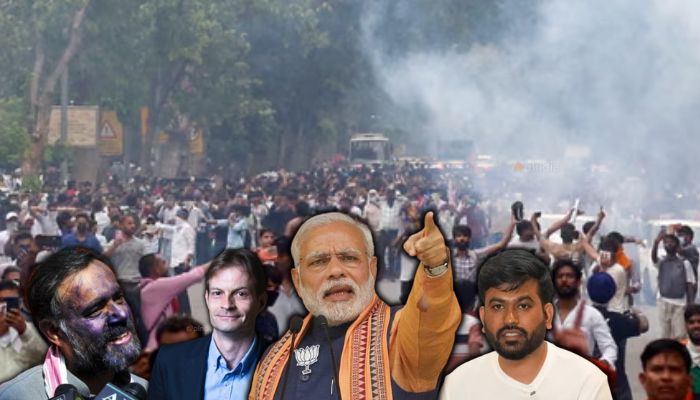
The Cockroach Janta Party (CJP) has pivoted from being an online campaign to an on-ground ‘movement’ exploiting students’ issues for its own agenda against the Modi government. While the CJP came into existence in May 2026, as a satirical response to Chief Justice of India (CJI) Surya Kant’s “cockroaches” remark, its origins can be traced back to 2016.
When Abhijeet Dipke, the founder of CJP, and a former Aam Aadmi Party (AAP) functionary, launched the CJP online, those ideologically opposed to the Modi government rallied behind it. The Cockroach Janta Party managed to tap into the issue-based discontent many apolitical people harboured against the ruling dispensation.
Despite the meteoric rise online and endorsement from key opposition parties, the Cockroach Janta Party was not taken seriously in its initial days. Many laughed at the CJP’s name itself; many dismissed the CJP’s rise as “if Congress and INDI Alliance could do no harm to BJP, what will these ‘cockroaches’ do”.
However, the Cockroach Janta Party is not the first satirical movement to emerge in a country that, despite its non-serious outlook, created a serious impact. In 1984, a satirical party was born in Canada – the “Rhinoceros Party.” Their election promise was that if they came to power, they would “ban the law of gravity itself!” The idea that a political party could defy the laws of physics sounds laughable. However, when the results were declared, the whole world was astonished. The public gave this satirical party such a massive “protest vote” that it emerged as Canada’s fourth-largest party. The same experiment happened with the “Beer Lovers Party” in Poland.
Despite not being involved in electoral politics so far, the CJP has managed to put the Central government in a tough spot, giving hopes to the opposition parties for an Arab Spring-like regime change in India. Although Cockroach Janta Party protestors are now issuing “Nepal bana denge” threats, indicating Bangladesh- and Nepal-like violent regime changes in the last two years, CJP’s origins go back to a meeting attended by ‘andolanjeevi’ Yogendra Yadav a decade ago.
Contrary to the popular narrative that the CJP is an organic and spontaneous movement fuelled by the sudden outburst of anti-government anger, CJP is essentially the actualisation of a blueprint prepared in 2016.
Back in 2016, when the Aam Aadmi Party (AAP) was expanding its tentacles in Indian politics, Yogendra Yadav held a meeting with a foreign anarchist mastermind.
Idea seeding – From Serbia to India – The global playbook
It all began, no, not in May 2026, but with an American political thinker Gene Sharp. Despite never running for office, joining active politics or being revolutionary, Sharp’s influence on modern political movements earned him the title of “The Machiavelli of Non-Violent Resistance.”
In his 1993 book From Dictatorship to Democracy: A Conceptual Framework for Liberation, Gene Sharp argued that power does not just flow from the police, the army, and parliament. Power flows from the “consent” and “cooperation” of the people. And if the people stop cooperating… even the most powerful regime in the world can collapse like a house of cards. Sharp detailed dozens of non-violent protest methods, including hunger strikes, and their effectiveness.
The first major practical application of Gene Sharp’s idea occurred in Serbia, in 1998, when President Slobodan Milosevic ruled the country. Serbia was grappling with an economic crisis, and there was widespread discontent among the youth. What emerged from the prevalent youth discontent was a student movement, Otpor, meaning Resistance.
Otpor was not a conventional protest, involving uniting people, hitting the streets, anti-establishment sloganeering, or violence. The Otpor activists engaged in “laughtivism” (Laugh + Activism). They weaponised satire, making people laugh and mocking the Serbian President.
The Otpor activists would ask ordinary people to put coins in it and hit the Serbian leader on the head with a stick. People would laugh, have fun, and take photos. This seemingly non-serious, rather hilarious method, however, eradicated the fear of power.
And here enters Serbian political activist Srđa Popović in the picture. Popović was one of the key leaders of the Otpor movement that toppled President Slobodan Milošević.
Srđa Popović asserted that showing anger in the face of the supposedly ‘oppressive’ government will result in a brutal crackdown. However, if a government begins to fear posters, memes, satire, and jokes, then the government itself is perceived as ridiculous and weak. Popović described this idea as Laughtivism (Laugh + Activism), which essentially means turning laughter into a political weapon.
In his 2013 Foreign Policy article, Popović proposed the theory of Dilemma Actions. He elaborated on this in his book Blueprint for Revolution.
In his works, Popović suggests that ‘laughtivists’ should create or identify a rallying issue which is meaningful to the public, design the action that will put the opponent in a position of either granting the nonviolent movement an exemption to the restrictions or engaging in unpopular sanctions.
Source: JSTOR
Popović suggested activists create a trap for the government, ensuring that whatever decision it makes, it backfires on them only. If the government ignores jokes or memes, the movement gradually gains more space and grows. And if the government, angered by this, takes legal action or resorts to repression, it ends up appearing extremely cruel, intolerant, and cowardly. This is called the “Backfire Effect.” In 2000, this very theory led to the downfall of the Serbian dictator.
The relatability with what happened with CJP protests is unmissable. The Modi government initially ignored the CJP, then ordered temporary blocking of the CJP’s Instagram page, handing the cockroaches their first win. The CJP, which amassed around 20 million followers on Instagram within days and boasted of having overtaken the world’s largest political party, BJP, in a self-imposed follower competition, portrayed the ban as the Centre’s fear of the young ‘cockroaches’.
Now, restricting CJP’s Instagram page was a blunder, and invited mockery for the Central government; restoring it only added fuel to the fire as CJP painted it as the ‘fascist’ government’s damage control.
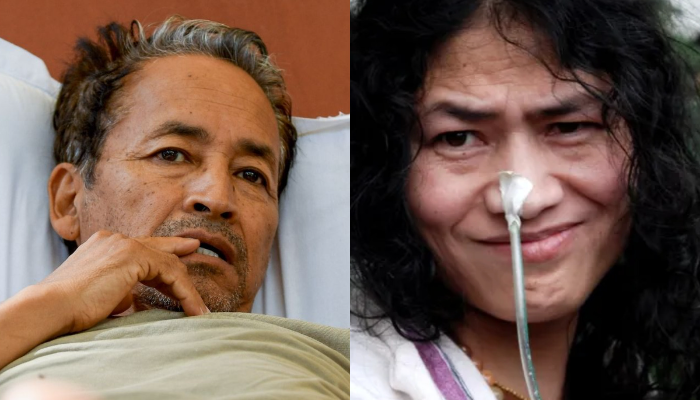
In accordance with Popović’s playbook, the Cockroach Janta Party soon picked up a burning and meaningful issue, NEET paper leak. By the first week of June 2026, the CJP’s online campaign demanding Education Minister Dharmendra Pradhan’s resignation transformed into a ground ‘non-violent’ protest. In no time, Sonam Wangchuk, a climate activist and son of a former Congress MLA, joined the CJP protest, declaring an indefinite hunger strike. Wangchuk became the first political entrant to the CJP protest at Jantar Mantar. Despite no direct association with any political party, Wangchuk’s activism against the Modi government in recent years made him a political element.
One after the other, Islamo-leftist elements extended support to the CJP, and used its stage for delivering Hinduphobic and anti-government commentary. For weeks, the Central government did not even acknowledge the CJP protest, perhaps assuming that the ‘movement’ would die its own death in the absence of government attention. However, the Centre’s nonchalance handed the CJP an opportunity to prepare, mobilise, and attack the government with full force.
It was only on 20th July that the Central government officially acknowledged the Cockroach Janta Party protest and allowed its leaders a face-to-face meeting. As the visuals of CJP spokesperson Saurav Das and Ashutosh Ranka with Health Minister JP Nadda surfaced online, a narrative spread like fire that the government, the near-invincible Modi government, is bending before cockroaches even as the government projected strength.
Meanwhile, the protests took a violent turn, as expected, and the police resorted to a lathi charge against CJP stone-pelters and attackers. Despite the law enforcement authorities only following the SOP, the popular narrative emerged that the government and its police were treating ‘student protestors’ as ‘terrorists’ and brutalising them.
Now the situation is such that if the Modi government accepts CJP demands of Dharmendra Pradhan’s resignation, Rs 1 crore compensation to students who died by suicide allegedly due to NEET paper leak, and ‘return’ Sonam Wangchuk, they would be handing a clear victory to the CJP and BJP’s political opposition. If not, the protests will go on, intensify, and likely magnify into a full-fledged redux of the 2020 Delhi Riots. Basically, the government is trapped, and no matter what it does, its actions are now only going to backfire.
From Italy, Iceland, Greece, Spain to Nepal and India: The digital experiment of disruption
The Cockroach Janta Party is not the first time that a digital experiment has become an anti-establishment mass mobilisation tool. Back in 2009, an Italian stand-up comedian, Beppe Grillo, whose entire career centred on mocking the system, noticed that people were moving away from mainstream media and spending time on the internet.
Grillo started a blog, built an online community, and started protest rallies making fun of the system. In no time, a Five Star Movement (Movimento 5 Stelle) emerged in 2009, becoming the world’s first ‘internet-native’ political movement, which proved that a blog and social network together can become a big political force.
In addition to Canada’s Rhinoceros Party, Italy’s M5S, ‘laughtivism’ also reached Iceland, Greece and Spain. In 2008, when there was an economic crisis in Iceland, people challenged the government and parliament through Facebook. During the Greek debt crisis in 2010, the world witnessed a new force: Outrage Amplification, the amplification of public anger through the algorithms of smartphones, Facebook, and Twitter. A similar playbook was followed in Spain in 2011, where the social media-based 15-M movement later spawned a mainstream political party called Podemos.
More recently, Nepal witnessed a ‘digital experiment’, wherein the “Gen-Z” took to the streets against the KP Sharma Oli-led government, over accusations of rampant corruption. Nepali streets witnessed violent protests and police crackdowns; Nepali parliament was burnt, public property vandalised, and the country burnt for days. Eventually, elections were held and the same people, Balen Shah, Sudan Gurung, and others, who spearheaded the ‘Gen-Z revolution’, won elections and rule Nepal.
Before violence, however, the outrage against government corruption in Nepal was primarily confined to social media. As the outrage and anti-government campaign intensified, the Oli regime banned social media. With this move, the Oli government entered the “lose-lose” spiral, wherein even its efforts to contain the protests and restore order ended up backfiring.
A notable aspect in Nepal’s case is Balen Shah, a non-political person’s propulsion from Kathmandu Mayor to the country’s Prime Minister.
In the 2022 Kathmandu municipal elections, a young rapper, Balen Shah, didn’t rely on any major political machinery. He connected directly with young people through social media, Facebook Live, and his songs. He had no grassroots workers or traditional rallies. Yet, he won the Kathmandu mayoral election by a landslide.
The result was that the “big players” of Nepal’s politics, who had been ruling for years, were completely decimated. This was a “protest vote” by the people of Nepal, proving that in the age of the internet, speaking the language of the people (whether it’s rap or memes) can “reboot” the system. Balen Shah’s victory taught political strategists across South Asia a new lesson: narratives have replaced speeches.
While the literature of Karl Marx, Gene Sharp, and Srđa Popović gives theoretical direction, the experiment in Nepal has served as a blueprint for movements like the CJP, where a non-political figure converts public anger against the system into votes. However, while in Nepal this was an organic public outcry, parties like the CJP in India are attempting to create a manufactured movement by replicating the same playbook. This is the biggest difference between organic and artificial, spontaneous and well-planned.
Discussion on regime change operations or colour revolutions is incomplete without the 2011 Arab Spring. From Tunisia, Egypt, Libya, to Yemen, Syria and beyond, the terms “Facebook and Twitter Revolution” began to resonate.
It was during this time that Srdja Popović and his Centre for Applied Nonviolent Action and Strategies, or CANVAS network, gained prominence. Media reports and investigations soon uncovered that activists from Egypt’s April 6 Youth Movement had already travelled to Serbia and received formal training from Otpor and CANVAS models.
This training involved imparting mastery in satire, decentralised organisation, and weaponising digital networks. While social media and public anger were key drivers of the Arab Spring, it was Popović and his CANVAS-prepared toolkit for young Arab ‘revolutionaries’ that played the major, behind-the-scenes role.
The Troll Army Model of the Philippines took the whole regime change game to another level. In the 2016 Philippine elections, Rodrigo Duterte created a dangerous model that has become a part of every nation’s politics today. Duterte’s campaign spent approximately $200,000 to create an army of 400 to 500 professional cyber soldiers—an organised “troll army.”
Noted author Peter Pomerantsev explains this modern information war well in his book, This Is Not Propaganda. He says that old dictatorships used to “hide” and censor information.
However, in modern politics, authoritarian states don’t hide information; instead, they deploy a flood of Nihilistic disinformation on the internet, disseminating numerous contradictory narratives and conspiracy theories, leaving the average citizen completely confused. The idea is to skew the common people’s understanding of the difference between facts and false propaganda.
Pomerantsev suggests that when traditional class and political identities crumble, manipulators exploit social media microtargeting to divide the people into highly specific, localised groups, generating “temporary” or pop-up identities based on fear or grievance rather than shared values.
The application of a digital mob psychology has been replicated in India by the Cockroach Janta Party and its supportive anti-BJP/Modi ecosystem.
The CANVAS nexus in India
Many foreign elements did not want the Bharatiya Janata Party-led National Democratic Alliance (NDA) to win the 2014 general elections. However, the popular quest for change propelled Narendra Modi to the helm of power, defying all foreign and internal manoeuvres intended to secure a third term for the Congress-led UPA.
The Modi government has not looked back since and secured two consecutive victories in the 2019 and 2024 Lok Sabha elections. Labelled by the international Islamo-leftist cabal as ‘Hindu nationalist’, ‘fascist Hindutva regime’, the Modi government has faced and survived several regime-change attempts in its twelve years in power.
Back in 2016, Srdja Popović, the Serbian leader of the Otpor movement, visited India for the LSE India Summit. There, he met Aam Aadmi Party (AAP) co-founder and psephologist Yogendra Yadav.
Over the last few years, the London School of Economics (LSE) has emerged as a prominent platform for spinning anti-India narratives globally. However, it is little known that this platform is directly connected to the faces of Indian anti-Modi movements. Mukulika Banerjee has been very active in the LSE ecosystem and in the South Asia Solidarity Groups.
It was the same Mukulika Banerjee who led the smear campaign against LSE student Karan Kataria, who in April 2023 contested for the post of General Secretary in the LSE Student Union elections. Social media and pamphlets were used to spread hatred against him on campus. Kataria was branded an extremist Hindu and disqualified from the election process.
Interestingly, Mukulika Banerjee is the sister of Yogendra Yadav’s wife, Madhulika Banerjee.
This essentially means that every time a network is active in India under the pretext of a ‘non-violent movement’, ‘restoring democracy’, or ‘posing resistance to the fascist Modi government’, and whatnot, Yogendra Yadav and his ilk remain the key players, regardless of who is the face of the movement.
In a BBC interview from late May 2026, Yogendra Yadav discussed the application of Serbia’s ‘laughtivism’ and ‘Dilemma Action’ in Indian democracy.
When CANVAS mastermind Srdja Popović visited India, LSE India was chosen as the platform to host him. During his visit, Popović met Yogendra Yadav and held an extensive discussion.
In the conversation, Popović explains the movement’s three core principles:
Personalisation of the movement: The struggle should be such that the common man feels it personally.
Low Entry Barriers: Joining the movement should be so easy and non-intimidating that anyone can join – like simply sharing a meme or creating graffiti on a wall.
Journey from Virtual to Real: Converting social media views into on-ground activists/volunteers.
A closer look at the CJP’s modus operandi reveals that the cockroaches have essentially adopted Gene Sharp and Popović’s “laughtivism” model.
While Yogendra Yadav was learning the concept of laughtivism and ways of the effective weaponisation of humour, it was Abhijeet Dipke who was leading the Aam Aadmi Party’s youth-centric, memes and satire-dominating social media campaign.
OpIndia reported earlier that before moving to the US to study PR at Boston University, Dipke worked as AAP’s social media coordinator and remained a disciple of AAP leader and former Delhi minister Manish Sisodia.
The Aam Aadmi Party and/or those with any present or past association with it have been at the centre of attempts at pulling off a regime change operation in India.
The first use of foreign toolkits was seen during the anti-CAA and farmers’ protests in 2019-2020. ED investigations indicated that several opposition leaders, including AAP’s Sanjay Singh, were linked to now-banned Popular Front of India, and other networks that routed funds to spread anarchy in India. Not to forget, Yogendra Yadav was at the forefront of the anti-CAA and Farmers’ Protest, overseeing the beta-testing of Popović’s playbook. Both anti-CAA agitation and the Farmers’ Protest culminated in violence, although a regime change could not be achieved.
The failure to topple the Modi government did not deter his detractors from their pursuit of ousting the BJP from power. Rather, the second stage of the anarchist playbook, narrative building, was activated. From AAP to Congress, major anti-BJP political parties colluded with foreign elements, with Yogendra Yadav being the binding force.
Between the Farmers’ protest and the ongoing CJP protests, Rahul Gandhi launched his Bharat Jodo Yatra, mobilising support against the Modi government. Unsurprisingly, Yogendra Yadav participated in Rahul Gandhi’s march. Not to forget, Rahul Gandhi and his party have on numerous occasions sought foreign intervention in India’s internal political affairs, citing a ‘threat’ to democracy.
The years of training, narrative weaving, and channelling of funds to incite anarchy in India have culminated in the rise of the Cockroach Janta Party (CJP).
The anti-Waqf agitations, although they caused violence and anarchy, since the issue concerned Muslims mainly, it could not be utilised as a trigger for a broader movement and attract wider public support. However, the trigger was found in CJI Surya Kant’s courtroom remarks on 15th May 2026 that young people who cannot find employment in their professions, “like cockroaches,” turn to RTI activism, social media, and journalism, becoming “parasites of society” who attack the system.
Despite the court’s clarification that CJI Surya Kant’s statement was only about those with fake degrees, Abhijeet Dipke already weaponised the perceived “insult” to the Indian youth, and moulded their insecurity and anger into an explosive. Dipke created an Instagram page that gained over 20 million followers within days.
The CJP launched its website and carefully embellished the platform with Gen-Z-appealing and ‘cool’ membership criteria like being “unemployed”, “lazy”, “chronically online” and able to “rant professionally”.
To further boost the relatability, CJP launched a hashtag #MainBhiCockroach, weaponising the perceived ‘cockroaches’ insult and attaching ‘revolutionary’ meaning to it.
In no time, CJP’s social media pages went viral; it had its own Wikipedia page, and media attention as a “cool new youth-centric trend”.
The CJP’s manifesto included almost all the talking points of the opposition parties. It called for judicial reforms, stating that no retired Chief Justice will immediately get a Rajya Sabha seat or government designation.
Under the pretext of electoral integrity, the CJP said that if a citizen’s valid vote is cancelled without any reason, then UAPA will be directly imposed on the Chief Election Commissioner. This was essentially in view of the Special Intensive Revision (SIR) and the opposition’s ‘vote chori’ allegations.
Moreover, it promised cancellation of licenses of media houses owned by corporate giants like Adani or Ambani. This was also in line with the opposition’s ‘Godi Media’ bogey, that the BJP has bought several mainstream media journalists, who only target opposition and don’t question the government.
OpIndia has extensively reported on how CJP cockroaches have been harassing and assaulting media reporters they declare Godi Media for not toeing their line and rather asking critical questions.
The CJP manifesto, its demands, and protest model are all designed to place the Modi government in the very “dilemma of action” theorised by Srdja Popović.
In fact, the main leaders of the CJP movement have been ideological detractors of the Modi government. CJP founder Abhijeet Dipke is a former AAP functionary. CJP’s chief spokesperson
Saurav Das, a journalist, has long been pushing anti-Modi propaganda and happens to be a fanboy of 2020 anti-Hindu Delhi Riots accused mastermind Umar Khalid’s fanboy. He also supported urban naxals who raised pro-Maoist slogans during anti-pollution protests in November 2025. The CJP’s other key face, until the recent ouster,
Vijeta Dahiya used to write scripts for Germany-based YouTuber and anti-BJP propagandist Dhruv Rathee and has a track record of issuing Hinduphobic statements.
The biggest weapons of laughtivism and CANVAS principle are humour and creation of a lose-lose situation for the government deemed adversarial. If the government does not take stern action against anarchists, it will appear weak, get dominated by protestors and will have to make massive concessions, if not ousted from power in a Nepal-Bangladesh fashion. If the government invokes stringent provisions against CJP anarchists, it will end up portraying itself as an authoritarian regime hell-bent on crushing the movement with cruelty, putting the country at risk of violence extending in and outside Delhi.
The CJP already had the backing of AAP; in fact, it is a B-Team of AAP, Samajwadi Party, and other anti-BJP outfits. Now it is also attracting the support of Pakistanis and Khalistani terrorist groups like Sikhs for Justice. An environment of an ‘aar ya paar ki ladaai’ is being created, with the ultimate aim of toppling the Modi government. However, this Indian version of anarchist ‘laughtivism’ still lacks the appeal that can bring a change in voter patterns against the Modi government or entertain the idea of a violent regime change.