From verification to victimhood: How Yogendra Yadav portrayed voter list revision as a bid to snatch citizens’ voting rights
The publication of draft electoral rolls after Phase 2 of the Special Intensive Revision has triggered predictable outrage, that too from actors who were expected to project it as though the Election Commission had collaborated with the Bharatiya Janata Party (BJP) to “viciously” take away the voting rights of the people of India. On 21st December, while speaking to a propaganda YouTube channel masquerading as a news portal, The Red Mike, Congress advocate and full time propagandist, Yogendra Yadav, claimed that 97 lakh voters had lost their voting rights in Tamil Nadu as a result of SIR. Notably, his remarks came after the Election Commission of India (ECI) published the draft electoral rolls of Tamil Nadu and Gujarat. In Tamil Nadu, 97.3 lakh names have been removed from the voter list. In Gujarat, the figure stood at 73.7 lakh. These numbers, released by the ECI, were immediately projected by commentators like Yogendra Yadav as evidence of mass disenfranchisement. However, such claims rely more on arithmetic shock value than on an honest reading of the data. What the draft rolls actually indicate In Tamil Nadu, the electorate has reduced from 6.4 crore to 5.4 crore in the current draft. Of the 97.3 lakh names removed, 26.9 lakh voters were recorded as deceased. Another 66.4 lakh had either migrated, were permanently absent, or could not be found during field verification. Another 4 lakh names were removed due to enrolment at multiple locations. A similar pattern was seen in Gujarat, where the electorate fell from 5.1 crore to 4.3 crore. Of the 73.7 lakh deletions, 18.1 lakh voters were found to have died. Another 51.8 lakh had shifted residence or were not traceable at their registered addresses. Around 3.8 lakh names were removed because of multiple enrolments. Furthermore, in Tamil Nadu, another 1.2 crore voters have been flagged for notices owing to logical discrepancies, including implausible age gaps between parents and children or unusually high numbers of progeny linked to the same parent. These are verification markers, not deletions. Conflating verification with disenfranchisement Despite the clear breakup of the data provided by the ECI, activists such as Yogendra Yadav, who often fearmonger over similar issues, have framed the deletions as if living, eligible voters were deliberately and indiscriminately removed. Such claims have dangerous implications, as they create an impression that the ECI is wilfully undermining democratic participation. SIR के दौरान अकेले तमिलनाडु में 97 लाख नाम वोटर लिस्ट से काट दिए गए—इतनी आबादी तो दुनिया के कई देशों में भी नहीं होती। SIR के दूसरे दौर में 6.5 करोड़ों लोगों के वोट कट रहे हैं, और अतिरिक्त 6 करोड़ों नागरिकों पर तलवार लटकी है। अफ़सोस कि देश का अधिकांश मीडिया इसे लोकतंत्र का संकट… pic.twitter.com/H4fMk1V8so— Yogendra Yadav (@_YogendraYadav) December 22, 2025 The conclusion drawn by Yadav is not derived from the data. Names have been removed primarily because voters no longer exist, no longer reside at the recorded address, or are registered in more than one place. In cases of multiple enrolments, one voter ID remains valid while duplicates are cancelled. This is a necessary step undertaken by the Election Commission to safeguard against electoral malpractice. Special Intensive Revision is a constitutional process SIR is neither a new phenomenon nor an exceptional one. It is a constitutionally mandated exercise carried out periodically to ensure the accuracy of electoral rolls. Without such revisions, voter lists would continue to accumulate deceased individuals, migrated voters, and duplicate entries. Such entries, when they remain on the voter list for long periods, tend to weaken the credibility of elections themselves. Presenting SIR as an attack on democracy risks eroding public trust in a process designed to protect electoral integrity. Remedies exist, rhetoric chooses to ignore them The Election Commission has categorically stated that claims and objections may be filed by voters or by political parties’ booth level agents until 18th January 2026. Any eligible voter who believes their name has been wrongly flagged has a defined and time bound remedy. Public debate, however, has preferred alarm over process, and narrative over procedure. Democracy demands accuracy, not amplification Electoral reforms are not glamorous. Furthermore, verification exercises are often misunderstood. At times, this is done wilfully by activists like Yadav and political leaders like Rahul Gandhi. When routine list correction is presented as systemic disenfranchisement, it dangerously blurs the line between scrutiny and sensationalism. Such deliberate attempts to question a genuine process create chaos, and this is precisely what such rhetoric achieves.

The publication of draft electoral rolls after Phase 2 of the Special Intensive Revision has triggered predictable outrage, that too from actors who were expected to project it as though the Election Commission had collaborated with the Bharatiya Janata Party (BJP) to “viciously” take away the voting rights of the people of India.
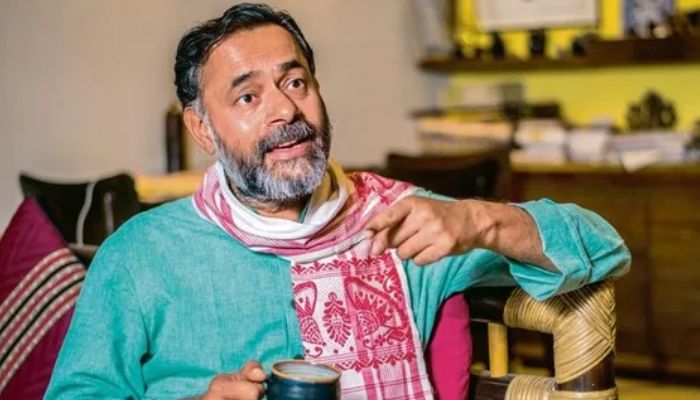
On 21st December, while speaking to a propaganda YouTube channel masquerading as a news portal, The Red Mike, Congress advocate and full time propagandist, Yogendra Yadav, claimed that 97 lakh voters had lost their voting rights in Tamil Nadu as a result of SIR.
Notably, his remarks came after the Election Commission of India (ECI) published the draft electoral rolls of Tamil Nadu and Gujarat. In Tamil Nadu, 97.3 lakh names have been removed from the voter list. In Gujarat, the figure stood at 73.7 lakh. These numbers, released by the ECI, were immediately projected by commentators like Yogendra Yadav as evidence of mass disenfranchisement.
However, such claims rely more on arithmetic shock value than on an honest reading of the data.
What the draft rolls actually indicate
In Tamil Nadu, the electorate has reduced from 6.4 crore to 5.4 crore in the current draft. Of the 97.3 lakh names removed, 26.9 lakh voters were recorded as deceased. Another 66.4 lakh had either migrated, were permanently absent, or could not be found during field verification. Another 4 lakh names were removed due to enrolment at multiple locations.
A similar pattern was seen in Gujarat, where the electorate fell from 5.1 crore to 4.3 crore. Of the 73.7 lakh deletions, 18.1 lakh voters were found to have died. Another 51.8 lakh had shifted residence or were not traceable at their registered addresses. Around 3.8 lakh names were removed because of multiple enrolments.
Furthermore, in Tamil Nadu, another 1.2 crore voters have been flagged for notices owing to logical discrepancies, including implausible age gaps between parents and children or unusually high numbers of progeny linked to the same parent. These are verification markers, not deletions.
Conflating verification with disenfranchisement
Despite the clear breakup of the data provided by the ECI, activists such as Yogendra Yadav, who often fearmonger over similar issues, have framed the deletions as if living, eligible voters were deliberately and indiscriminately removed. Such claims have dangerous implications, as they create an impression that the ECI is wilfully undermining democratic participation.
SIR के दौरान अकेले तमिलनाडु में 97 लाख नाम वोटर लिस्ट से काट दिए गए—इतनी आबादी तो दुनिया के कई देशों में भी नहीं होती। SIR के दूसरे दौर में 6.5 करोड़ों लोगों के वोट कट रहे हैं, और अतिरिक्त 6 करोड़ों नागरिकों पर तलवार लटकी है। अफ़सोस कि देश का अधिकांश मीडिया इसे लोकतंत्र का संकट… pic.twitter.com/H4fMk1V8so
— Yogendra Yadav (@_YogendraYadav) December 22, 2025
The conclusion drawn by Yadav is not derived from the data. Names have been removed primarily because voters no longer exist, no longer reside at the recorded address, or are registered in more than one place. In cases of multiple enrolments, one voter ID remains valid while duplicates are cancelled. This is a necessary step undertaken by the Election Commission to safeguard against electoral malpractice.
Special Intensive Revision is a constitutional process
SIR is neither a new phenomenon nor an exceptional one. It is a constitutionally mandated exercise carried out periodically to ensure the accuracy of electoral rolls. Without such revisions, voter lists would continue to accumulate deceased individuals, migrated voters, and duplicate entries. Such entries, when they remain on the voter list for long periods, tend to weaken the credibility of elections themselves.
Presenting SIR as an attack on democracy risks eroding public trust in a process designed to protect electoral integrity.
Remedies exist, rhetoric chooses to ignore them
The Election Commission has categorically stated that claims and objections may be filed by voters or by political parties’ booth level agents until 18th January 2026. Any eligible voter who believes their name has been wrongly flagged has a defined and time bound remedy. Public debate, however, has preferred alarm over process, and narrative over procedure.
Democracy demands accuracy, not amplification
Electoral reforms are not glamorous. Furthermore, verification exercises are often misunderstood. At times, this is done wilfully by activists like Yadav and political leaders like Rahul Gandhi. When routine list correction is presented as systemic disenfranchisement, it dangerously blurs the line between scrutiny and sensationalism. Such deliberate attempts to question a genuine process create chaos, and this is precisely what such rhetoric achieves.