Iran on the boil: How economic collapse is fueling an open revolt against the Mullah regime
Iran is on a boil as the nation grapples with economic and political crises. This crisis has escalated into nationwide protests beginning in late December 2025. The Iranian people are on the streets to protest against myriad long-standing issues, including skyrocketing inflation, collapsing currency, chronic energy shortages, water scarcity, air pollution, and overall mismanagement under the Islamic Republic regime. Three years after the Mahsa Amini episode, which saw massive agitation, Iran witnessed nationwide protests What began as a localised strike by shopkeepers and bazaar traders in Tehran on 28th December 2025 soon snowballed into protests spreading across over 17 out of 31 provinces in Iran. Major cities witnessing street protests include Isfahan, Shiraz, Kermanshah, Tabriz, and Yasuj. It is being said that the protests stemming from economic and other factors have evolved into an anti-Mullah regime demonstration. In some incidents, the protestors, including students and workers, have raised slogans like “Death to the Dictator, referring to Supreme Leader Ali Khamenei. The ongoing protests have also seen people raising slogans calling for regime change, specifically, the return of the Shah or Reza Pahlavi. On 30th December, students held protests at four universities in Tehran, wherein “Rest in Peace Reza Shah” slogans were raised. Reza Shah was the founder of the royal dynasty ousted in the 1979 Islamic ‘revolution’. In Dehloran and Baghmalek, protestors chanted pro‑monarchy slogans, including “This is the national slogan: Reza Pahlavi,” “Javid Shah” (“Long live the Shah”). By 1st January 2026, the protests had entered their fourth day, with nationwide bazaar shutdowns, university closures, and clashes in several areas. The local media reports that over 37 protestors have been killed, hundreds arrested or wounded, while 8 security forces members have died in the ongoing chaos. #Breaking: A few minutes ago, security forces of #Iran’s Islamic Regime raided the dormitory buildings of Shahid Beheshti University in Velenjak, north of #Tehran, to arrest multiple female students over their participation in yesterday’s anti-regime protests at the university.… pic.twitter.com/0jBYj9u3ms— Babak Taghvaee – The Crisis Watch (@BabakTaghvaee1) December 31, 2025 On 1st January, the semi-official Fars news agency said that a 21-year-old member of the Basij, a paramilitary force connected with Iran’s Revolutionary Guards, was killed during clashes in Kouhdasht city. In the stone pelting protestors, 13 police and Basij officers have sustained injuries. The southern province of Fars also witnessed massive protests, with agitators trying to break into a local government building. Several officers were reported injured, while four protestors were arrested in the city of Fasa. A part of the governor’s office was damaged during the unrest. Protests in Iran continue to spread across several cities on their fourth day, with universities and additional workers' unions joining the demonstrations. In the southern city of Fasa, initial reports of protestors seizing control of the governor's building following the retreat… pic.twitter.com/W1Kgy5zaVn— Ariel Oseran أريئل أوسيران (@ariel_oseran) December 31, 2025 The Iranian security personnel are using brute force to crush the uprising, as visuals from the ground show the authorities using violence, tear gas, etc, to disperse protestors. The videos also show protestors hurling objects at the police officers. Protests in Fars, Iran (Image via SkyNews) The protesting merchants, particularly youth, say that they will bear losses by shutting down business to participate in protests, arguing that they are fed up with years-long economic mismanagement, sanctions pressure and diminishing hope for a better future. Iranian govt hints at willingness to engage in negotiations, does not forget to threaten protestors with ‘decisive response’ President Masoud Pezeshkian has acknowledged the raging public anger against the government over the Iranian currency depreciation and overall economic downslide, offering to listen to “legitimate demands. However, Prosecutor General Mohammad Movahedi-Azad has said that even though protests against the economic situation in the country are legitimate, damage to public property or any security threat would invite “decisive response”. In the face of rising public anger, Mohammad Reza Farzin, the head of Iran’s Central Bank, resigned, and President Pezeshkian appointed Abdolnaser Hemmati as the new head. On one hand, the Iranian authorities are trying to quell public anger with rhetoric and replacements in top positions; on the other, the Mullah regime is taking measures to tighten security control. Recently, Supreme Leader Ali Khamenei appointed IRGC Brigadier General Ahmad Vahidi as deputy commander-in-chief of the Iranian Revolutionary Guards. In many universities, classes have been moved to online mo
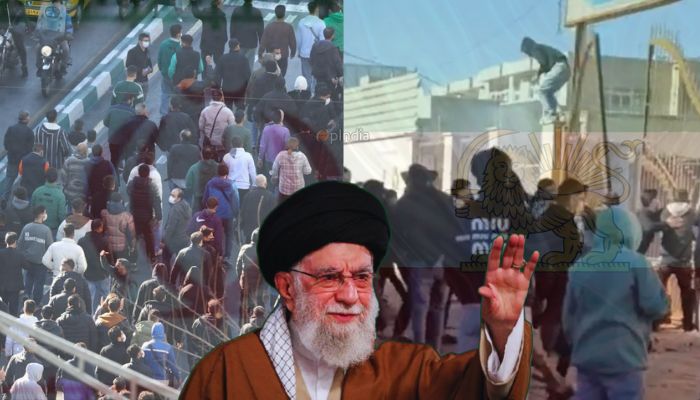

Iran is on a boil as the nation grapples with economic and political crises. This crisis has escalated into nationwide protests beginning in late December 2025. The Iranian people are on the streets to protest against myriad long-standing issues, including skyrocketing inflation, collapsing currency, chronic energy shortages, water scarcity, air pollution, and overall mismanagement under the Islamic Republic regime.
Three years after the Mahsa Amini episode, which saw massive agitation, Iran witnessed nationwide protests
What began as a localised strike by shopkeepers and bazaar traders in Tehran on 28th December 2025 soon snowballed into protests spreading across over 17 out of 31 provinces in Iran. Major cities witnessing street protests include Isfahan, Shiraz, Kermanshah, Tabriz, and Yasuj. It is being said that the protests stemming from economic and other factors have evolved into an anti-Mullah regime demonstration.
In some incidents, the protestors, including students and workers, have raised slogans like “Death to the Dictator, referring to Supreme Leader Ali Khamenei. The ongoing protests have also seen people raising slogans calling for regime change, specifically, the return of the Shah or Reza Pahlavi.
On 30th December, students held protests at four universities in Tehran, wherein “Rest in Peace Reza Shah” slogans were raised. Reza Shah was the founder of the royal dynasty ousted in the 1979 Islamic ‘revolution’. In Dehloran and Baghmalek, protestors chanted pro‑monarchy slogans, including “This is the national slogan: Reza Pahlavi,” “Javid Shah” (“Long live the Shah”).
By 1st January 2026, the protests had entered their fourth day, with nationwide bazaar shutdowns, university closures, and clashes in several areas. The local media reports that over 37 protestors have been killed, hundreds arrested or wounded, while 8 security forces members have died in the ongoing chaos.
#Breaking: A few minutes ago, security forces of #Iran’s Islamic Regime raided the dormitory buildings of Shahid Beheshti University in Velenjak, north of #Tehran, to arrest multiple female students over their participation in yesterday’s anti-regime protests at the university.… pic.twitter.com/0jBYj9u3ms
— Babak Taghvaee – The Crisis Watch (@BabakTaghvaee1) December 31, 2025
On 1st January, the semi-official Fars news agency said that a 21-year-old member of the Basij, a paramilitary force connected with Iran’s Revolutionary Guards, was killed during clashes in Kouhdasht city. In the stone pelting protestors, 13 police and Basij officers have sustained injuries.
The southern province of Fars also witnessed massive protests, with agitators trying to break into a local government building. Several officers were reported injured, while four protestors were arrested in the city of Fasa. A part of the governor’s office was damaged during the unrest.
Protests in Iran continue to spread across several cities on their fourth day, with universities and additional workers' unions joining the demonstrations. In the southern city of Fasa, initial reports of protestors seizing control of the governor's building following the retreat… pic.twitter.com/W1Kgy5zaVn
— Ariel Oseran أريئل أوسيران (@ariel_oseran) December 31, 2025
The Iranian security personnel are using brute force to crush the uprising, as visuals from the ground show the authorities using violence, tear gas, etc, to disperse protestors. The videos also show protestors hurling objects at the police officers.

The protesting merchants, particularly youth, say that they will bear losses by shutting down business to participate in protests, arguing that they are fed up with years-long economic mismanagement, sanctions pressure and diminishing hope for a better future.
Iranian govt hints at willingness to engage in negotiations, does not forget to threaten protestors with ‘decisive response’
President Masoud Pezeshkian has acknowledged the raging public anger against the government over the Iranian currency depreciation and overall economic downslide, offering to listen to “legitimate demands. However, Prosecutor General Mohammad Movahedi-Azad has said that even though protests against the economic situation in the country are legitimate, damage to public property or any security threat would invite “decisive response”.
In the face of rising public anger, Mohammad Reza Farzin, the head of Iran’s Central Bank, resigned, and President Pezeshkian appointed Abdolnaser Hemmati as the new head.
On one hand, the Iranian authorities are trying to quell public anger with rhetoric and replacements in top positions; on the other, the Mullah regime is taking measures to tighten security control.
Recently, Supreme Leader Ali Khamenei appointed IRGC Brigadier General Ahmad Vahidi as deputy commander-in-chief of the Iranian Revolutionary Guards. In many universities, classes have been moved to online mode. While authorities say that this move is temporary, it is obvious that this is being done to prevent student mobilisation. Meanwhile, a sudden public holiday was declared in 21 out of 31 provinces in Iran.
Amidst a declaration of accepting the legitimate demands of protestors, the Iranian regime is responding to the protests with tear gas, internet blackouts, and deployments of heavy military vehicles.
A large part of the country is now witnessing government-ordered shutdowns of offices, universities and businesses, leading to a standstill in commerce, further worsening the economic crisis.
Economic downslide, currency depreciation and inflation trigger protests in Iran
The ongoing protests in Iran are primarily triggered by a serious economic crisis, although regime change voices are also significantly loud. The immediate trigger is the dramatic collapse of the Iranian Rial (Iran’s currency), which plunged to a historic low of around 1.42–1.45 million to the US dollar. The Rial lost nearly half of its value in 2025 alone.
It is notable that Rial was never in a very strong position against the US dollar, as when Mohammad Reza Farzin took charge as the Central Bank’s chief, the exchange rate of Rial was 430,000 to the USD. However, the sudden drop to 1.42 million showed the quagmire the Iranian currency has descended into.
This record depreciation of the Iranian currency is fuelled by prolonged international sanctions, slashed oil revenues after the June 2025 clash with Israel, as well as domestic economic mismanagement. The depreciation of the Iranian currency’s exchange rate is reported to have been significantly triggered by the government’s liberalisation policies.
Resultantly, Iran is grappling with hyperinflation, with official rates surging 42.2% in December 2025 and food prices reaching an alarming high of 72% year-on-year, while medical goods rose by 50%.
With growing reliance on imports, failure to access frozen funds abroad and foreign exchange, Iran’s economy is in deep trouble. The country’s GDP growth dropped from 5.7% in 2023 3.7% in 2024 and to a projected 0.6% in 2026, as per the IMF.
Due to eroding purchasing power, millions of people are struggling to afford basic goods, food, and healthcare. Besides the unbearable living costs, what has further exacerbated the situation is the impending tax hikes in the new Iranian year. The Iranian taxpayers fear that their condition is going to worsen further after tax levies are raised.
Iranian Shah-in-exile calls on youth to rise in protest: Is regime change on the cards or will Khamenei crush the agitation?
While the Khamenei-led Iranian regime is appealing for unity amid “enemies” pressures, Reza Pahlevi, the exiled Iranian Crown Prince, has declared open support to the protestors, saying that the flame of a “national revolution” has been kindled.
“Your presence in the streets across Iran has kindled the flame of a national revolution. The continuation and expansion of your presence and taking control of the streets is today our foremost, vital priority. I call upon the people of Iran to join in with the nationwide strikes and protests: government employees, workers in the energy and transportation sectors, truck drivers, nurses, teachers and academics, artisans and entrepreneurs, retirees and those who have lost their savings—everyone, unite and join this national movement.”
In another message to the Iranian youth, Pahlavi said, “The Islamic Republic tried to keep you confined to your homes by closing public places and universities. But you bravely stood in the streets. I am proud of every one of you. We need greater solidarity and to hold the streets. Therefore, I ask you to use every opportunity, gathering, and event in the coming days to expand this movement. My team and I will continue to work toward mobilising more forces, causing greater defections from the regime, and also bringing your voice to the world. Victory belongs to us.”
The Iranian Crown Prince’s vocal support for the protesting Iranians, the anti-Khamenei sloganeering by protestors and the growing resentment against the Ayatollahs have reignited the question: Is regime change on the cards?
This question warrants recalling US President Donald Trump’s “Make Iran Great Again” remark made in June 2025, when the Iran-Israel conflict was raging, and the US bombed Iran’s nuclear facility. Trump had also said that Iran’s Supreme Leader Ayatollah Ali Khamenei was under his radar. Donald Trump’s indication that the US is in favour of and even willing to orchestrate a regime change had raised eyebrows then. The US has been interested in ousting the anti-US Ayatollahs and installing a pro-US democratic government.
While tensions flared up in Iran, Donald Trump on Monday teased that if Iran relaunches its nuclear program, the US will strike again. “We’ll knock them down,” Trump said.
The ‘regime change’ talks may have filled anti-Ayatollah factions within Iran and the world. However, the Mullah regime, with the Islamic Revolutionary Guards Corps (IRGC), Iran’s powerful and Islamist institution with significant military and economic clout at its disposal, can crush the protests. During the 2022 nationwide ‘Zan, Zendagi, Azadi’ protests after a young girl, Mahsa Amin, was killed by the ‘Morality Police’ in custody, over ‘improper Hijab’, the world believed that the fall of the Ayatollahs is certain. Yet, the protests were crushed, and the regime prevailed, although there has been a softening in stance about imposing Islamic ‘morality’.
However, considering the last two years have been marked by violent regime change in several countries, nothing is impossible. The possibility further increases with Iran’s deepening isolation, internal decay, and economy reeling under the burden of US and UN-imposed sanctions. It remains to be seen if Khamenei manages to hold the grip or a new political dawn awaits Iran.