Ladakh to set up autonomous hill councils across all 7 districts, empowering local communities with direct control over land, jobs, and funds
The Ladakh Administration has decided to bring elected self-governance to every district of the Union Territory by setting up an Autonomous Hill Development Council (AHDC) in all seven districts. The move marks one of the biggest changes in Ladakh’s administrative structure since it became a Union Territory and is expected to give local communities a much greater role in decisions related to land, development, jobs and public services. Until now, only Leh and Kargil had elected Autonomous Hill Development Councils. With the latest decision, the five newly created districts Sham, Nubra, Changthang, Zanskar and Drass will also get their own Councils with the same legal powers enjoyed by Leh and Kargil. The announcement was made by Ladakh Chief Secretary Ashish Kundra, who described the move as an important step towards strengthening democracy at the grassroots. He said the government was acting in line with the provisions already available under the Ladakh Autonomous Hill Development Council (LAHDC) Act. Every district is to have its own elected Hill Council The decision follows Ladakh’s administrative expansion earlier this year. In April 2026, the Union Territory officially increased its number of districts from two to seven after Sham, Nubra, Changthang, Zanskar and Drass were notified as new districts. However, elected district-level governance continued to remain limited to Leh and Kargil. The new announcement changes that situation by extending the Hill Council system across the entire Union Territory. Once the remaining legal formalities are completed, every district in Ladakh will have its own elected Autonomous Hill Development Council. According to the administration, the legal framework for this already exists. Section 3(1) of the LAHDC Act provides for the constitution of a Council in every district from a date notified by the government through the Official Gazette. Only the required amendments to the Act, wherever necessary, and the delimitation of constituencies are pending before the new Councils can become operational. Government says decision fulfils people’s long-standing demand Speaking at a press conference, Chief Secretary Ashish Kundra said the decision reflects the government’s commitment to strengthening democratic institutions across Ladakh. #WATCH | Leh, Ladakh: On major administrative reforms, Chief Secretary, Ladakh, Ashish Kundra says, “…Today, the Lieutenant Governor decided to establish dedicated engineering wings for the PWD, Rural Works, and PHE departments in every district; this has been announced, and… pic.twitter.com/bgXzYiiVs2— ANI (@ANI) July 13, 2026 He said, “Section 3, Sub-section 1 of the LAHDC Act mandates the constitution of an LAHDC for every district in Ladakh. The government has decided to comply with this legal provision.” Kundra also pointed out that people from the newly created districts had repeatedly demanded elected Hill Councils. “There have been widespread demands from various areas, including Dras, Zanskar, Changthang, Nubra and Sham, with many people submitting written requests for the formation of an LAHDC. This decision has been taken to fulfil the people’s aspiration of strengthening the roots of democracy here,” he said. He added that the administration had already completed most of its restructuring process. “Today, the Lieutenant Governor decided to establish dedicated engineering wings for the PWD, Rural Works and PHE departments in every district. Posting orders for the concerned officials have been issued. I believe our administrative restructuring is now largely complete. There are a few remaining aspects, and we will work on them very soon in the coming weeks,” Kundra said. New Councils to enjoy the same powers as Leh and Kargil One of the biggest points highlighted by the administration is that the five new Hill Councils will not receive limited powers. Instead, Sham, Nubra, Changthang, Zanskar and Drass will enjoy the same authority that the Leh Hill Council has exercised since 1995 and the Kargil Hill Council since 2003. The government has made it clear that there will be no separate or weaker version of the Councils for the new districts. All seven Councils will function under the provisions of the LAHDC Act with equal powers. This is expected to ensure that every district has the same level of administrative authority, regardless of when it was created. Greater control over land and local resources Among the most significant powers of the Hill Councils is their authority over land ownership and land allotment within their respective districts. After the new Councils are formed, decisions related to land in Sham, Nubra, Changthang, Zanskar and Drass will be taken by their own elected institutions rather than being handled from outside the district. This is considered especially important in Ladakh, where land is closely linked to local culture, traditional livelihood
The Ladakh Administration has decided to bring elected self-governance to every district of the Union Territory by setting up an Autonomous Hill Development Council (AHDC) in all seven districts. The move marks one of the biggest changes in Ladakh’s administrative structure since it became a Union Territory and is expected to give local communities a much greater role in decisions related to land, development, jobs and public services.
Until now, only Leh and Kargil had elected Autonomous Hill Development Councils. With the latest decision, the five newly created districts Sham, Nubra, Changthang, Zanskar and Drass will also get their own Councils with the same legal powers enjoyed by Leh and Kargil.
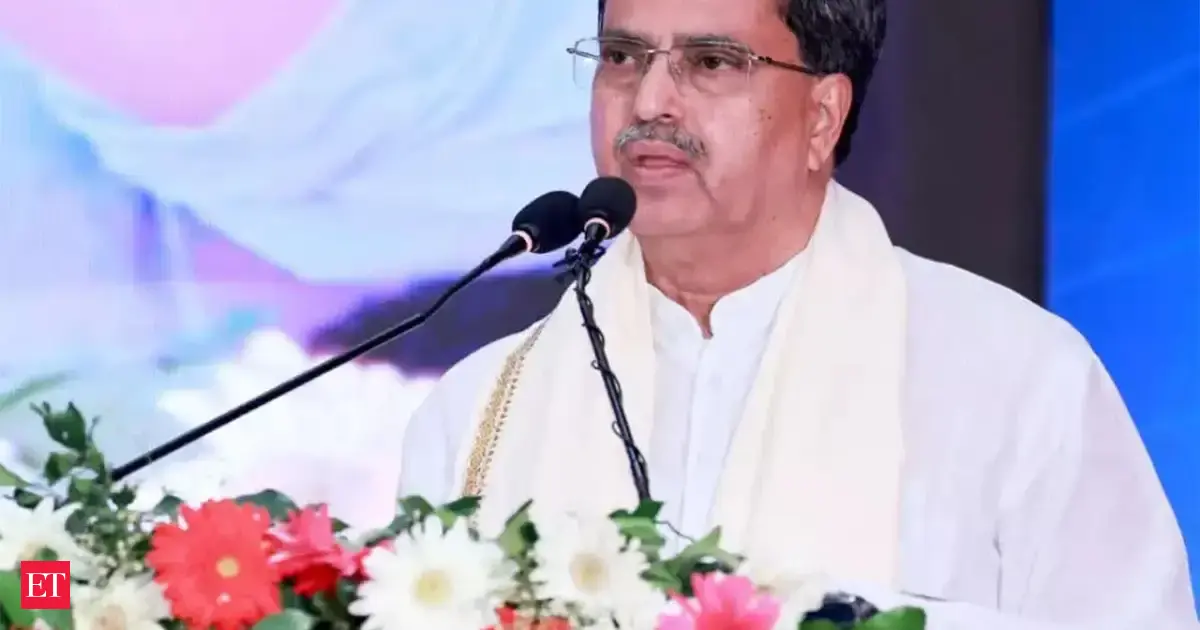
The announcement was made by Ladakh Chief Secretary Ashish Kundra, who described the move as an important step towards strengthening democracy at the grassroots. He said the government was acting in line with the provisions already available under the Ladakh Autonomous Hill Development Council (LAHDC) Act.
Every district is to have its own elected Hill Council
The decision follows Ladakh’s administrative expansion earlier this year. In April 2026, the Union Territory officially increased its number of districts from two to seven after Sham, Nubra, Changthang, Zanskar and Drass were notified as new districts. However, elected district-level governance continued to remain limited to Leh and Kargil.
The new announcement changes that situation by extending the Hill Council system across the entire Union Territory. Once the remaining legal formalities are completed, every district in Ladakh will have its own elected Autonomous Hill Development Council.
According to the administration, the legal framework for this already exists. Section 3(1) of the LAHDC Act provides for the constitution of a Council in every district from a date notified by the government through the Official Gazette. Only the required amendments to the Act, wherever necessary, and the delimitation of constituencies are pending before the new Councils can become operational.
Government says decision fulfils people’s long-standing demand
Speaking at a press conference, Chief Secretary Ashish Kundra said the decision reflects the government’s commitment to strengthening democratic institutions across Ladakh.
#WATCH | Leh, Ladakh: On major administrative reforms, Chief Secretary, Ladakh, Ashish Kundra says, “…Today, the Lieutenant Governor decided to establish dedicated engineering wings for the PWD, Rural Works, and PHE departments in every district; this has been announced, and… pic.twitter.com/bgXzYiiVs2— ANI (@ANI) July 13, 2026
He said, “Section 3, Sub-section 1 of the LAHDC Act mandates the constitution of an LAHDC for every district in Ladakh. The government has decided to comply with this legal provision.”
Kundra also pointed out that people from the newly created districts had repeatedly demanded elected Hill Councils. “There have been widespread demands from various areas, including Dras, Zanskar, Changthang, Nubra and Sham, with many people submitting written requests for the formation of an LAHDC. This decision has been taken to fulfil the people’s aspiration of strengthening the roots of democracy here,” he said.
He added that the administration had already completed most of its restructuring process.
“Today, the Lieutenant Governor decided to establish dedicated engineering wings for the PWD, Rural Works and PHE departments in every district. Posting orders for the concerned officials have been issued. I believe our administrative restructuring is now largely complete. There are a few remaining aspects, and we will work on them very soon in the coming weeks,” Kundra said.
New Councils to enjoy the same powers as Leh and Kargil
One of the biggest points highlighted by the administration is that the five new Hill Councils will not receive limited powers.
Instead, Sham, Nubra, Changthang, Zanskar and Drass will enjoy the same authority that the Leh Hill Council has exercised since 1995 and the Kargil Hill Council since 2003.
The government has made it clear that there will be no separate or weaker version of the Councils for the new districts. All seven Councils will function under the provisions of the LAHDC Act with equal powers.
This is expected to ensure that every district has the same level of administrative authority, regardless of when it was created.
Greater control over land and local resources
Among the most significant powers of the Hill Councils is their authority over land ownership and land allotment within their respective districts.
After the new Councils are formed, decisions related to land in Sham, Nubra, Changthang, Zanskar and Drass will be taken by their own elected institutions rather than being handled from outside the district.
This is considered especially important in Ladakh, where land is closely linked to local culture, traditional livelihoods, environmental protection and demographic concerns.
Giving district-level elected bodies control over such decisions is expected to increase local participation while ensuring that development plans reflect the needs of individual regions.
Employment decisions to move closer to local communities
The Hill Councils will also have an important role in district-level employment. They will regulate recruitment and promotions for district cadre posts, allowing local institutions to participate directly in decisions concerning government jobs within their respective districts.
This is expected to improve administrative accountability while giving districts greater control over their own workforce and local governance priorities.
Financial powers for every district
The new Councils will also receive financial authority under the LAHDC Act. Each Council will have its own Council Fund and will be empowered to collect taxes and fees as allowed under the law.
Having their own financial resources is expected to help districts prepare development plans based on local needs rather than depending entirely on decisions taken elsewhere.
Officials believe that this financial independence will allow each district to identify its priorities and allocate resources accordingly.
Development plans based on local needs
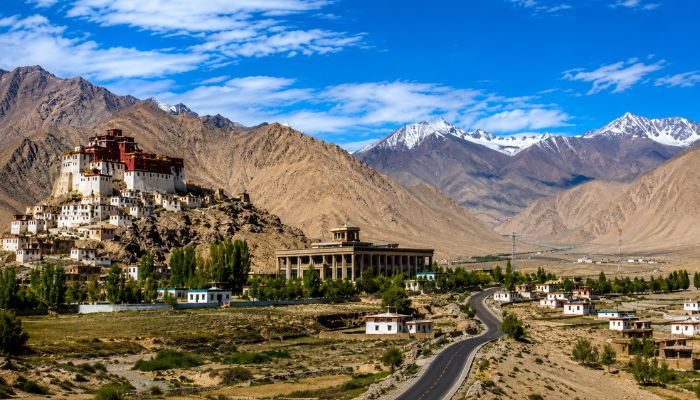
Ladakh covers nearly 60,000 square kilometres and includes regions with very different geographical conditions, climates and economic activities. The administration believes that a single development approach cannot address the needs of every district.
For example, Changthang’s high-altitude pastoral communities face different challenges from the farming areas of Sham, the remote valleys of Zanskar, the border region of Drass or the tourism-focused Nubra Valley.
With elected Councils in every district, local representatives will be able to prepare development plans that match the specific requirements of their own areas.
Instead of following a uniform model, each district will have greater freedom to decide where resources should be invested and which projects deserve priority.
Responsibility for key public services
Apart from development planning, the Councils will also oversee several important sectors that directly affect daily life. These include health services, education, tourism, local infrastructure and the implementation of social welfare programmes.
Since Ladakh is spread across difficult terrain with many remote settlements, the government believes that bringing decision-making closer to the people will help improve the delivery of public services.
Local representatives are expected to better understand the challenges faced by their communities and respond more quickly to district-specific issues.
A larger governance model is also being discussed
The announcement regarding the seven Hill Councils is part of a wider discussion on Ladakh’s future governance structure.
The Centre and Ladakh’s representatives are also working on a proposal for a Union Territory-level representative body under a customised framework linked to Article 371 of the Constitution. According to the administration, the proposed body is expected to have legislative, executive, financial and administrative powers.
Kundra said the model would be different from arrangements available in other parts of the country.
“The model will be unique and not identical to any arrangement elsewhere in the country. The best features from other models will be adapted and given a new form suited to Ladakh’s needs and aspirations,” he said.
He also said representatives from Ladakh and officials from the Union Government would prepare a draft framework in the coming weeks to give shape to the proposed system.
While the UT-level body is still under discussion and will require constitutional changes before its powers are defined, the creation of Hill Councils in all seven districts is the first major step that has now been officially confirmed.
Panchayati Raj institutions will continue
The administration has clarified that the new arrangement will not replace existing Panchayati Raj institutions. Village-level elected bodies will continue to function alongside the district-level Hill Councils.
If the proposed Union Territory-level representative body is eventually created, Ladakh will have elected institutions at three levels village Panchayats, district Autonomous Hill Development Councils and a Union Territory-level representative body.
This three-tier structure is intended to strengthen democratic participation from the village level to the Union Territory level.
A major shift in Ladakh’s governance
For nearly three decades, the Autonomous Hill Development Councils of Leh and Kargil have remained the main elected institutions for local governance in Ladakh. The decision to extend the same model to Sham, Nubra, Changthang, Zanskar and Drass is expected to significantly change how the Union Territory is governed.
The proposal aims to give every district greater authority over land, employment, finances, public services and development planning while ensuring that decisions are taken closer to the people affected by them.
Before the new Councils begin functioning, the government will complete amendments to the LAHDC Act wherever required and carry out the delimitation of constituencies.
Once these formalities are finished, Ladakh will move from having two Hill Councils to seven, with every district getting its own elected institution. The government says the move is meant to deepen grassroots democracy, improve local governance and ensure that every part of Ladakh has a stronger voice in shaping its own future.