Opposition trying to provoke farmer protests by lying about India-US trade deal: Read how it is only interim framework, no tariff cut on major crops, and India already imports farm products
The United States and India on Saturday unveiled a new joint framework for an Interim Trade Agreement, a major step toward a full Bilateral Trade Agreement (BTA). The White House said that the US is dropping the punitive 25% tariff on India for purchasing Russian Oil immediately, and the reciprocal tariff of 25% will come down to 18% once the trade deal is finalised and signed. After US President Donald Trump and Prime Minister Narendra Modi described the move as a big breakthrough that could open the door to deeper economic cooperation between the two countries, opposition leaders have started to attack the Modi government over the framework. Some of them have started to claim that PM Modi has already signed the trade deal with the United States, reducing tariffs on farm products to zero, and that it will flood the domestic market with cheap American agricultural products, leading to the ruin of local producers. However, these allegations are completely false and misleading. In a post on X, Sanjay Singh of the Aam Aadmi Party claimed that Prime Minister Narendra Modi had “lied to the nation” and “betrayed crores of farmers” by opening India’s agricultural market to the US at zero per cent tax. He also claimed that PM Modi agreed for the deal to save Gautam Adani after he was accused of corruption by US Department of Justice. He accused the government of lying for saying that interests of farmers will be protected in the trade deal with the US. मोदी ने देश से झूठ बोला, करोड़ों किसानों के साथ धोखा किया। अमेरिका के लिए 0% टैक्स पर भारत का कृषि बाज़ार खोल दिया। उनके सस्ते अनाज और फल देश के बाज़ार में बिकेंगे और हमारा किसान बर्बाद हो जाएगा। भारत रूस से सस्ता तेल लेने के बजाय अमेरिका से महंगा तेल लेगा, जिसका खामियाजा देश की… pic.twitter.com/20NrganTIw— Sanjay Singh AAP (@SanjayAzadSln) February 7, 2026 Sanjay Singh claimed that cheap American grains and fruits would devastate Indian farmers, while the country would be forced to buy costly American oil instead of cheaper Russian supplies, imposing an additional burden of ₹80,000 crore on the public. The AAP leader claimed that while the US will impose 18% tariff on all Indian exports to the US, India will not impose any tariff on imports from the US. He claimed that Narendra Modi signed the death warrant of farmers by allowing 0% tariff on farm products. Similarly, activist Yogendra Yadav claimed that the deal marked the first time Indian agriculture was being integrated into an international trade agreement. He added that while products will be imported at zero import duties, others like maize and soya will enter the Indian market through the “back door.” He urged farmers to mobilise against what he termed an “attack.” जिसका डर था, वही हुआ।इंडो-यूएस ट्रेड डील के संयुक्त बयान ने साफ़ कर दिया है कि पहली बार भारतीय कृषि को अंतरराष्ट्रीय व्यापार समझौते का हिस्सा बनाया जा रहा है। कुछ कृषि उत्पादों पर आयात शुल्क शून्य कर दिए गए हैं, मक्का-सोया जैसे उत्पाद पिछले दरवाज़े से प्रवेश कर रहे हैं और आगे… pic.twitter.com/bonvOx7D1a— Yogendra Yadav (@_YogendraYadav) February 7, 2026 Yadav claimed that the Modi govt is also ready to relax the ban on the import of genetically modified crops and dairy from animals that consume non-vegetarian feed. But there is no basis to make this claim, and even the Trump administration has not made such a claim. These comments are completely baseless and untrue, aimed at provoking the farmers to launch yet another protest against the government. The opposition leaders are claiming that the Indian government has already signed a trade deal reducing tariffs on agricultural products to zero, which is completely false. No Trade Deal Yet Opposition leaders are claiming that India has already signed the trade deal with the USA, which is completely false. What we have is a joint statement saying that India and the US have reached a framework for an interim trade agreement. The actual Free Trade Agreement is yet to be finalised, let alone signed. The framework is not a binding pact but a preliminary outline reaffirming commitment to broader US-India Bilateral Trade Agreement (BTA) talks. It will potentially take months of negotiations to finalise the draft of the deal. The final agreement will depend on these negotiations, and also on the famously unstable mood of Donald Trump. No Major Farm Products Mentioned Notably, the Joint statement specifies that India will “eliminate or reduce tariffs” on all US industrial goods and a “wide range” of American food and agricultural products. Notably, it does not say that India will eliminate tariffs across all items, contrary to the claims. Yogendra Yadav, Sanjay Singh and other opposition leaders have chosen to conveniently ignore the term ‘reduce’, which is a blatant misrepresentation of the text of the statement. The agricultural products on which India will eliminate or reduce tariffs include Dried Distillers’ Grains, red sorghum for animal feed, tree nuts, fres
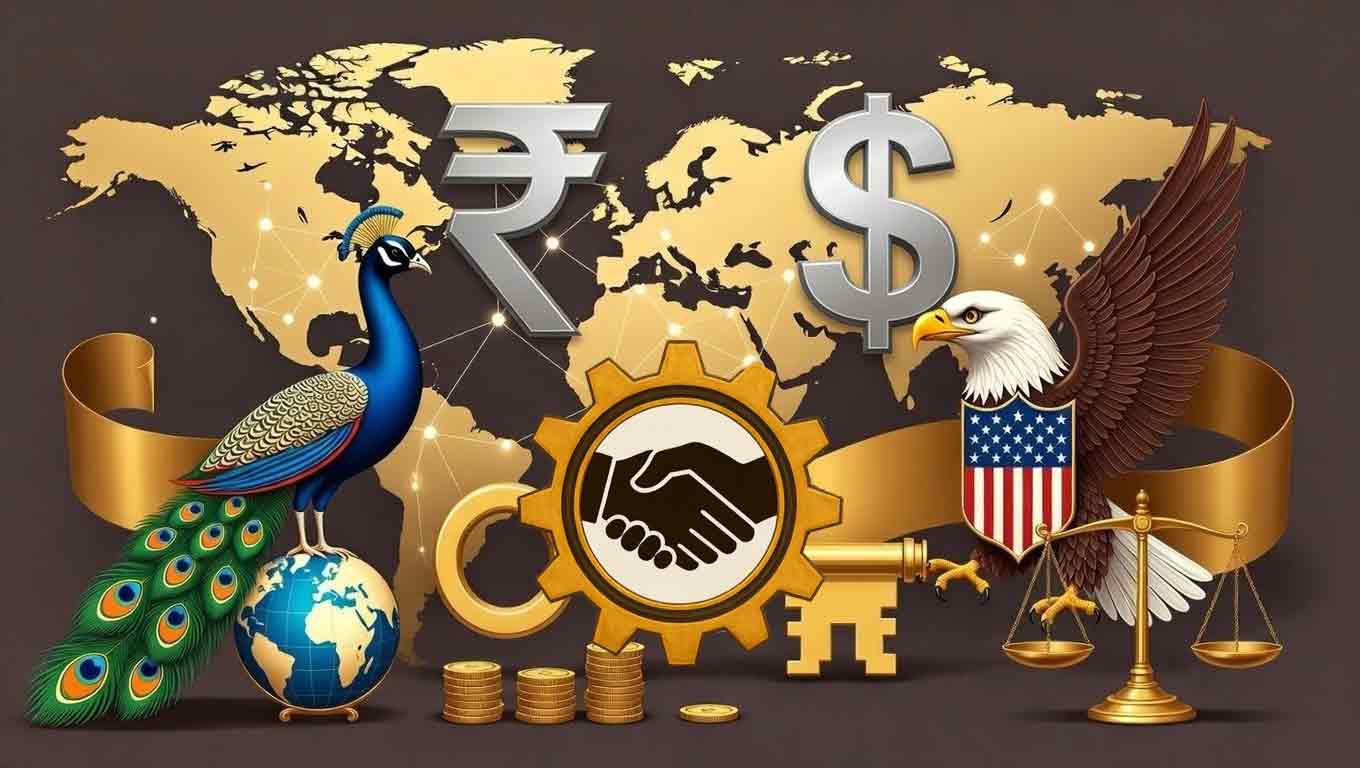

The United States and India on Saturday unveiled a new joint framework for an Interim Trade Agreement, a major step toward a full Bilateral Trade Agreement (BTA). The White House said that the US is dropping the punitive 25% tariff on India for purchasing Russian Oil immediately, and the reciprocal tariff of 25% will come down to 18% once the trade deal is finalised and signed.
After US President Donald Trump and Prime Minister Narendra Modi described the move as a big breakthrough that could open the door to deeper economic cooperation between the two countries, opposition leaders have started to attack the Modi government over the framework. Some of them have started to claim that PM Modi has already signed the trade deal with the United States, reducing tariffs on farm products to zero, and that it will flood the domestic market with cheap American agricultural products, leading to the ruin of local producers. However, these allegations are completely false and misleading.
In a post on X, Sanjay Singh of the Aam Aadmi Party claimed that Prime Minister Narendra Modi had “lied to the nation” and “betrayed crores of farmers” by opening India’s agricultural market to the US at zero per cent tax. He also claimed that PM Modi agreed for the deal to save Gautam Adani after he was accused of corruption by US Department of Justice. He accused the government of lying for saying that interests of farmers will be protected in the trade deal with the US.
मोदी ने देश से झूठ बोला, करोड़ों किसानों के साथ धोखा किया। अमेरिका के लिए 0% टैक्स पर भारत का कृषि बाज़ार खोल दिया। उनके सस्ते अनाज और फल देश के बाज़ार में बिकेंगे और हमारा किसान बर्बाद हो जाएगा। भारत रूस से सस्ता तेल लेने के बजाय अमेरिका से महंगा तेल लेगा, जिसका खामियाजा देश की… pic.twitter.com/20NrganTIw
— Sanjay Singh AAP (@SanjayAzadSln) February 7, 2026
Sanjay Singh claimed that cheap American grains and fruits would devastate Indian farmers, while the country would be forced to buy costly American oil instead of cheaper Russian supplies, imposing an additional burden of ₹80,000 crore on the public. The AAP leader claimed that while the US will impose 18% tariff on all Indian exports to the US, India will not impose any tariff on imports from the US. He claimed that Narendra Modi signed the death warrant of farmers by allowing 0% tariff on farm products.
Similarly, activist Yogendra Yadav claimed that the deal marked the first time Indian agriculture was being integrated into an international trade agreement. He added that while products will be imported at zero import duties, others like maize and soya will enter the Indian market through the “back door.” He urged farmers to mobilise against what he termed an “attack.”
जिसका डर था, वही हुआ।
— Yogendra Yadav (@_YogendraYadav) February 7, 2026
इंडो-यूएस ट्रेड डील के संयुक्त बयान ने साफ़ कर दिया है कि पहली बार भारतीय कृषि को अंतरराष्ट्रीय व्यापार समझौते का हिस्सा बनाया जा रहा है। कुछ कृषि उत्पादों पर आयात शुल्क शून्य कर दिए गए हैं, मक्का-सोया जैसे उत्पाद पिछले दरवाज़े से प्रवेश कर रहे हैं और आगे… pic.twitter.com/bonvOx7D1a
Yadav claimed that the Modi govt is also ready to relax the ban on the import of genetically modified crops and dairy from animals that consume non-vegetarian feed. But there is no basis to make this claim, and even the Trump administration has not made such a claim.
These comments are completely baseless and untrue, aimed at provoking the farmers to launch yet another protest against the government. The opposition leaders are claiming that the Indian government has already signed a trade deal reducing tariffs on agricultural products to zero, which is completely false.
No Trade Deal Yet
Opposition leaders are claiming that India has already signed the trade deal with the USA, which is completely false. What we have is a joint statement saying that India and the US have reached a framework for an interim trade agreement. The actual Free Trade Agreement is yet to be finalised, let alone signed.
The framework is not a binding pact but a preliminary outline reaffirming commitment to broader US-India Bilateral Trade Agreement (BTA) talks. It will potentially take months of negotiations to finalise the draft of the deal. The final agreement will depend on these negotiations, and also on the famously unstable mood of Donald Trump.
No Major Farm Products Mentioned
Notably, the Joint statement specifies that India will “eliminate or reduce tariffs” on all US industrial goods and a “wide range” of American food and agricultural products. Notably, it does not say that India will eliminate tariffs across all items, contrary to the claims. Yogendra Yadav, Sanjay Singh and other opposition leaders have chosen to conveniently ignore the term ‘reduce’, which is a blatant misrepresentation of the text of the statement.
The agricultural products on which India will eliminate or reduce tariffs include Dried Distillers’ Grains, red sorghum for animal feed, tree nuts, fresh and processed fruit, soybean oil, wine, spirits, and select others. These are predominantly commodities that India already imports to meet domestic demand gaps. These are not major farm products produced by Indian farmers. Therefore, it does not represent any major threat to Indian farmers.
The joint statement does mention any major staple crop like rice, wheat, maize, etc., most of the products are used for industrial and non-food purposes. These reductions are targeted at industrial and supplementary goods that do not compete with the core productions of Indian farmers.
While the US was demanding that India open up its market for American corn, soybean, fuel ethanol, dairy and poultry products, none of them have been mentioned in the joint statement, and are unlikely to be included in the final agreement.
No Backdoor Entry
Yogendra Yadav claimed India is allowing backdoor import of corn and soyabean by allowing import of Dried Distillers’ Grains (DDG) and soyabean oil, which is not correct. DDG is a byproduct of ethanol manufactured from corn and other cereal grains, and it is used as animal feed. But it does not replace existing feed; it is only added to normal feed, as it is very rich in protein.
Similarly, Red Sorghum mentioned in the statement is also used as animal feed. Amul MD Jayen Mehta has assured that import of these items will not have any major impact on Indian farmers, as dairy farmers do not use more then 3%-4% of DDG in animal feed. He said that though DDG has high energy, it leads to fat separation in the cattle, and hence it is kept limited to around 3% to 4% only.
DDG is only a byproduct of corn that India has agreed to purchase; there will be no import of corn or other corn products like ethanol and corn syrup. And as DDG made from corn is cheaper compared to DDG made from other crops like rice or other sources of protein, Indian dairy farmers will actually benefit from it.
Contrary to Yadav’s claim, importing soyabean oil does not mean backdoor import of soyabean, and India already imports a large quantity of soyabean oil as domestic production is not sufficient to meet demand.
Union ministers, including Commerce Minister Piyush Goyal and Agriculture Minister Shivraj Singh Chauhab have repeatedly emphasised that farmers’ interests will be safeguarded, and the joint statement reflects that commitment by not referring to not mentioning any major Indian farm products. It only shows that tariff adjustments are limited to products where India has import dependencies.
US imposed 25% reciprocal tariff on India, claiming that India was charging a very high import duty. Therefore, it was only expected that the Indian govt will reduce some tariffs as part of the deal. In exchange, the US has committed to slashing tariffs on Indian goods from 50 per cent to 18 per cent, removing punitive duties linked to India’s prior Russian oil purchases, and easing barriers on items like generic pharmaceuticals, gems, diamonds, and aircraft parts.
Russian Oil
Referring to the claim that India will replace cheap Russian Oil with costly American oil, it needs to be noted that this remains only a claim by the US, and the Indian govt has not made any comment on it. The claim that India has agreed to stop buying Russian Oil is not even mentioned in the India-US joint statement. It was mentioned in a separate presidential order issued by the White House, eliminating the 25% punitive tariff on India.
The Executive Order states, “India has committed to stop directly or indirectly importing Russian Federation oil, has represented that it will purchase United States energy products from the United States, and has recently committed to a framework with the United States to expand defense cooperation over the next 10 years.”
India never imported oil only from Russia; the country imported petroleum products from various countries depending on market conditions. India started to buy Russian oil in significant quantities only after the Russia-Ukraine conflict resulted in EU imposed discount on Russian oil. Before that, India was buying oil at prevailing market rates.
Therefore, the claim that replacing discounted Russian oil with oil at market rates will destroy the economy is completely baseless and wrong. Discount on Russian oil is anyway coming down, and once the war is ended, sanctions on Russian oil and gas will also go away, as the country is a major producer and exporter of energy in the world. Once that discount is removed, India will have to buy all its imported oil at market prices only. That will not destroy the economy, but will only remove the additional benefit oil companies are enjoying.
India Already Imports Farm Products
A key misconception fuelling the claims regarding the import of agricultural products is the notion that India does not import farm products, and is now being coerced into doing so under US pressure. In reality, India has long been a major importer of agricultural commodities to meet its vast domestic demand. A country does not and can not produce all the agricultural products, and has to depend on imports.
For example, an interesting trivia is that India is simultaneously the largest producer, largest consumer and largest importer of pulses. India’s domestic demand for pulses is so high that, despite being the largest producer, it needs to import substantial quantities from various countries, including the USA and Canada.
Similarly, India imports substantial quantities of vegetable oils like palm oil, soybean oil, sunflower oil, etc. India needs to import edible oils because domestic oilseed production, like mustard, groundnut, soybean, etc., doesn’t meet the high demand for cooking and industrial use.
Similarly, Indian markets already import a variety of fruits and nuts in large quantities. This includes apples, almonds, walnuts, pistachios, kiwis, pears, dates, grapes and others. Other farm products already imported by India include cotton, natural rubber, certain cereals, coffee, cocoa beans, and certain spices, which are not produced domestically in sufficient quantities, like some types of pepper and cardamom.
As per the latest data, India imported agricultural and farm produce worth approximately US $38 billion in total in the year 2024-25. Imports have been rising because domestic production of certain items, especially edible oils and pulses, falls short of domestic demand.
These imports address shortages in edible oils and protein-rich foods, supporting food security without undermining local farmers.