UP records massive drop in accidents and fatalities on National Highways: Read how CM Yogi Adityanath’s policies brought the transformation
India remains the most affected country in the world in terms of road accidents. The National Highways (NHs), though they form only about 2.3% of the total road network, account for more than 36% of all road accident deaths in the country, but 2025 marked a major turning point. For the first time in three years, the rising trend in accidents and deaths on National Highways was reversed, with both figures falling by more than 11%. According to data placed in the Lok Sabha by the Ministry of Road Transport and Highways (MoRTH), there were 1,34,307 accidents and 57,482 deaths on National Highways in 2025. This was a sharp improvement compared to the year 2024, when 1,50,958 accidents and 64,772 deaths were reported. These numbers clearly indicate a nationwide improvement in highway safety. Uttar Pradesh leads the national decline Among all states, Uttar Pradesh played the biggest role in bringing down the national figures. Under the leadership of Chief Minister Yogi Adityanath, road safety has remained a top priority since 2017. Continuous work on road quality, better engineering, stricter enforcement and faster emergency response has delivered visible results. Deaths on National Highways in Uttar Pradesh fell from 9,560 in 2024 to 6,973 in 2025. This means 2,587 lives were saved in just one year, the highest reduction achieved by any state in the country. Officials say this improvement reflects long-term planning rather than short-term action. Five states drive the overall improvement Provisional MoRTH data, based on inputs from states uploaded on the eDAR portal, shows that total accidents on National Highways fell by 16,651 and deaths by 7,290 in 2025. This reduction was mainly driven by five states: Uttar Pradesh, Madhya Pradesh, Punjab, Chhattisgarh and Telangana. Uttar Pradesh and Madhya Pradesh together contributed to a reduction of 6,072 deaths. State level key indicators Uttar Pradesh: Deaths fall from 9,560 to 6,973 (2,587 less) Madhya Pradesh: Deaths fall from 4,644 to 2,882 (1,762 less) Punjab, Chhattisgarh and Telangana also showed significant improvement States where numbers increased While many states showed progress, some regions reported a rise in accidents and deaths. Gujarat: accidents increased from 3,519 to 3,944 and deaths from 2,192 to 2,380. Jharkhand: It reported a slight rise in both accidents from 2,039 to 2,056 and deaths from 1,686 to 1,783 Uttarakhand: It also saw higher numbers of accidents from 828 to 875 and deaths from 543 to 605 Delhi: It recorded a sharp jump in accidents on National Highways, from 593 to 1,827, drawing concern from road safety experts. Why Uttar Pradesh stands apart Officials point out that Uttar Pradesh’s performance is the result of steady and systematic reforms. From the very beginning of his first term in March 2017, Chief Minister Yogi Adityanath treated road safety as a “social challenge” and pushed for a strong and balanced approach based on the 4E model: Education, Enforcement, Engineering and Emergency Care. Pothole-Free roads as the first big push Soon after being appointed on 18th March, 2017, Yogi Adityanath issued strict instructions on road quality. On 25th March, 2017, he ordered that all state roads be made pothole-free within two and a half months. Officials were given clear responsibility, and regular reviews were conducted to ensure results on the ground. At that time, potholes were a major cause of accidents in Uttar Pradesh. The pothole-free drive not only improved road quality but also sent a strong message that road safety was being taken seriously. This campaign did not stop after 2017. Every year, especially before festivals, fresh instructions were issued. In September 2025, departments such as municipal corporations, the Public Works Department (PWD) and the Rural Development Department were again directed to ensure pothole-free roads across cities and villages. Better roads helped reduce skidding, tyre bursts and sudden braking incidents. The impact was seen not just on National Highways, but also on state highways and rural roads, giving the policy long-term benefits. Special focus on fog-related accidents Winter fog is a major cause of accidents in Uttar Pradesh. After a fatal accident on the Yamuna Expressway in Mathura in December 2025, where 13 people lost their lives, the Chief Minister immediately reviewed the situation and ordered strict safety steps. Increased patrolling on expressways, deployment of teams at accident-prone black spots Installation of reflectors, and 24×7 availability of cranes and ambulances. Proposal to reduce speed limits from 120 km/h to 80 km/h during fog. Toll plazas were directed to provide shelter, blankets and basic facilities for two-wheeler riders, along with real-time safety announcements. On-street parking was banned, street lighting checks were intensified, and faulty lights were repaired

India remains the most affected country in the world in terms of road accidents. The National Highways (NHs), though they form only about 2.3% of the total road network, account for more than 36% of all road accident deaths in the country, but 2025 marked a major turning point. For the first time in three years, the rising trend in accidents and deaths on National Highways was reversed, with both figures falling by more than 11%.
According to data placed in the Lok Sabha by the Ministry of Road Transport and Highways (MoRTH), there were 1,34,307 accidents and 57,482 deaths on National Highways in 2025. This was a sharp improvement compared to the year 2024, when 1,50,958 accidents and 64,772 deaths were reported. These numbers clearly indicate a nationwide improvement in highway safety.
Uttar Pradesh leads the national decline
Among all states, Uttar Pradesh played the biggest role in bringing down the national figures. Under the leadership of Chief Minister Yogi Adityanath, road safety has remained a top priority since 2017. Continuous work on road quality, better engineering, stricter enforcement and faster emergency response has delivered visible results.
Deaths on National Highways in Uttar Pradesh fell from 9,560 in 2024 to 6,973 in 2025. This means 2,587 lives were saved in just one year, the highest reduction achieved by any state in the country. Officials say this improvement reflects long-term planning rather than short-term action.
Five states drive the overall improvement
Provisional MoRTH data, based on inputs from states uploaded on the eDAR portal, shows that total accidents on National Highways fell by 16,651 and deaths by 7,290 in 2025. This reduction was mainly driven by five states: Uttar Pradesh, Madhya Pradesh, Punjab, Chhattisgarh and Telangana. Uttar Pradesh and Madhya Pradesh together contributed to a reduction of 6,072 deaths.
State level key indicators
- Uttar Pradesh: Deaths fall from 9,560 to 6,973 (2,587 less)
- Madhya Pradesh: Deaths fall from 4,644 to 2,882 (1,762 less)
- Punjab, Chhattisgarh and Telangana also showed significant improvement
States where numbers increased
While many states showed progress, some regions reported a rise in accidents and deaths.

- Gujarat: accidents increased from 3,519 to 3,944 and deaths from 2,192 to 2,380.
- Jharkhand: It reported a slight rise in both accidents from 2,039 to 2,056 and deaths from 1,686 to 1,783
- Uttarakhand: It also saw higher numbers of accidents from 828 to 875 and deaths from 543 to 605
- Delhi: It recorded a sharp jump in accidents on National Highways, from 593 to 1,827, drawing concern from road safety experts.
Why Uttar Pradesh stands apart
Officials point out that Uttar Pradesh’s performance is the result of steady and systematic reforms. From the very beginning of his first term in March 2017, Chief Minister Yogi Adityanath treated road safety as a “social challenge” and pushed for a strong and balanced approach based on the 4E model: Education, Enforcement, Engineering and Emergency Care.
Pothole-Free roads as the first big push
Soon after being appointed on 18th March, 2017, Yogi Adityanath issued strict instructions on road quality. On 25th March, 2017, he ordered that all state roads be made pothole-free within two and a half months. Officials were given clear responsibility, and regular reviews were conducted to ensure results on the ground.
At that time, potholes were a major cause of accidents in Uttar Pradesh. The pothole-free drive not only improved road quality but also sent a strong message that road safety was being taken seriously. This campaign did not stop after 2017. Every year, especially before festivals, fresh instructions were issued.
In September 2025, departments such as municipal corporations, the Public Works Department (PWD) and the Rural Development Department were again directed to ensure pothole-free roads across cities and villages.
Better roads helped reduce skidding, tyre bursts and sudden braking incidents. The impact was seen not just on National Highways, but also on state highways and rural roads, giving the policy long-term benefits.
Special focus on fog-related accidents
Winter fog is a major cause of accidents in Uttar Pradesh. After a fatal accident on the Yamuna Expressway in Mathura in December 2025, where 13 people lost their lives, the Chief Minister immediately reviewed the situation and ordered strict safety steps.
- Increased patrolling on expressways, deployment of teams at accident-prone black spots
- Installation of reflectors, and 24×7 availability of cranes and ambulances.
- Proposal to reduce speed limits from 120 km/h to 80 km/h during fog.
- Toll plazas were directed to provide shelter, blankets and basic facilities for two-wheeler riders, along with real-time safety announcements.
- On-street parking was banned, street lighting checks were intensified, and faulty lights were repaired quickly.
These steps were implemented on major expressways, including Yamuna, Agra-Lucknow, Purvanchal, Bundelkhand and Gorakhpur Link Expressways. Officials reported a clear reduction in rear-end collisions during foggy conditions. Arrangements for night shelters and bonfires for the homeless were also made as part of a broader humanitarian approach.
AI-based road safety Initiative
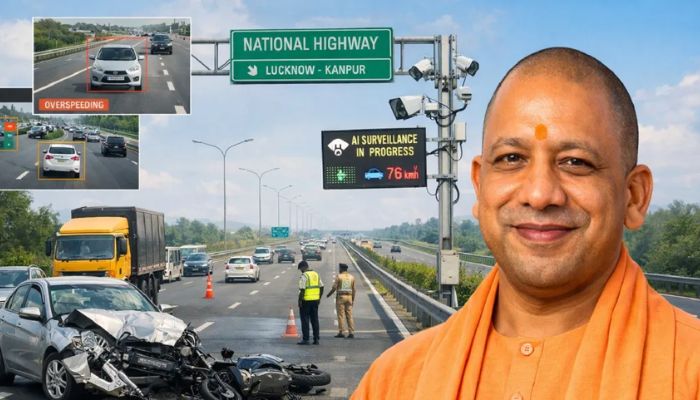
In August 2025, Uttar Pradesh became the first state in the country to receive central approval for an AI-based road safety pilot project. An amount of ₹10 crore was allocated for this initiative in the 2025-26 budget.
- Collaboration with ITI Limited and mLogica.
- Data related to accidents, vehicles, weather, road conditions and driver profiles to identify accident patterns.
- AI models are being used to predict risks and prevent future accidents.
- The pilot is planned for six weeks, after which a detailed report will be submitted to the central government.
Officials say this step shows the state’s readiness to use modern technology along with traditional safety measures.
January is declared as ‘Road Safety Month
On December 21, 2025, Yogi Adityanath announced that January 2026 would be observed as Road Safety Month across Uttar Pradesh. Clear instructions were issued to turn the campaign into a mass movement.
- Awareness drives were planned from the tehsil to the district level
- Use of real accident case studies.
- Volunteers from NSS, NCC, Disaster Mitra and Scouts-Guides
- Strict action was ordered against repeat offenders, including licence cancellation and vehicle seizure.
Permanent repair of black spots, road safety audits, vehicle fitness checks, and faster emergency response during the golden hour were also emphasised. Illegal parking and encroachment were targeted, and steps were taken to keep liquor shops away from schools and colleges.
Towards a model state in road safety
With the biggest decline in National Highway deaths in 2025, Uttar Pradesh has shown that strong leadership and a multi-pronged strategy can bring real change. From pothole-free roads and fog-specific measures to AI technology and mass awareness, the state’s approach covers every aspect of road safety.
Officials say the reduction is not just about numbers, but about saving families from lifelong loss and pain. Uttar Pradesh’s experience is now being seen as a model that other states can learn from to improve road safety across the country.