Ottawa says India no longer linked to violent crimes: Ahead of Mark Carney’s India visit, Canada pivots to boosting trade and strategic partnership amid shifting geopolitics
As Canadian Prime Minister Mark Carney prepares for his first official visit to India, Ottawa and New Delhi appear poised to turn a difficult page in their bilateral relationship. The trip comes after years of strain following the diplomatic fallout over the killing of Hardeep Singh Nijjar in 2023 and the sharp public exchanges that followed under former prime minister Justin Trudeau’s tenure. Recent briefings by senior Canadian officials suggest a notable change in tone. Ottawa now says it is confident that India is no longer linked to violent crimes in Canada and points to renewed security dialogue and cooperation between the two sides. This shift has helped create the political space for re-engagement at the highest level, even as both governments continue to stress the importance of law enforcement cooperation and respect for due process. The message is clear: whatever suspicions and tensions dominated the Trudeau years, the current government believes those concerns are no longer active or ongoing. It is a notable recalibration from the confrontational rhetoric of 2023 and suggests that both sides have quietly worked to stabilise a relationship that had veered into open diplomatic hostility. This shift, however, also raises uncomfortable questions about the trajectory of the earlier dispute. If Ottawa now believes such activities are not continuing, it underscores the gap between the political drama that followed the Nijjar killing and the slower, more cautious grind of legal and security processes. Rather than a dramatic vindication of either side, the present stance reflects a more pragmatic recognition that managing security concerns and rebuilding diplomatic and economic ties do not have to be mutually exclusive. In effect, Canada appears to be drawing a line between past allegations still working their way through the courts and the strategic reality that a prolonged standoff with India is neither sustainable nor in its broader national interest. Carney’s visit is therefore being framed not as a dramatic breakthrough, but as a pragmatic reset, one that acknowledges unresolved issues while recognising the strategic and economic logic of rebuilding ties with the world’s most populous country and one of its fastest-growing major economies. Trade and strategic diversification The timing of the outreach is significant. Canada’s relationship with its southern neighbour, the United States, has grown more complicated amid trade frictions, political uncertainty, and concerns in Ottawa about overdependence on a single market. In this context, India represents both an economic opportunity and a strategic hedge. With a population of over 1.4 billion and an expanding middle class, India offers scope for deeper cooperation in sectors ranging from energy and critical minerals to technology, artificial intelligence, and education. Canadian officials accompanying Carney have spoken about exploring new commercial partnerships, including in oil and gas exports and advanced technologies. While a comprehensive trade deal is unlikely to be concluded immediately, the visit is expected to revive momentum toward broader economic engagement, something both sides have intermittently pursued over the past decade but struggled to sustain amid political headwinds. The Nijjar case and ongoing sensitivities At the same time, the shadow of the Nijjar case has not disappeared. Canada’s justice department has recently moved the Federal Court to seek permission to withhold certain sensitive national security information in ongoing proceedings, citing concerns about international relations and security. The case remains under a publication ban and in a pretrial stage, underscoring how legally and diplomatically complex the matter remains. India has consistently maintained that no concrete evidence linking it to the killing has been shared through formal channels and has denied any role in the incident, while stating it is open to cooperation if proper legal processes are followed. Canadian officials, for their part, say they take threats on their soil seriously and will continue to combat transnational repression and organised crime. The current approach in Ottawa appears to be one of compartmentalisation: keeping law enforcement and judicial processes on their own track, while allowing diplomatic and economic engagement with India to move forward in parallel. Domestic and political pressures Carney’s India visit is not without controversy at home. Some Sikh activist groups, including those associated with the Khalistan movement, have criticised the re-engagement, arguing that it overlooks their security concerns and the unresolved questions surrounding Nijjar’s death. Others within Canada’s policy establishment caution that any reset must be incremental and grounded in transparency and legal cooperation. On the Indian side, there remains longstanding frustration over what New Delhi sees
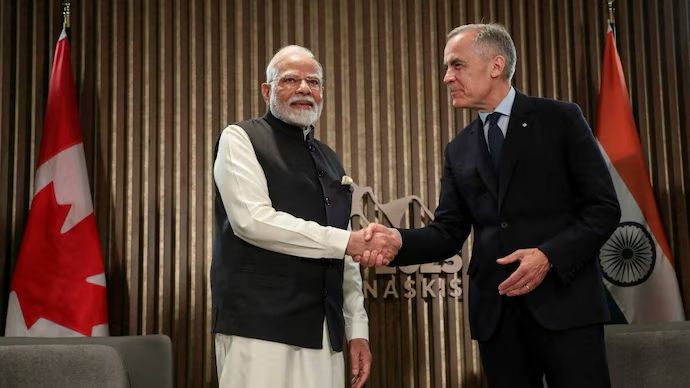
As Canadian Prime Minister Mark Carney prepares for his first official visit to India, Ottawa and New Delhi appear poised to turn a difficult page in their bilateral relationship. The trip comes after years of strain following the diplomatic fallout over the killing of Hardeep Singh Nijjar in 2023 and the sharp public exchanges that followed under former prime minister Justin Trudeau’s tenure.
Recent briefings by senior Canadian officials suggest a notable change in tone. Ottawa now says it is confident that India is no longer linked to violent crimes in Canada and points to renewed security dialogue and cooperation between the two sides. This shift has helped create the political space for re-engagement at the highest level, even as both governments continue to stress the importance of law enforcement cooperation and respect for due process.
The message is clear: whatever suspicions and tensions dominated the Trudeau years, the current government believes those concerns are no longer active or ongoing. It is a notable recalibration from the confrontational rhetoric of 2023 and suggests that both sides have quietly worked to stabilise a relationship that had veered into open diplomatic hostility.
This shift, however, also raises uncomfortable questions about the trajectory of the earlier dispute. If Ottawa now believes such activities are not continuing, it underscores the gap between the political drama that followed the Nijjar killing and the slower, more cautious grind of legal and security processes. Rather than a dramatic vindication of either side, the present stance reflects a more pragmatic recognition that managing security concerns and rebuilding diplomatic and economic ties do not have to be mutually exclusive. In effect, Canada appears to be drawing a line between past allegations still working their way through the courts and the strategic reality that a prolonged standoff with India is neither sustainable nor in its broader national interest.
Carney’s visit is therefore being framed not as a dramatic breakthrough, but as a pragmatic reset, one that acknowledges unresolved issues while recognising the strategic and economic logic of rebuilding ties with the world’s most populous country and one of its fastest-growing major economies.
Trade and strategic diversification
The timing of the outreach is significant. Canada’s relationship with its southern neighbour, the United States, has grown more complicated amid trade frictions, political uncertainty, and concerns in Ottawa about overdependence on a single market. In this context, India represents both an economic opportunity and a strategic hedge.
With a population of over 1.4 billion and an expanding middle class, India offers scope for deeper cooperation in sectors ranging from energy and critical minerals to technology, artificial intelligence, and education. Canadian officials accompanying Carney have spoken about exploring new commercial partnerships, including in oil and gas exports and advanced technologies.
While a comprehensive trade deal is unlikely to be concluded immediately, the visit is expected to revive momentum toward broader economic engagement, something both sides have intermittently pursued over the past decade but struggled to sustain amid political headwinds.
The Nijjar case and ongoing sensitivities
At the same time, the shadow of the Nijjar case has not disappeared. Canada’s justice department has recently moved the Federal Court to seek permission to withhold certain sensitive national security information in ongoing proceedings, citing concerns about international relations and security. The case remains under a publication ban and in a pretrial stage, underscoring how legally and diplomatically complex the matter remains.
India has consistently maintained that no concrete evidence linking it to the killing has been shared through formal channels and has denied any role in the incident, while stating it is open to cooperation if proper legal processes are followed. Canadian officials, for their part, say they take threats on their soil seriously and will continue to combat transnational repression and organised crime.
The current approach in Ottawa appears to be one of compartmentalisation: keeping law enforcement and judicial processes on their own track, while allowing diplomatic and economic engagement with India to move forward in parallel.
Domestic and political pressures
Carney’s India visit is not without controversy at home. Some Sikh activist groups, including those associated with the Khalistan movement, have criticised the re-engagement, arguing that it overlooks their security concerns and the unresolved questions surrounding Nijjar’s death. Others within Canada’s policy establishment caution that any reset must be incremental and grounded in transparency and legal cooperation.
On the Indian side, there remains longstanding frustration over what New Delhi sees as Canada’s tolerance of extremist elements operating under the banner of political activism. These concerns, rooted in past incidents such as the 1985 Air India bombing, continue to shape India’s expectations of stronger action against separatist violence and criminal networks.
A pragmatic, if cautious, path forward
Ultimately, Carney’s trip signals a recognition in Ottawa that a prolonged freeze with India is neither economically desirable nor strategically sustainable, especially at a time when Canada is seeking to diversify its partnerships amid a more uncertain relationship with the United States.
Rather than a clean slate, the visit is better understood as a managed reset: an effort to stabilise ties, reopen channels of communication, and explore trade and investment opportunities, while accepting that sensitive security and legal issues will take longer to resolve.
If successful, the engagement could lay the groundwork for a more functional, if still cautious, partnership, one that reflects both countries’ interests in economic cooperation and regional stability, even as they continue to navigate the complexities and mistrust left by recent disputes.