Pakistan court sentences Baloch activist Mahrang Baloch to life imprisonment: From a doctor to the fiercest voice of Balochistan freedom
Irony died a painful death when an ‘Anti-Terrorism Court’ in Pakistan, the state sponsor of Jihadi terrorism, sentenced Baloch rights activist Mahrang Baloch to life imprisonment. On 22nd June, Judge Muhammad Ali Mobin of the Anti-Terrorism Court in Quetta, Balochistan, pronounced the verdict aimed at silencing Mahrang Baloch, snatching her freedom, and crippling the Baloch freedom struggle. Alongside Dr Mahrang Baloch, the “Lioness of Balochistan”, the court sentenced fellow Baloch Yakjehti Committee (BYC) leader Sibghatullah Shah to a life sentence, in addition to a fine of PKR 200,000 each. Mahrang Baloch and Sibghatullah Shah were convicted of terrorism, sedition, and murder over bogus accusations of ‘inciting’ a mob during the 29th July 2024 “Baloch Raji Muchi” (Baloch National Gathering) protest in Gwadar. The occupying Pakistani authorities arrested Mahrang Baloch after a Frontier Corps troop, Sepoy Shabbir Ahmed, was killed in the stone-pelting incident. The BYC leaders have been convicted and given life sentences, even as there is no direct evidence linking them to the death of Shabbir Ahmed. The Pakistani authorities blamed the rising Baloch freedom activism, both in violent and non-violent forms, due to Pakistan’s oppression of the Baloch people, on Mahrang Baloch. The movement was called against the Baloch genocide by the Pakistani Army and enforced disappearances of Balochi people. Back then, activist Mahrang had said that the Baloch people have been raising their voices for over the last seven decades against the “atrocities and injustices” committed by the Pakistani state. Fearing Dr Mahrang’s dauntless and intrepid quest to secure rights, dignity and freedom for Balochistan, the Pakistani authorities filed multiple cases against her. Mahrang was initially arrested on 22nd March 2025 and detained under the Balochistan Maintenance of Public Order (MPO) for 30 days. Since then, the Pakistani authorities extended her detention twice for 30 days each. However, before the expiration of the third detention order, Mahrang Baloch was taken into custody in connection with another of the many bogus cases filed against her. During her detention period, multiple cases were filed against her other BYC leaders under different sections of the Anti-Terrorism Act and the Pakistan Penal Code. An FIR was filed against Mahrang Baloch and several other BYC leaders on 21st March 2024, in Quetta’s Sariab Police Station. It was claimed that Baloch protestors led by Mahrang Baloch, Beberg Baloch, Gulzadi, Sabiha Baloch, and Sibghatullah Shah gathered on Sariab Road and raised “anti-state” slogans. Pakistan’s military leadership and its puppet civilian government is so scared of a 33-year-old Dr Mahrang Baloch that even as the Baloch Yakjehti Committee is not banned by the National Counter Terrorism Authority, Mahrang Baloch is included in the list of proscribed persons. Mahrang Baloch boycotted hearing, her sister and BYC called the life sentence “expression of Pakistani hatred for Balochistan” The Baloch activists, already in detention, boycotted the video-linked trial from jail since 12th June 2026. Their legal team, including Mahrang’s lawyer, Israr Jatak, called it a biased “kangaroo court” of contradictory police reports. They stated that Marang Baloch and Sibghatullah Shahji were denied a fair trial. Deeply concerning. Dr. Mahrang Baloch, a women’s rights activist and Baloch rights defender, reportedly faces life imprisonment alongside other Baloch activists by Pakistani military court.This is alarming. Standing for human rights, and justice should never be treated crime. pic.twitter.com/pc2dFpLZr8— Jahanzib Wesa (@jahanzibwesa) June 23, 2026 Meanwhile, Mahrang’s sister Nadia Baloch rejected the court verdict. She described the so-called Anti-Terrorism Court as a “faceless court”. Speaking to BBC Urdu, Nadia Baloch said that the Pakistani government appointed lawyers to represent Mahrang, Sibghatullah, and other accused BYC leaders during the boycott. However, the Baloch activists rejected the state-appointed lawyers. Mahrang Baloch: The ‘Lioness of Balochistan’ and Pakistan’s nightmare Born in 1993, Mahrang Baloch is a doctor by profession and is recognised globally as a human rights activist. Mahrang completed MBBS from Baloch Medical College. She has spent over a decade fighting for the rights of the people of Balochistan. Mahrang Baloch lost her father, Abdul Ghaffar Langove, in this struggle and endured the pain of her brother’s sudden disappearance. She began speaking out for the Baloch people in 2006, but her father was abducted shortly thereafter, and his mutilated body was found in 2011. Until then, Mahrang had not been actively involved in Baloch rights activism; however, when her brother was also suddenly kidnapped in 2017, she had an epiphany and decided to raise her voice. Mahrang Baloch rose in protest for her brother, participated in marc
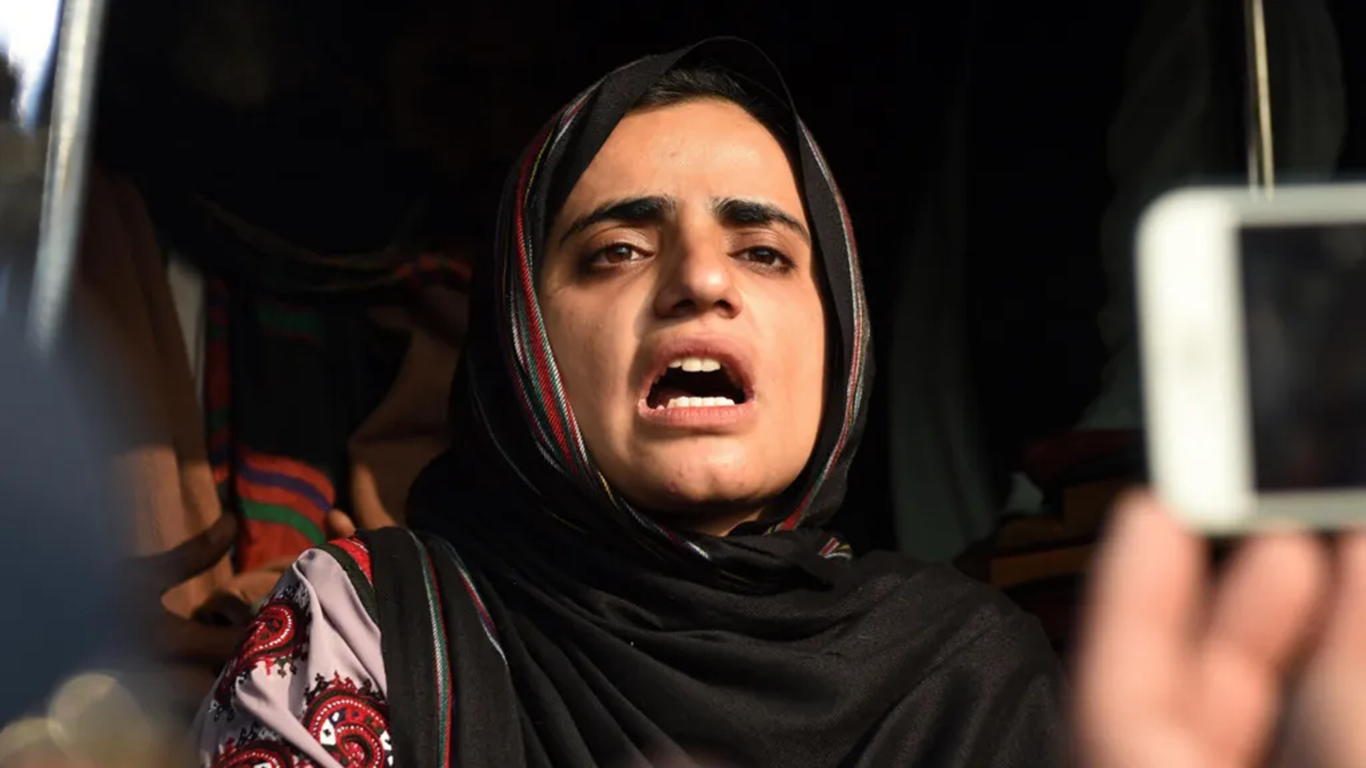
Irony died a painful death when an ‘Anti-Terrorism Court’ in Pakistan, the state sponsor of Jihadi terrorism, sentenced Baloch rights activist Mahrang Baloch to life imprisonment. On 22nd June, Judge Muhammad Ali Mobin of the Anti-Terrorism Court in Quetta, Balochistan, pronounced the verdict aimed at silencing Mahrang Baloch, snatching her freedom, and crippling the Baloch freedom struggle.
Alongside Dr Mahrang Baloch, the “Lioness of Balochistan”, the court sentenced fellow Baloch Yakjehti Committee (BYC) leader Sibghatullah Shah to a life sentence, in addition to a fine of PKR 200,000 each.
Mahrang Baloch and Sibghatullah Shah were convicted of terrorism, sedition, and murder over bogus accusations of ‘inciting’ a mob during the 29th July 2024 “Baloch Raji Muchi” (Baloch National Gathering) protest in Gwadar. The occupying Pakistani authorities arrested Mahrang Baloch after a Frontier Corps troop, Sepoy Shabbir Ahmed, was killed in the stone-pelting incident.
The BYC leaders have been convicted and given life sentences, even as there is no direct evidence linking them to the death of Shabbir Ahmed.
The Pakistani authorities blamed the rising Baloch freedom activism, both in violent and non-violent forms, due to Pakistan’s oppression of the Baloch people, on Mahrang Baloch. The movement was called against the Baloch genocide by the Pakistani Army and enforced disappearances of Balochi people.
Back then, activist Mahrang had said that the Baloch people have been raising their voices for over the last seven decades against the “atrocities and injustices” committed by the Pakistani state.
Fearing Dr Mahrang’s dauntless and intrepid quest to secure rights, dignity and freedom for Balochistan, the Pakistani authorities filed multiple cases against her.
Mahrang was initially arrested on 22nd March 2025 and detained under the Balochistan Maintenance of Public Order (MPO) for 30 days. Since then, the Pakistani authorities extended her detention twice for 30 days each. However, before the expiration of the third detention order, Mahrang Baloch was taken into custody in connection with another of the many bogus cases filed against her.
During her detention period, multiple cases were filed against her other BYC leaders under different sections of the Anti-Terrorism Act and the Pakistan Penal Code.
An FIR was filed against Mahrang Baloch and several other BYC leaders on 21st March 2024, in Quetta’s Sariab Police Station. It was claimed that Baloch protestors led by Mahrang Baloch, Beberg Baloch, Gulzadi, Sabiha Baloch, and Sibghatullah Shah gathered on Sariab Road and raised “anti-state” slogans.
Pakistan’s military leadership and its puppet civilian government is so scared of a 33-year-old Dr Mahrang Baloch that even as the Baloch Yakjehti Committee is not banned by the National Counter Terrorism Authority, Mahrang Baloch is included in the list of proscribed persons.
Mahrang Baloch boycotted hearing, her sister and BYC called the life sentence “expression of Pakistani hatred for Balochistan”
The Baloch activists, already in detention, boycotted the video-linked trial from jail since 12th June 2026. Their legal team, including Mahrang’s lawyer, Israr Jatak, called it a biased “kangaroo court” of contradictory police reports. They stated that Marang Baloch and Sibghatullah Shahji were denied a fair trial.
Deeply concerning. Dr. Mahrang Baloch, a women’s rights activist and Baloch rights defender, reportedly faces life imprisonment alongside other Baloch activists by Pakistani military court.This is alarming. Standing for human rights, and justice should never be treated crime. pic.twitter.com/pc2dFpLZr8— Jahanzib Wesa (@jahanzibwesa) June 23, 2026
Meanwhile, Mahrang’s sister Nadia Baloch rejected the court verdict. She described the so-called Anti-Terrorism Court as a “faceless court”.
Speaking to BBC Urdu, Nadia Baloch said that the Pakistani government appointed lawyers to represent Mahrang, Sibghatullah, and other accused BYC leaders during the boycott. However, the Baloch activists rejected the state-appointed lawyers.
Mahrang Baloch: The ‘Lioness of Balochistan’ and Pakistan’s nightmare
Born in 1993, Mahrang Baloch is a doctor by profession and is recognised globally as a human rights activist. Mahrang completed MBBS from Baloch Medical College. She has spent over a decade fighting for the rights of the people of Balochistan.
Mahrang Baloch lost her father, Abdul Ghaffar Langove, in this struggle and endured the pain of her brother’s sudden disappearance. She began speaking out for the Baloch people in 2006, but her father was abducted shortly thereafter, and his mutilated body was found in 2011.
Until then, Mahrang had not been actively involved in Baloch rights activism; however, when her brother was also suddenly kidnapped in 2017, she had an epiphany and decided to raise her voice. Mahrang Baloch rose in protest for her brother, participated in marches, and attended meetings. Her voice ultimately led to the kidnappers returning her brother in 2018.
Although Mahrang Baloch got her brother back, she had realised and fully gauged the extent to which the Pakistani state was forcibly abducting, torturing, and even killing Baloch people, children and adults alike. Dr Mahrang decided to become the voice of numerous Baloch families who were not fortunate enough to have their loved ones back from the brutal clutches of the Pakistan Army.
In 2019, Mahrang formed her own organisation, the Baloch Yakjehti Committee (BYC). After forming the party, he began holding small meetings. He went door-to-door, connecting with people. Gradually, everyone from elderly women to daughters began to join him. The convoy that followed him began to grow.
Mahrang’s influence in Balochistan is such that lakhs of Baloch people take to the streets at her one call. Back in 2023, Mahrang led hundreds of Baloch women on a 1,000-mile (1,600km) march to Pakistan’s capital, Islamabad to seek justice for missing family members.
Dr Baloch’s fiery speeches and warnings to the occupying state of Pakistan about the atrocities united and gave hope to the Baloch people. Before her detention in 2025, a march was held, estimated to have attracted around 200,000 people. Police resorted to lathicharge and tear gas to stop the crowds, but the people refused to give up.
While Pakistan vilified and jailed her, the world recognised Mahrang Baloch as an inspiration. In 2024, TIME magazine included Dr Mahrang in its “TIME100 Next” list.
International human rights bodies call out Pakistan against the unlawful life sentencing of Mahrang Baloch and other BYC leaders
The Pakistani court’s verdict against the Baloch leaders has received sharp criticism from various human rights organisations and activists.
Amnesty International described the life sentencing of Dr Baloch and Sibghatullah Shah as a miscarriage of justice and cynical misuse of anti-terrorism laws against peaceful activists.
The organisation demanded the immediate release of Dr Mahrang Baloch and Sibghatullah Shah.
“This verdict, which is an affront to the right to a fair trial, demonstrates how Pakistan’s anti-terrorism laws are being cynically misused to silence peaceful dissent. The conviction and sentence followed an expedited secret trial conducted on jail premises, during which serious concerns were raised over international fair trial standards and due process. No direct evidence was presented linking Mahrang and Shah Jee to the alleged violence. It also comes after a prolonged period of unlawful detention. Mahrang was arrested in March 2025 following a peaceful sit-in and later charged with over two dozen anti-terrorism cases filed across Pakistan. These cases were so high in number that it was difficult for her lawyers to even keep track, let alone provide meaningful legal representation,” Isabelle Lassee, Amnesty International’s Acting Regional Director for South Asia, said.
While Malala Yousufzai, the Pakistani human rights activist, who earlier raised her voice for Mahrang Baloch after detention, has remained silent on the BYC leader’s life imprisonment sentence so far, Swedish climate activist Greta Thunberg has commented.
In a video message, Greta said, “Yesterday, an anti-terrorism court in Pakistan sentenced Dr Mahram Baloch and a few other activists to life imprisonment. Dr Mahram Baloch has spent years peacefully advocating for the families of the disappeared, speaking up against extrajudicial killings, and demanding justice for the people of Balochistan, an occupied territory by Pakistan.”
Swedish activist Greta Thunberg has raised concerns on Pakistan’s brutal human rights record after top Baloch activist Dr. Mahrang Baloch was given life sentence by Quetta Anti-Terrorism Court for speaking up against extra-judicial killings in Pakistan Occupied Balochistan. pic.twitter.com/Hwzmhkv52D— Aditya Raj Kaul (@AdityaRajKaul) June 24, 2026
Meanwhile, the Baloch National Movement called Pakistan a terrorist state. The BNM stated that Pakistan is using its institutions to spread fear and terror in Balochistan.
Similarly, the Human Rights Council of Balochistan called the verdict a blatant miscarriage of justice. The HRCB stated that the verdict against BYC leaders was blatant criminalisation of peaceful Baloch human rights advocacy and stifling voices speaking out against alleged state-sponsored rights violations.
The Baloch Yakjehti Committee not only condemned the Pakistani anti-terrorism court’s verdict but has called for a Balochistan shutdown on 24th June, to demand reversal of the verdict and release of the BYC leaders.
Balochistan: The treasure trove of natural resources infected by Pakistan’s greed, occupation, and brutality
The Baloch people are an ethnic group across Pakistan, Iran and Afghanistan, with Balochistan being the largest region they inhabit. Founded around 2000, the Baloch Liberation Army is said to be a resurgence of the Independence Balochistan Movement of 1973-77.
Historically, Balochistan was an independent entity under the Khan of Kalat until its coercive accession to Pakistan in March 1948 following the British withdrawal. However, in 1948, Pakistan forced the Khan to merge Balochistan into Pakistan. Pakistan wanted Balochistan to be merged into its federation.
Pakistan’s first Governor-General and Muslim League leader Mohammad Ali Jinnah presented this proposal to the Khan of Kalat and offered him to join their federation. The Khan of Kalat established the House of Commons and the House of Lords in Balochistan within 24 hours after the country’s proclamation of independence in 1947. The conference of Balochistan’s two houses was convened by the Khan of Kalat on December 16th, 1947, to examine the prospect of joining Pakistan. The lawmakers of both Houses opposed joining Pakistan. The Khan of Kalat and his family were then imprisoned within the palace while Pakistan invaded Balochistan and seized power.
Over the past 78 years, Balochistan has witnessed five major insurgencies during 1948, 1958, 1962, 1973-77 and the ongoing conflict since the early 2000s. These protests have erupted, driven by grievances of the Baloch people over political marginalisation, violent and torturous suppression and resource exploitation by the Pakistani state.
Although Mahrang Baloch and her Baloch Yakjehti Committee mainly pursued the path of peaceful agitations, groups like Balochistan Liberation Army (BLA), its Majeed Brigad, among others, have been pushing back against Pakistani oppression and unfair resource extraction, through violent means.
Balochistan is the most resource-rich region Pakistan has a hold on, having vast reserves of natural gas, oil, coal, copper and gold. However, despite the region’s resource affluence, its people have got nothing but economic exploitation from the Pakistani establishment. Balochistan’s resources are squeezed to the last drop to sustain Pakistan’s economy and life in Panjab and other provinces, and yet the Balochi people themselves are deprived of access to their own resources. The case of Sui Gas Field perfectly exemplifies this.
Found in 1952, this gas field in Balochistan supplies much of Pakistan’s energy needs, yet Balochistan itself has very limited access to it. The excuse often given for this neglect is the rough terrain of Balochistan. However, Sui gas is supplied to the remote areas of Sindh and Punjab. While the CPEC promised billions in revenue, the Baloch people expect nothing to reach their pockets, as evidenced by the high unemployment and profits being funnelled to Punjab-dominated elites or Chinese investors.
The people of Balochistan have resisted Pakistan’s attempts to plunder their resources for decades. From student uprisings to armed insurgencies, the demand has been consistent: recognition of Balochistan’s sovereignty and control over its natural wealth. Every time Islamabad signs a new contract with a foreign investor, it does so under the shadow of army guns and enforced disappearances.
Several international and local human rights organisations have repeatedly highlighted the human rights abuses in Balochistan. However, the Pakistani military and subservient political establishment dismiss these concerns either as India’s ‘propaganda’ or the West’s ‘ignorant misinformation’.
Over 70% of Balochistan’s population is identified as multidimensionally poor, which is the highest in Pakistan. Moreover, Balochistan makes up 4% of Pakistan’s GDP and 40% of natural gas is supplied to other provinces. Balochistan is reported to be using only 17% of its resources, while the rest 83% are sent to other provinces of Pakistan.
The Baloch people have their own language, Balochi, traditions, and tribal structure. However, the Panjab-dominated power centre of Pakistan harbours disdain from the Baloch people. Similar their approach towards Pashtuns.
From rigged elections, forcing the Urdu language instead of the local Balochi, killing Baloch activists and freedom fighters by attaching fake India/Hindustan labels, the Islamist fanatic regime in Pakistan is imposing a homogenous identity to destroy the unique identity of Balochistan, deepen its occupation of the Baloch land, and exploit its resources to fill the coffers of the Pakistan army and political top echelons.