Silent on Muslim perpetrators in Delhi Red Fort terror attack, ashamed over Christmas vandalism: Arfa Khanum Sherwani’s selective outrage exposed
One of the most effective weapons in the arsenal of India’s left-liberal ecosystem is not data manipulation, nor selective outrage alone, but intellectual dishonesty presented as moral superiority. It is a carefully engineered strategy that relies on misleading followers, laundering narratives, and suppressing inconvenient truths, all while claiming the high ground of “constitutional values” and “human rights.” At its core, this dishonesty performs a crucial function: it sanitises and whitewashes Islamist criminality by reframing violence as context, grievance, or misunderstanding. A recent episode of ‘The Buck Stops Here’, hosted by Padmaja Joshi, offered a textbook demonstration of this pathology when Arfa Khanum Sherwani, a ‘journalist’ with propaganda rag The Wire, was confronted with a question that disrupted the ideological comfort zone of the left-liberal narrative machine. The debate itself was merely the setting. The real story was the exposure of how so-called liberals manipulate public opinion by applying moral standards selectively, depending entirely on the identity of the perpetrator and the political usefulness of the outrage. Isolated incidents of vandalism against Christmas decorations were framed as evidence of “Christians under attack in Modi’s India.” This is familiar territory for India’s self-appointed conscience keepers. Fringe acts by anonymous miscreants are deliberately projected as ideologically sanctioned, inflated into sweeping civilisational indictments, and used to place the entire Hindu society in the dock of collective moral guilt, after which the usual suspects rush in to declare secularism dead. Selective morality as a political strategy The left-liberal ecosystem thrives on a rigid binary: Hindus are framed as structural oppressors, Muslims as perpetual victims. Every incident, regardless of scale or intent, is filtered through this lens. Facts are secondary; ideological alignment is everything. Thus, vandalism of Christmas decorations by fringe elements, criminal acts that deserve unequivocal condemnation, is instantly elevated into proof of “majoritarian fascism” and “genocide.” No investigation is awaited. No proportionality is exercised. Collective Hindu guilt is declared as a moral axiom. However, when confronted with Islamist terror, especially when it involves educated professionals and ideological motivation, the same ecosystem suddenly discovers nuance, procedural caution, and legal restraint. This contradiction is not accidental. It is deliberate. And this is what happened when Arfa was asked, in no uncertain terms, to condemn the involvement of educated Muslim professionals in the recent November Delhi Red Fort attack. Question on Delhi Red Fort attack that Arfa found “funny” Lawyer and activist Subuhi Khan punctured this hypocrisy by asking a question that exposed the scam at the heart of left-liberal discourse. Referring to the involvement of Muslim doctors in the Delhi Red Fort attack, she asked whether Arfa Khanum Sherwani felt the same collective shame for this act of jihad-inspired violence that she demands from Hindus over vandalism. Posing a piercing question, Khan pointed out that an educated doctor had executed a fidayeen (suicide) attack operation, calling it “martyrdom.” Khan’s query to Sherwani was simple yet devastating: Did her head “hang in shame” as an Indian Muslim for this act of terror by a community member, just as she expected the majority community to hang their heads in shame for the vandalism of Christmas decorations? Sherwani’s response was not a condemnation. It was not a moment of introspection. It was a dismissal. “This is a really funny question,” she smirked, repeating the phrase multiple times. Arfa – I'm ashamed as an Indian over Christmas vandalism Subuhi – Did your head hang in shame as a Muslim when MBBS doctors carried out Red Fort bomb attack?Arfa – I don't want to reply The more she @khanumarfa speaks, the more she exposes 'Liberal Muslims'. pic.twitter.com/uflPze7xWV— BALA (@erbmjha) December 28, 2025 This was not flippancy. It was ideological conditioning on display. For the left-liberal mind, Islamist terror is not morally central; it is politically inconvenient. It disrupts the victimhood economy. It complicates the narrative fed to followers. Therefore, it must be minimised, proceduralised, or ridiculed. ‘Sub-judice’ for some, summary verdicts for others When pressed, Sherwani retreated to the familiar refuge of “the matter is under investigation.” This sudden reverence for due process would be admirable if it were not so blatantly selective. When Hindu activists are accused, the same voices dispense instant moral verdicts. Courts are irrelevant. Investigations are unnecessary. The crime is assumed, expanded, and collectivised. But when jihad enters the conversation, moral judgment is indefinitely postponed. This is not legal prudence. It is narrative m

One of the most effective weapons in the arsenal of India’s left-liberal ecosystem is not data manipulation, nor selective outrage alone, but intellectual dishonesty presented as moral superiority. It is a carefully engineered strategy that relies on misleading followers, laundering narratives, and suppressing inconvenient truths, all while claiming the high ground of “constitutional values” and “human rights.”
At its core, this dishonesty performs a crucial function: it sanitises and whitewashes Islamist criminality by reframing violence as context, grievance, or misunderstanding.
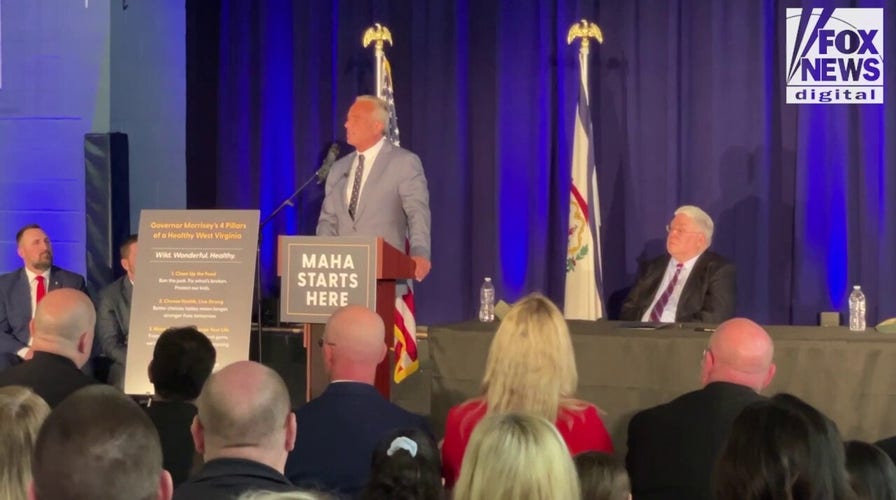
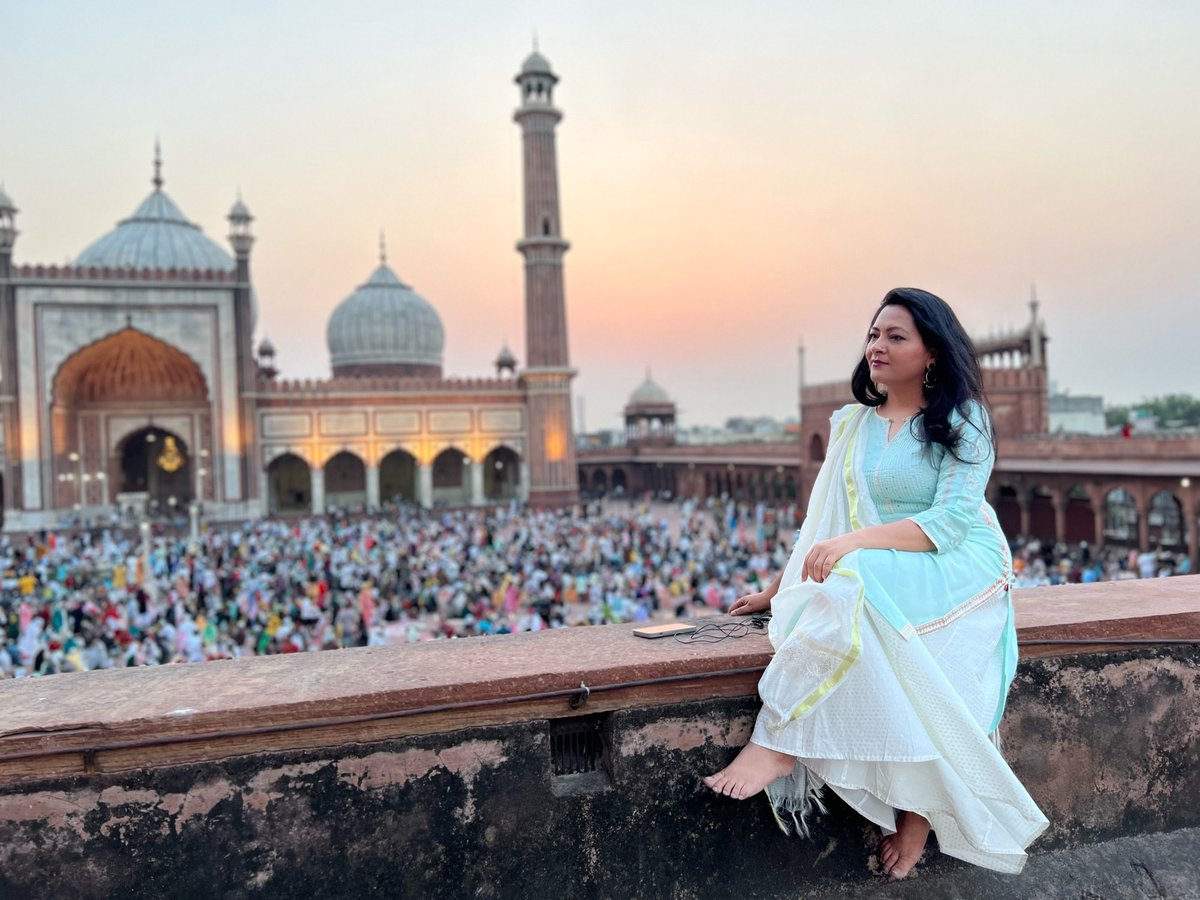
A recent episode of ‘The Buck Stops Here’, hosted by Padmaja Joshi, offered a textbook demonstration of this pathology when Arfa Khanum Sherwani, a ‘journalist’ with propaganda rag The Wire, was confronted with a question that disrupted the ideological comfort zone of the left-liberal narrative machine.
The debate itself was merely the setting. The real story was the exposure of how so-called liberals manipulate public opinion by applying moral standards selectively, depending entirely on the identity of the perpetrator and the political usefulness of the outrage.
Isolated incidents of vandalism against Christmas decorations were framed as evidence of “Christians under attack in Modi’s India.” This is familiar territory for India’s self-appointed conscience keepers. Fringe acts by anonymous miscreants are deliberately projected as ideologically sanctioned, inflated into sweeping civilisational indictments, and used to place the entire Hindu society in the dock of collective moral guilt, after which the usual suspects rush in to declare secularism dead.
Selective morality as a political strategy
The left-liberal ecosystem thrives on a rigid binary: Hindus are framed as structural oppressors, Muslims as perpetual victims. Every incident, regardless of scale or intent, is filtered through this lens. Facts are secondary; ideological alignment is everything.
Thus, vandalism of Christmas decorations by fringe elements, criminal acts that deserve unequivocal condemnation, is instantly elevated into proof of “majoritarian fascism” and “genocide.” No investigation is awaited. No proportionality is exercised. Collective Hindu guilt is declared as a moral axiom.
However, when confronted with Islamist terror, especially when it involves educated professionals and ideological motivation, the same ecosystem suddenly discovers nuance, procedural caution, and legal restraint.
This contradiction is not accidental. It is deliberate. And this is what happened when Arfa was asked, in no uncertain terms, to condemn the involvement of educated Muslim professionals in the recent November Delhi Red Fort attack.
Question on Delhi Red Fort attack that Arfa found “funny”
Lawyer and activist Subuhi Khan punctured this hypocrisy by asking a question that exposed the scam at the heart of left-liberal discourse. Referring to the involvement of Muslim doctors in the Delhi Red Fort attack, she asked whether Arfa Khanum Sherwani felt the same collective shame for this act of jihad-inspired violence that she demands from Hindus over vandalism.
Posing a piercing question, Khan pointed out that an educated doctor had executed a fidayeen (suicide) attack operation, calling it “martyrdom.” Khan’s query to Sherwani was simple yet devastating: Did her head “hang in shame” as an Indian Muslim for this act of terror by a community member, just as she expected the majority community to hang their heads in shame for the vandalism of Christmas decorations?
Sherwani’s response was not a condemnation. It was not a moment of introspection. It was a dismissal. “This is a really funny question,” she smirked, repeating the phrase multiple times.
Arfa – I'm ashamed as an Indian over Christmas vandalism
— BALA (@erbmjha) December 28, 2025
Subuhi – Did your head hang in shame as a Muslim when MBBS doctors carried out Red Fort bomb attack?
Arfa – I don't want to reply
The more she @khanumarfa speaks, the more she exposes 'Liberal Muslims'. pic.twitter.com/uflPze7xWV
This was not flippancy. It was ideological conditioning on display.
For the left-liberal mind, Islamist terror is not morally central; it is politically inconvenient. It disrupts the victimhood economy. It complicates the narrative fed to followers. Therefore, it must be minimised, proceduralised, or ridiculed.
‘Sub-judice’ for some, summary verdicts for others
When pressed, Sherwani retreated to the familiar refuge of “the matter is under investigation.” This sudden reverence for due process would be admirable if it were not so blatantly selective.
When Hindu activists are accused, the same voices dispense instant moral verdicts. Courts are irrelevant. Investigations are unnecessary. The crime is assumed, expanded, and collectivised.
But when jihad enters the conversation, moral judgment is indefinitely postponed.
This is not legal prudence. It is narrative management.
The left-liberal ecosystem does not oppose violence. It categorises it. Violence committed by the “wrong” side is ideological; violence committed by the “right” side is contextual, accidental, or funny.
Bangladesh: The mask fully off
The intellectual dishonesty becomes grotesque when viewed through Sherwani’s commentary on Bangladesh. When Islamist mobs ousted Sheikh Hasina, Sherwani celebrated the upheaval as a “democratic takeover.”
What followed was predictable: Hindu homes torched, temples desecrated, men lynched. The most horrific example was the recent lyching of Dipu Chandra Das, beaten to death by an Islamist mob over alleged blasphemy.
And yet, the self-styled champions of minority rights were silent.
No outrage. No international campaigns. No lectures on safety of minorities.
Because Hindus, in this ideological framework, do not qualify as victims. Their suffering disrupts the narrative, so it is erased.
Gaslighting the nation and attempting to manipulate public opinion
This is how the left-liberal ecosystem sustains itself and misleads its followers and public at large, not through overt falsehoods alone, but through a steady conditioning of moral instincts. Morality is no longer anchored in actions or consequences; it is redefined around identity. Violence is condemned or excused not based on its brutality, but on who commits it. The act itself becomes secondary to the political profile of the perpetrator.
Collective guilt is imposed selectively. Entire Hindu society is expected to internalise shame for the actions of fringe elements, while collective introspection is aggressively rejected when Islamist violence is discussed. In fact, dissenting voices are suppressed into silence by hurling accusations of ‘Islamophobia’, ‘rising religious hate’, so on and so forth at the mere call of asking Muslims to introspect within over the weaponisation of their faith by terrorists. The same people who sermonise about “societal responsibility” suddenly retreat into hyper-individualism the moment accountability threatens their preferred community.
Extremism, when inconvenient, is hidden behind procedural alibis. The phrase “sub-judice” is deployed not as a legal principle but as a rhetorical shield meant to shut down moral discussion, delay condemnation indefinitely, and exhaust public attention. Due process becomes a tool of deflection rather than justice.
Uncomfortable questions are not answered; they are ridiculed. By branding legitimate concerns about jihad, radicalisation, and terror as “funny,” the ecosystem trains its audience to laugh away dangers rather than confront them. This mockery is not accidental, it is pedagogical. It signals to followers what is permissible to question and what must remain taboo.
Above all, empathy is weaponised. Victimhood is rationed, distributed only where it produces ideological dividends. Suffering that reinforces the narrative is amplified and internationalised; suffering that disrupts it is minimised, contextualised, or erased altogether. Compassion, in this framework, is not human; it is transactional.
Followers are not encouraged to think. They are conditioned to respond. Outrage is pre-scripted, silence is strategic, and moral confusion is sold as sophistication.
The selective outrage that exposes the pattern
This selective morality is not episodic; it is consistent and Arfa Khanum Sherwani’s own record illustrates it starkly. While Sherwani passionately defends the slogan “I love Muhammad” as a benign expression of faith, she has remained conspicuously silent when Hindus were violently targeted for saying “I love Mahadev.”
In September 2025, in Bahiyal village of Gujarat’s Gandhinagar district, a Hindu youth’s social media post declaring devotion to Lord Shiva triggered a brutal, one-sided communal attack. His shop was vandalised and set ablaze, Hindu vehicles were torched, Garba celebrations were attacked, police personnel were assaulted, and a Hindu neighbourhood, comprising barely 80 households, was terrorised by a mob reportedly running into thousands. CCTV footage captured Muslim mobs pelting stones, wielding rods, and selectively destroying Hindu property, while eyewitness videos recorded a Hindu mother crying out in panic for her missing son.
Yet, there was no outrage from Sherwani. No sermons on minority safety. No lectures on constitutional values. Her silence was deafening.
This omission becomes even more telling when contrasted with her defence of Islamist slogans that have repeatedly been accompanied by riots, arson, stone pelting, attacks on police, and open “Sar tan se juda” threats across multiple states. While Sherwani insists these chants are merely expressions of faith, she has never publicly questioned why they are so frequently paired with violence or why posters invoking “war” in the name of religion echo the language once used by groups like PFI, which openly fantasised about annihilating Hindus. From mocking Hindu faith in the past to dismissing documented cases of Love Jihad and defending coverage that shielded Islamist perpetrators of forced conversions, Sherwani’s trajectory reveals not journalistic balance but ideological loyalty.
Taken together, these episodes expose a pattern that cannot be explained away as oversight. They reveal a worldview in which Hindu expression is treated as provocation, Islamist aggression as context, and accountability as optional so long as it threatens the preferred narrative.
Intellectual dishonesty is not a flaw but the foundation of the Islamo-leftist ecosystem
What unfolded on that debate was not a failure of articulation; it was a failure of honesty. The laughter at a question on terror was not arrogance; it was exposure.
Left-liberalism in India today does not operate on universal principles. It operates on exemptions. It does not seek justice; it seeks narrative dominance. And intellectual dishonesty is not a flaw in this system, it is its foundation.
When morality is conditional, credibility collapses. When terror is trivialised, journalism dies. And when followers are misled repeatedly, trust eventually runs out.
The mask did not slip accidentally. It slipped because truth has a way of forcing itself into the conversation, whether the ecosystem likes it or not.