Special Intensive Revision: Over 5.2 crore names purged across 12 states and 3 UTs; Uttar Pradesh leads deletions, followed by West Bengal and Tamil Nadu. Full details inside
The Election Commission of India (ECI) has recently completed the Special Intensive Revision (SIR) across 12 states and three Union Territories (UTs). What started with Bihar last year before Assembly Elections has resulted in a large scale clean up of electoral rolls. According to the data provided by the ECI and media reports, the exercise has identified ineligible electors including those who were deceased, shifted, duplicated, or unverifiable. Across these states and UTs, the total number of voters came down to approximately 45.8 crore from 51 crore. Source: ECI During the process, 7.2 crore names were removed during verification. Once the draft list was published by the commission, claims, objections and fresh registrations resulted in the addition of around 2 crore electors, leading to a net reduction of around 5.2 crore voters or 10% of the total number of electors before SIR. Source: ECI Here is the state and UT wise outcome of the revision. Uttar Pradesh Bharatiya Janata Party ruled Uttar Pradesh, the largest state in the country in terms of population, recorded the biggest change in absolute numbers. Before SIR, the state had 15.44 crore electors. However, after SIR, the final electoral roll stood at 13.39 crore voters, which is a reduction of around 2.05 crore names from the voter lists across the state. Data Source: ECI The draft roll in UP had seen higher provisional deletions. However, additions during the claims and objections stage resulted in a net decline of around 13.2%. UP also recorded the highest number of additions after verification. Tamil Nadu DMK led Tamil Nadu recorded the second largest reductions in electoral rolls. The number of voters declined from around 6.41 crore to 5.67 crore after completion of the SIR. A total of 97.37 lakh names were deleted following verification. The final electorate stood at 5.67 crore voters after additions and corrections. Data Source: ECI West Bengal Trinamool Congress ruled West Bengal saw around 90.93 lakh voters removed during the SIR. The number of voters came down from 7.66 crore before the SIR to around 6.75 crore after the exercise. Data Source: ECi Notably, judicial adjudication played a vital role in the final numbers. According to the data, over 60 lakh cases were examined. In the end, over 27 lakh names were removed following verification. Muslim dominant Murshidabad, a region which has made headlines in recent years for all the wrong reasons, recorded the highest deletions among districts. Throughout the process, current Chief Minister of the state, Mamata Banerjee, continued to make controversial statements against the ECI and also challenged the process in the Supreme Court. Gujarat BJP ruled Gujarat also witnessed a large number of voters being removed from the electoral lists following SIR. The number of voters in Gujarat came down to 4.40 crore from 5.08 crore. Around 13.39% names were removed from the voter lists across the state after the exercise, making it among the states that saw the largest proportional decline. Data Source: ECI Madhya Pradesh BJP ruled Madhya Pradesh recorded deletion of around 34.25 lakh voters after the Special Intensive Revision. The electorate declined from approximately 5.74 crore to about 5.39 crore voters. The drop showed a reduction of around 6% after claims, objections and the verification stage. Data Source: ECI Rajasthan BJP ruled Rajasthan reported removal of around 31.36 lakh voters during the Special Intensive Revision. The final electoral roll stood at approximately 5.15 crore voters after completion of the exercise. The decline represents about 5.7% of the electorate. Data Source: ECI Chhattisgarh BJP ruled Chhattisgarh recorded deletion of 24.99 lakh names after the Special Intensive Revision. The electorate declined from 2.12 crore voters to 1.87 crore in the final roll. This corresponds to a reduction of roughly 11.8%. Data Source: ECI Kerala LDF ruled Kerala saw a comparatively smaller reduction. A total of 8.97 lakh names were deleted from the electoral roll during the Special Intensive Revision. The final roll stood at around 2.71 crore voters after additions. The overall reduction was approximately 3.2%. Data Source: ECI Goa BJP ruled Goa saw a decline of 1.27 lakh voters following the exercise. The number before the SIR was 11.85 lakh, which came down to 10.57 lakh in the final roll, which makes around 10.76% reduction. Data Source: ECI Andaman and Nicobar Islands The Andaman and Nicobar Islands saw a reduction of 52,364 voters after the Special Intensive Revision. The electorate declined from 3,10,404 voters to 2,58,040 in the final roll. This represents one of the highest proportional reductions at around 16.6%. Data Source: ECI Puducherry In Puducherry, the number of voters came down from 10.21 lakh to 9.44 lakh, which makes around 7.5% reduction following the
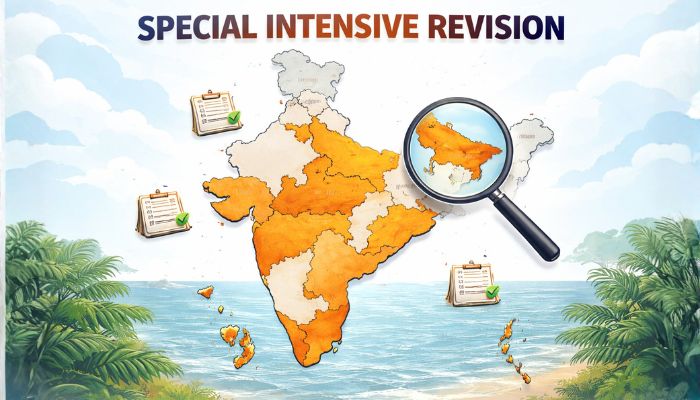
The Election Commission of India (ECI) has recently completed the Special Intensive Revision (SIR) across 12 states and three Union Territories (UTs). What started with Bihar last year before Assembly Elections has resulted in a large scale clean up of electoral rolls.
According to the data provided by the ECI and media reports, the exercise has identified ineligible electors including those who were deceased, shifted, duplicated, or unverifiable. Across these states and UTs, the total number of voters came down to approximately 45.8 crore from 51 crore.
Source: ECI
During the process, 7.2 crore names were removed during verification. Once the draft list was published by the commission, claims, objections and fresh registrations resulted in the addition of around 2 crore electors, leading to a net reduction of around 5.2 crore voters or 10% of the total number of electors before SIR.
Source: ECI
Here is the state and UT wise outcome of the revision.
Uttar Pradesh
Bharatiya Janata Party ruled Uttar Pradesh, the largest state in the country in terms of population, recorded the biggest change in absolute numbers. Before SIR, the state had 15.44 crore electors. However, after SIR, the final electoral roll stood at 13.39 crore voters, which is a reduction of around 2.05 crore names from the voter lists across the state.
Data Source: ECI
The draft roll in UP had seen higher provisional deletions. However, additions during the claims and objections stage resulted in a net decline of around 13.2%. UP also recorded the highest number of additions after verification.
Tamil Nadu
DMK led Tamil Nadu recorded the second largest reductions in electoral rolls. The number of voters declined from around 6.41 crore to 5.67 crore after completion of the SIR. A total of 97.37 lakh names were deleted following verification. The final electorate stood at 5.67 crore voters after additions and corrections.
Data Source: ECI
West Bengal
Trinamool Congress ruled West Bengal saw around 90.93 lakh voters removed during the SIR. The number of voters came down from 7.66 crore before the SIR to around 6.75 crore after the exercise.
Data Source: ECi
Notably, judicial adjudication played a vital role in the final numbers. According to the data, over 60 lakh cases were examined. In the end, over 27 lakh names were removed following verification. Muslim dominant Murshidabad, a region which has made headlines in recent years for all the wrong reasons, recorded the highest deletions among districts.
Throughout the process, current Chief Minister of the state, Mamata Banerjee, continued to make controversial statements against the ECI and also challenged the process in the Supreme Court.
Gujarat
BJP ruled Gujarat also witnessed a large number of voters being removed from the electoral lists following SIR. The number of voters in Gujarat came down to 4.40 crore from 5.08 crore. Around 13.39% names were removed from the voter lists across the state after the exercise, making it among the states that saw the largest proportional decline.
Data Source: ECI
Madhya Pradesh
BJP ruled Madhya Pradesh recorded deletion of around 34.25 lakh voters after the Special Intensive Revision. The electorate declined from approximately 5.74 crore to about 5.39 crore voters. The drop showed a reduction of around 6% after claims, objections and the verification stage.
Data Source: ECI
Rajasthan
BJP ruled Rajasthan reported removal of around 31.36 lakh voters during the Special Intensive Revision. The final electoral roll stood at approximately 5.15 crore voters after completion of the exercise. The decline represents about 5.7% of the electorate.
Data Source: ECI
Chhattisgarh
BJP ruled Chhattisgarh recorded deletion of 24.99 lakh names after the Special Intensive Revision. The electorate declined from 2.12 crore voters to 1.87 crore in the final roll. This corresponds to a reduction of roughly 11.8%.
Data Source: ECI
Kerala
LDF ruled Kerala saw a comparatively smaller reduction. A total of 8.97 lakh names were deleted from the electoral roll during the Special Intensive Revision. The final roll stood at around 2.71 crore voters after additions. The overall reduction was approximately 3.2%.
Data Source: ECI
Goa
BJP ruled Goa saw a decline of 1.27 lakh voters following the exercise. The number before the SIR was 11.85 lakh, which came down to 10.57 lakh in the final roll, which makes around 10.76% reduction.
Data Source: ECI
Andaman and Nicobar Islands
The Andaman and Nicobar Islands saw a reduction of 52,364 voters after the Special Intensive Revision. The electorate declined from 3,10,404 voters to 2,58,040 in the final roll. This represents one of the highest proportional reductions at around 16.6%.
Data Source: ECI
Puducherry
In Puducherry, the number of voters came down from 10.21 lakh to 9.44 lakh, which makes around 7.5% reduction following the SIR.
Data Source: ECI
Lakshadweep
Lakshadweep recorded the smallest change in electoral rolls. The electorate declined from 57,813 voters to 57,607 after the Special Intensive Revision. This represents a reduction of just 206 voters, or around 0.36%.
Data Source: ECI
Comparison across states and UTs
The proportional reduction varied significantly across regions. The highest percentage decline was recorded in the Andaman and Nicobar Islands at around 16.6%, followed by Gujarat with around 13.39%, while UP recorded a reduction of around 13.2%. Chhattisgarh saw around 11.8% decline, followed by West Bengal at around 11%, Tamil Nadu at around 10.6%, and Goa at around 10.76%.
Source: ECI
Mid range reductions were observed in Madhya Pradesh at around 6 per cent and Rajasthan at approximately 5.7%. Puducherry recorded a decline of about 7.5%. Kerala saw a smaller reduction of roughly 3.2%.
Lakshadweep recorded the lowest reduction at around 0.36%.
Conclusion
The Special Intensive Revision (SIR) resulted in one of the most extensive updates of electoral rolls across multiple states and UTs. The exercise is yet to commence in several states that will see Assembly elections in coming years including Punjab, which is scheduled for state polls in the first quarter of 2027.
The exercise removed entries due to several reasons including death of the electors, shifted residents, duplicate enrolments and unverifiable electors. However, those voters who saw deletion of their names from the list had a chance to challenge it. Fresh registrations were also done for voters who attained the age of 18 years.
The variation in percentage reductions across states indicates differences in migration patterns, urbanisation levels, verification outcomes and the scale of legacy entries in electoral rolls. With updated rolls, the exercise is expected to reduce duplication, minimise bogus voting risks and improve accuracy of voter databases. The cleaned electoral rolls will also assist in better polling station planning, more accurate turnout assessment and smoother conduct of elections.