US-Trump flip-flop on Strait of Hormuz blockade and Iran war, how it endangers the region and worsens the energy crisis for Asia
The expected failure of the much-hyped ‘Islamabad Talks’ between the warring nations of Iran and the US has resulted in the exacerbation of the ongoing global energy crisis. On 12th April, US President Donald Trump announced an immediate ‘blockade of the Strait of Hormuz’ starting 13th April, stating that the US Navy will immediately move to enforce the blockade. The US Central Command soon clarified that the blockade is not for all ships in the Persian Gulf, nor is it exactly a blockade of the Strait of Hormuz; rather, it will block only those ships that are entering or leaving Iranian ports and coastal areas. The clarification was more of a U-turn from Trump’s complete blockade of the Strait of Hormuz announcement, given that it would have caused a full shutdown of global shipping. Just a day after the ceasefire announcement, Trump had floated the idea of a joint Iran-US toll framework in the Strait of Hormuz. However, after the Iranian and American delegations returned from Pakistan without a deal, Trump remembered that Iran is levying an “illegal toll” on vessels passing through the Strait of Hormuz. Since the possibility of a joint Iran-US venture collapsed, Trump took the task upon himself to end the Iranian ‘extortion’. “The US Navy would begin blockading all ships attempting to enter or leave the Strait of Hormuz. Vessels that had paid an “illegal toll” to Iran in international waters would be interdicted. American forces would also destroy Iranian mines in the strait, and any Iranian personnel firing on US or peaceful vessels will be BLOWN TO HELL!”, Trump announced on Truth Social. The US claim of blockading the Strait of Hormuz and the presence of American forces in the region The US blockade in response to the Iranian blockade of the Strait of Hormuz was announced to start from 13 April. It essentially applies to all vessels of any nationality entering or exiting Iranian ports and coastal areas. Non-Iranian ports like those of Saudi Arabia, United Arab Emirates (UAE), Iraq, Kuwait, Qatar, etc., remain fully open and unaffected by the US naval blockade. This means that ships can transit the Strait of Hormuz for those destinations. In addition, the US naval forces will interdict ships in international waters that have paid an “illegal toll” to Iran, as per Trump’s announcement. The US authorities have said that commercial sailors will get formal notices with details. While the US blockade on the Strait of Hormuz, which is already blockaded by the Iranian forces, is not a complete closure of the passage, which carries around 20% of the global seaborne oil and LNG, the counter-blockade is going to have global implications. The American rationale behind the counterblockade is putting pressure on Iran’s oil exports and revenue. During the war, Iran exported around 1.84 million barrels of crude a day in March this year, which is about 100,000 barrels a day extra, compared to the last three months, a Kpler analysis shows. An increase in Iranian output before the war began on 28th February has resulted in near-record levels of Iranian oil loaded on ships, with over 180 million barrels floating so far in April. Thus, blocking Iranian oil exports would essentially help crippling the already economically distraught Iran’s revenues. However, the US CENTCOM clarification indicates that outside Trump’s Truth Social echo chamber, the American leadership understands that a full blockade, even if somehow physically achieved, would cause a global disruption. The IRGC, meanwhile, has dubbed US naval vessels near the Strait of Hormuz a ceasefire violation and vowed a strong response. Before delving into the practicality of a US naval blockade of the Strait of Hormuz, it is pertinent to know about the current American military presence in the CENTCOM area, which comprises the Arabian Sea, the Persian Gulf, and the Gulf of Oman. Infographic via X @/ShivAroor In recent weeks, the Pentagon has been rapidly fortifying its forward presence in the Gulf states, Kuwait, Qatar, Bahrain, UAE, and Saudi Arabia, as staging grounds and logistics hubs for contingencies. As per the US Central Command, the USS Tripoli, carrying 3,500 sailors and Marines from the 31st Marine Expeditionary Unit, had arrived in recent weeks. More than 5,000 United States troops, including 2,500 Marines, have made their way to West Asia, waiting for a go-ahead from the American Commander-in-Chief to launch a ground invasion against Iran. In the last week of March 2026, around 2,000 to 4,000 paratroopers from the elite 82nd Airborne Division were being flown in as an “Immediate Response Force” prepared for quick insertion operations, in addition to over 4,000 Marines and sailors onboard USS Tripoli and USS Boxer (2,500 Marines and sailors). USS Abraham Lincoln Carrier Strike Group (CSG) is operating in the Arabian Sea. USS George H.W. Bush has also been reportedly repositioned. It is notable that eac
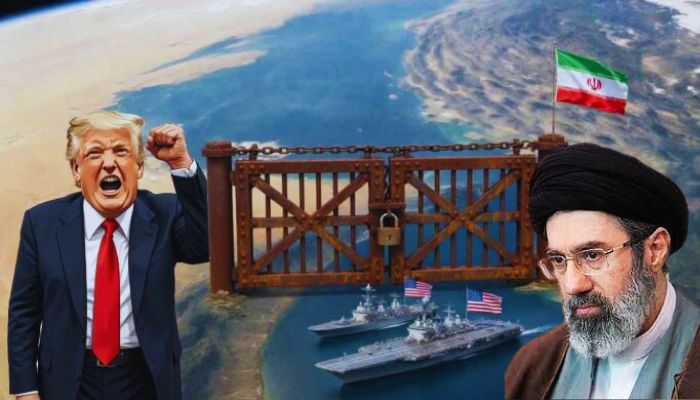
The expected failure of the much-hyped ‘Islamabad Talks’ between the warring nations of Iran and the US has resulted in the exacerbation of the ongoing global energy crisis. On 12th April, US President Donald Trump announced an immediate ‘blockade of the Strait of Hormuz’ starting 13th April, stating that the US Navy will immediately move to enforce the blockade.
The US Central Command soon clarified that the blockade is not for all ships in the Persian Gulf, nor is it exactly a blockade of the Strait of Hormuz; rather, it will block only those ships that are entering or leaving Iranian ports and coastal areas. The clarification was more of a U-turn from Trump’s complete blockade of the Strait of Hormuz announcement, given that it would have caused a full shutdown of global shipping.
Just a day after the ceasefire announcement, Trump had floated the idea of a joint Iran-US toll framework in the Strait of Hormuz. However, after the Iranian and American delegations returned from Pakistan without a deal, Trump remembered that Iran is levying an “illegal toll” on vessels passing through the Strait of Hormuz. Since the possibility of a joint Iran-US venture collapsed, Trump took the task upon himself to end the Iranian ‘extortion’.
“The US Navy would begin blockading all ships attempting to enter or leave the Strait of Hormuz. Vessels that had paid an “illegal toll” to Iran in international waters would be interdicted. American forces would also destroy Iranian mines in the strait, and any Iranian personnel firing on US or peaceful vessels will be BLOWN TO HELL!”, Trump announced on Truth Social.
The US claim of blockading the Strait of Hormuz and the presence of American forces in the region
The US blockade in response to the Iranian blockade of the Strait of Hormuz was announced to start from 13 April. It essentially applies to all vessels of any nationality entering or exiting Iranian ports and coastal areas.
Non-Iranian ports like those of Saudi Arabia, United Arab Emirates (UAE), Iraq, Kuwait, Qatar, etc., remain fully open and unaffected by the US naval blockade. This means that ships can transit the Strait of Hormuz for those destinations.
In addition, the US naval forces will interdict ships in international waters that have paid an “illegal toll” to Iran, as per Trump’s announcement. The US authorities have said that commercial sailors will get formal notices with details.
While the US blockade on the Strait of Hormuz, which is already blockaded by the Iranian forces, is not a complete closure of the passage, which carries around 20% of the global seaborne oil and LNG, the counter-blockade is going to have global implications.
The American rationale behind the counterblockade is putting pressure on Iran’s oil exports and revenue. During the war, Iran exported around 1.84 million barrels of crude a day in March this year, which is about 100,000 barrels a day extra, compared to the last three months, a Kpler analysis shows.
An increase in Iranian output before the war began on 28th February has resulted in near-record levels of Iranian oil loaded on ships, with over 180 million barrels floating so far in April.
Thus, blocking Iranian oil exports would essentially help crippling the already economically distraught Iran’s revenues.
However, the US CENTCOM clarification indicates that outside Trump’s Truth Social echo chamber, the American leadership understands that a full blockade, even if somehow physically achieved, would cause a global disruption. The IRGC, meanwhile, has dubbed US naval vessels near the Strait of Hormuz a ceasefire violation and vowed a strong response.
Before delving into the practicality of a US naval blockade of the Strait of Hormuz, it is pertinent to know about the current American military presence in the CENTCOM area, which comprises the Arabian Sea, the Persian Gulf, and the Gulf of Oman.
Infographic via X @/ShivAroor
In recent weeks, the Pentagon has been rapidly fortifying its forward presence in the Gulf states, Kuwait, Qatar, Bahrain, UAE, and Saudi Arabia, as staging grounds and logistics hubs for contingencies. As per the US Central Command, the USS Tripoli, carrying 3,500 sailors and Marines from the 31st Marine Expeditionary Unit, had arrived in recent weeks. More than 5,000 United States troops, including 2,500 Marines, have made their way to West Asia, waiting for a go-ahead from the American Commander-in-Chief to launch a ground invasion against Iran.
In the last week of March 2026, around 2,000 to 4,000 paratroopers from the elite 82nd Airborne Division were being flown in as an “Immediate Response Force” prepared for quick insertion operations, in addition to over 4,000 Marines and sailors onboard USS Tripoli and USS Boxer (2,500 Marines and sailors). USS Abraham Lincoln Carrier Strike Group (CSG) is operating in the Arabian Sea. USS George H.W. Bush has also been reportedly repositioned. It is notable that each CSG contains at least 1 carrier, 4 to 6 guided-missile destroyers/cruisers, submarines, support ships and 60 to 90 aircraft.
Besides the multiple CSGs, the US forces are reported to have deployed surface combatants in the region. Guided-missile destroyers like USS Michael Murphy and USS Frank E Peterson recently transited the Hormuz Strait. In addition, littoral combat ships (LCS) are present in Bahrain with mine-countermeasure packages, alongside other warships.
If we look at the overall posture, this marks one of the largest US naval concentrations in West Asia in recent decades, comparable only to the disastrous American campaign during the Iraq War. Headquartered in Bahrain, the US 5th Fleet routinely maintains over 10 to 10 warships alongside aviation and special operations assets. Moreover, amphibious ready groups (ARGs) with Marines are also reported to be heading to the theatre.
While time alone will tell if this force level will be sufficient for sustained interdiction patrols, surveillance, rapid response and boarding operations, reports suggest that the blockade enforcement will involve LCS and destroyers near Iranian port approaches backed by carrier air wings for drones, intelligence and overwatch.
Meanwhile, the US is also reported to be in talks with Indonesia for seeking US military access over Indonesian airspace. A Reuters report says that the Indonesian President Prabowo Subianto have even approved the proposal seeking “blanket overnight access” for American military aircraft .
President Trump has told Fox News that NATO, which has remained reluctant so far to enter the war to aid US forces in clearing the Hormuz blockade by Iran, have offered to help “clean out” the Strait. In addition, Trump claimed that the UK, a NATO member, which recently announced that it will not be dragged into the Iran war directly, would deploy minesweepers. However, UK PM Keir Starmer told the BBC, “We’re not supporting the blockade.”:
Speaking about why the US is pivoting towards blockading the very Strait it wanted to reopen, Trump said, “we’re not going to let Iran make money on selling oil to people that they like and not people that they don’t like.”
The enforcement of the US blockade will involve standard practices like warnings through radio, visual signals, boarding teams or disabling fire if the vessels ignore warnings. The interdiction will be a selective and targeted and not necessarily involve the erection of a literal wall of mines across the entire 21-mile-wide Strait of Hormuz.
The war has been targeting critical energy infra in the region
It should, however, not be forgotten that the Iranian forces will not sit back and let the Americans dominate the theatre. The IRGC employs asymmetric tactics like fast boats, cheap drones, mines and anti-ship missiles, etc. Their countermeasure could involve harassing the patrols, using proxies or laying drifting mines. Iran’s mines strategy has proven to be a success in disrupting shipping earlier. There is a possibility that the war Trump recently said would end in a week or two could get prolonged, stretching up to weeks and even months if Iran tests the blockade, pivoting to other escalation points for proxy attacks.
Strike impact map: Assets attacked A visual breakdown of key sites hit across the region-spanning energy infrastructure, military assets, and critical #maritime routes. As tensions escalate, the concentration of strikes highlights growing risks to global supply chains and… pic.twitter.com/5o50Q5xpUw— Kpler (@Kpler) April 13, 2026
Iran’s unified armed forces command has already declared an American counterblockade of Iranian ports “illegal and amounts to piracy”.
Iran’s Khatam al-Anbiya Central Headquarters spokesperson reportedly said that either the ports in West Asia are secure for everyone or for no one.
“The security of ports in the Persian Gulf and the Sea of Oman is either for everyone or for no one. No port in the Persian Gulf and the Sea of Oman will be safe,” the spokesperson said.
Iran has made it clear that it will “resolutely implement a permanent mechanism to control the Strait of Hormuz” during and after the war (whenever it ends).
“Enemy-affiliated vessels do not and will not have the right to pass through the Strait of Hormuz, while other vessels will continue to be allowed passage through the strait subject to compliance with Islamic Republic of Iran armed forces regulations,” the Iranian authorities said.
Notably, Iranian media reports that the existing authorities is planning to impose a $2m toll for each ship transiting the Strait of Hormuz. Iran has reportedly collected at least two tolls for ships in Chinese Yuan, in an apparent attempt to not only make money during war but also weaken the US dollar. China has already transitioned to Renminbi or Yuan-based payments for Iranian energy, with over 80-90% of Iran’s oil exports now heading to China settled in Yuan.
The revenues generated would obviously be utilised for rebuilding military and civilian infrastructure destroyed by the joint US-Israel strikes. Oman, however, has already rejected Iran’s idea.
It is apparently, for this reason, Trump, who was more than eager to get the Hormuz Strait reopened, has changed the approach and ordered its blockade. It seems that the US is not blockading the Strait of Hormuz and targeting Iranian ports as a quick fix and a pressure tactic to bend Iran to its terms, but also squeeze Chinese economy.
The Iranian ‘alternate’ route, Source: Al Jazeera
The IRGC on the other hand, has released a navigation map indicating safer routes for vessels planning on transiting the Strait of Hormuz, highlighting “the likelihood of the presence of various types of anti-ship mines in the main traffic zone”.
Global energy crisis and supply disruptions
The global energy markets are already strained by the Iran war. The US naval blockade adds fresh pressure, even if the move is selective. The Strait of Hormuz witnesses around 20 million barrels per day of oil and LNG, there will be immediate price hikes and supply chain chaos for Asia-heavy importers, although countries like India, that do not pay any ‘toll’ to Iran due to the friendship between the two nations, may not essentially be in a tough spot. The US blockade could also result in higher energy costs rippling into global inflation, particularly for fuel and petrochemicals.
However, if Iran decides to cause a disruption to dilute the American blockade, India could be at risk. India significantly relies on Gulf suppliers for its energy requirements, and is now importing even Iranian oil after a 7-year hiatus. Thin buffers could cause shortages and diesel, petrol, and LPG price hikes if the war escalates. This could have happened in March, when amidst the raging, however, the India-Iran friendship, as well as the strategy of ramping up of Russian oil imports as a hedge, paid off well.
Beyond the bravado and posturing, even the US is not immune from the crisis that will potentially escalate the American blockade of the Strait of Hormuz.
Mohammad Bagher Ghalibaf, the Speaker of the Iranian Parliament who participated in the Islamabad talks, has posted a mocking tweet, telling Trump that fuel prices are going to skyrocket and that Trump will feel the pressure.
Sharing a Google Maps screenshot showing gas stations around White House, Ghalibaf posted a mathematical expression, insinuating how the ‘Blockade of Strait of Hormuz’ will affect the gas prices in the USA with a compounding function, rapidly escalating so that people will be nostalgic for $5 per gallon.
The failed Islamabad talks
The failure of the Iran-US negotiation talks under the ‘drafted’ mediation of Pakistan has made the ceasefire agreement fragile. Iran’s reluctance to give up its nuclear ambitions and demand for cessation of Israel attacks on Lebanon causes an impasse in the negotiations with the US and Israel, maintaining that the Lebanon conflict was never a part of the ceasefire. Now, Israel and Iran-backed Hezbollah are fighting each other in Lebanon, making the collapse of the fragile ceasefire nearly inevitable.
On Monday, European stock markets opened lower after Trump’s Hormuz blockade announcement. In the United Kingdom, the FTSE 100 index slumped by 0.38%. France’s Cac 40 dropped 0.95%, while Germany’s Dax index was down 1%. Meanwhile, Brent crude prices rose by more than 7% to $102 a barrel.
In conclusion, Donald Trump has played a high-stakes game. America has unleashed a calibrated design to squeeze Iran economically without triggering an immediate absolute oil shock. The tactic might work short-term to cut Tehran’s revenues, however, any miscalculation and Iranian retaliation could birth prolonged regional instability wherein a narrow and congested waterway will be the theatre of war and crisis mired by the presence of armed and recalcitrant actors.
Trump has already begun marketing American oil as a better and ‘sweet’ alternative, with claims that vessels are lining up to have their fill. The US President’s failure to secure a joint Iran-US toll deal and the advertising of American oil while blockading the Strait of Hormuz, reinforces the speculations that for Trump, the Iran war is not simply about eliminating Iran’s nuclear dreams but also seizing control of the Iranian oil. However, the nuclear ambition of Iran, Israel’s fear of a threat to existence, and America’s oil and geopolitical interests are essentially pushing the whole world toward a supply chain crisis for the foreseeable future.