Washington Post’s India chief begs Jeff Bezos as layoffs loom, exposing how ‘bashing India’ is the price of job security at The Post
There is something uniquely revealing about senior journalists publicly pleading with their owner to spare their jobs. It strips away the carefully cultivated myth of editorial aloofness and exposes the power hierarchy that actually governs legacy media. Pranshu Verma, the New Delhi Bureau Chief of The Washington Post, did precisely that, taking to X to appeal directly to Jeff Bezos as reports of massive retrenchment at the newspaper rattled its foreign desks. .@JeffBezos, since I came to India early last summer to be the The Post's India bureau chief, one thing was abundantly clear: in India's media ecosystem very few outlets can do accountability reporting without fear of government censure. The Post is one of them. Since August, we…— Pranshu Verma (@pranshuverma_) January 27, 2026 Verma’s tweet was not merely a request for professional continuity; it was a résumé, a loyalty affidavit, and an ideological confession rolled into one. Addressing Bezos by name, Verma argued that The Post is among the very few outlets in India capable of “accountability reporting without fear of government censure.” In one stroke, he positioned himself as a brave dissenter in an allegedly authoritarian media ecosystem, and the paper as a lone moral crusader standing against a repressive Indian state. This has long been a stance taken by hostile foreign publications, which often drum up such imaginary grandstanding to continue soliciting support from their Western patrons. What followed was even more telling. Verma proudly listed the bureau’s greatest hits: stories on Indian billionaires being “treated far better than others,” insinuations of crony capitalism under the Modi government; pieces on Indian conglomerates allegedly “fueling Russia’s war in Ukraine”; and the framing of India’s efforts to curb illegal immigration as a “draconian deportation campaign of Muslims to Bangladesh.” Each example served a purpose, not to inform Bezos about journalistic merit, but to signal ideological alignment with the worldview that has increasingly defined The Washington Post’s foreign reporting. In other words, Verma made it abundantly clear what it takes to wor and survive at The Post. To be an India correspondent there is not merely to report on India, but to indict it. To view the Indian state not as a sovereign democracy grappling with complex challenges, but as a suspect entity whose actions must be cast through the prism of oppression, majoritarianism, and moral delinquency. Illegal Rohingya immigration, involving forged documents, border infiltration, and in several cases criminal charges, is not treated as a national security issue, but repackaged as a communal persecution campaign. Billionaires are not business actors in a liberalising economy, but shorthand for regime corruption. Diplomatic friction is not geopolitics, but a “breakdown” caused by India’s presumed moral failings. This is why Verma’s plea reads less like a defence of journalism and more like a performance for power. The subtext was unmistakable: Look at the damage we do. Look at the narratives we push. Surely this is worth saving. That such a performance was necessary at all speaks volumes about the crisis engulfing The Washington Post. According to reports by former Post media reporter Paul Farhi, the newspaper is preparing for deep staffing cuts that could eliminate up to 300 jobs, with foreign and sports desks bearing the brunt. Editors have reportedly warned that as much as half the newsroom could face cuts. This follows the elimination of around 240 jobs in 2023, despite Bezos’s initial post-acquisition expansion and investment. The reasons are neither mysterious nor ideological. Advertising revenues have collapsed, subscriptions have stagnated, and the moral grandstanding that once passed for global journalism no longer pays the bills. Readers are tuning out, not because accountability reporting is unwelcome, but because relentless narrative activism masquerading as reportage has eroded trust. Verma’s public supplication to Bezos fits into a broader and rather undignified trend: bureau chiefs and senior editors appealing to the benevolence of a billionaire owner while simultaneously claiming independence from power. It is a contradiction that cannot be wished away with hashtags like #SaveThePost. In the end, the irony is sharp. A journalist who accuses the Indian government of suppressing press freedom finds his own professional fate resting entirely on the discretion of a single American tycoon. It is deliciously ironic that Verma was flaunting his Bureau’s prejudiced reporting on India’s business conglomerates while supplicating an American businessman to keep his job intact. The problem, however, is not Bezos’s reluctance to keep funding loss-making desks. It is the inability of outlets like The Washington Post to reckon with the fact that contempt-driven, ideologically rigid reporting is no longer a sustainabl
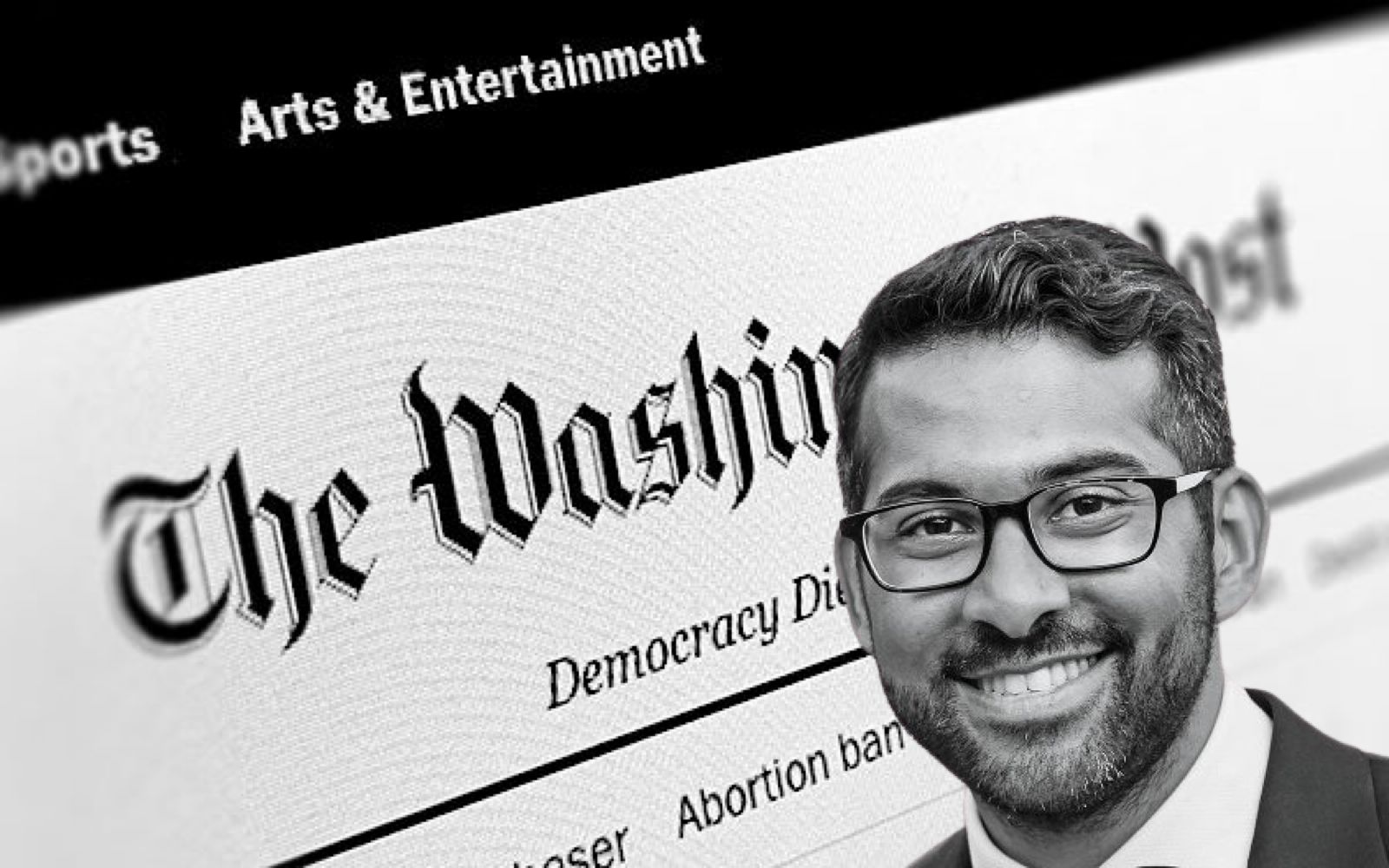

There is something uniquely revealing about senior journalists publicly pleading with their owner to spare their jobs. It strips away the carefully cultivated myth of editorial aloofness and exposes the power hierarchy that actually governs legacy media.
Pranshu Verma, the New Delhi Bureau Chief of The Washington Post, did precisely that, taking to X to appeal directly to Jeff Bezos as reports of massive retrenchment at the newspaper rattled its foreign desks.
.@JeffBezos, since I came to India early last summer to be the The Post's India bureau chief, one thing was abundantly clear: in India's media ecosystem very few outlets can do accountability reporting without fear of government censure. The Post is one of them. Since August, we…
— Pranshu Verma (@pranshuverma_) January 27, 2026
Verma’s tweet was not merely a request for professional continuity; it was a résumé, a loyalty affidavit, and an ideological confession rolled into one. Addressing Bezos by name, Verma argued that The Post is among the very few outlets in India capable of “accountability reporting without fear of government censure.”
In one stroke, he positioned himself as a brave dissenter in an allegedly authoritarian media ecosystem, and the paper as a lone moral crusader standing against a repressive Indian state. This has long been a stance taken by hostile foreign publications, which often drum up such imaginary grandstanding to continue soliciting support from their Western patrons.
What followed was even more telling. Verma proudly listed the bureau’s greatest hits: stories on Indian billionaires being “treated far better than others,” insinuations of crony capitalism under the Modi government; pieces on Indian conglomerates allegedly “fueling Russia’s war in Ukraine”; and the framing of India’s efforts to curb illegal immigration as a “draconian deportation campaign of Muslims to Bangladesh.” Each example served a purpose, not to inform Bezos about journalistic merit, but to signal ideological alignment with the worldview that has increasingly defined The Washington Post’s foreign reporting.
In other words, Verma made it abundantly clear what it takes to wor and survive at The Post. To be an India correspondent there is not merely to report on India, but to indict it. To view the Indian state not as a sovereign democracy grappling with complex challenges, but as a suspect entity whose actions must be cast through the prism of oppression, majoritarianism, and moral delinquency.
Illegal Rohingya immigration, involving forged documents, border infiltration, and in several cases criminal charges, is not treated as a national security issue, but repackaged as a communal persecution campaign. Billionaires are not business actors in a liberalising economy, but shorthand for regime corruption. Diplomatic friction is not geopolitics, but a “breakdown” caused by India’s presumed moral failings.
This is why Verma’s plea reads less like a defence of journalism and more like a performance for power. The subtext was unmistakable: Look at the damage we do. Look at the narratives we push. Surely this is worth saving.
That such a performance was necessary at all speaks volumes about the crisis engulfing The Washington Post. According to reports by former Post media reporter Paul Farhi, the newspaper is preparing for deep staffing cuts that could eliminate up to 300 jobs, with foreign and sports desks bearing the brunt. Editors have reportedly warned that as much as half the newsroom could face cuts. This follows the elimination of around 240 jobs in 2023, despite Bezos’s initial post-acquisition expansion and investment.
The reasons are neither mysterious nor ideological. Advertising revenues have collapsed, subscriptions have stagnated, and the moral grandstanding that once passed for global journalism no longer pays the bills. Readers are tuning out, not because accountability reporting is unwelcome, but because relentless narrative activism masquerading as reportage has eroded trust.
Verma’s public supplication to Bezos fits into a broader and rather undignified trend: bureau chiefs and senior editors appealing to the benevolence of a billionaire owner while simultaneously claiming independence from power. It is a contradiction that cannot be wished away with hashtags like #SaveThePost.
In the end, the irony is sharp. A journalist who accuses the Indian government of suppressing press freedom finds his own professional fate resting entirely on the discretion of a single American tycoon. It is deliciously ironic that Verma was flaunting his Bureau’s prejudiced reporting on India’s business conglomerates while supplicating an American businessman to keep his job intact.
The problem, however, is not Bezos’s reluctance to keep funding loss-making desks. It is the inability of outlets like The Washington Post to reckon with the fact that contempt-driven, ideologically rigid reporting is no longer a sustainable business model. It is precisely this ideological rigidity that has generated mounting headwinds for The Washington Post globally, pushing the organisation into a position where it is now forced to contemplate large-scale layoffs to stay afloat.
Verma’s tweet was meant to save his job. Instead, it inadvertently laid bare the mindset that has helped push one of America’s most storied newspapers to the brink. And this is why most Indian outlets trying to mimic The Post’s ideological moorings, such as Newslaundry, The Wire, etc., find themselves perpetually soliciting donations and subscriptions for the same reason. Whether it is an American legacy paper or its Indian ideological imitators, audiences have begun to withdraw support from media organisations that dress up advocacy and propaganda as “independent” and “neutral” journalism.