Why is PoK on the boil? All you need to know about the protests, Pakistan Army firing and election violence
The first phase of the assembly elections in Pakistan-occupied Jammu and Kashmir (PoJK) turned violent after the Pakistani army opened fire on protesters, leaving at least 19 people dead and more than 30 seriously injured. The firing took place at different locations, including Rawalkot during polling, as thousands of people protested against the election process and the policies of the Pakistani government. According to local media reports, the identities of 16 of those killed have been confirmed, while one body could not be identified because identity documents were not available. Among those killed was Usman Nazir, the brother of Jammu and Kashmir Joint Awami Action Committee (JAAC) leader Sardar Umar Nazir. The violence has further increased tensions in the region, where protests have already been continuing for weeks. Videos shared on social media showed panic among voters, heavy deployment of security forces, and people running for safety after firing began. Another video showed armed men taking away ballot boxes from a polling station, adding to concerns over the credibility of the election process. Election day marked by violence The violence broke out during voting for the first phase of the elections to the so-called legislative assembly in Pakistan-occupied Jammu and Kashmir. Polling was held in the Mirpur Division, but instead of a peaceful election, several areas witnessed clashes, firing, and reports of irregularities. One of the major flashpoints was the Ramloha polling station in the Samahni constituency, where residents gathered after reports spread that polling staff had been confined inside the polling station. Soon after, clashes broke out between protesters and security personnel. Gunfire was reported from the area, leaving many people dead and injured. At several polling booths, people also reported bogus voting and voting under the threat of weapons. A widely circulated video from the Samahni area showed armed individuals carrying away ballot boxes from a polling station. Election officials said such incidents would be examined, and a decision on re-polling would be taken if required. Violence was also reported from Kotli’s Nakayal area, where clashes between rival political supporters claimed the life of Pakistan People’s Party (PPP) worker Mukhtar Younus, while two others were injured. The PPP blamed supporters of the ruling Pakistan Muslim League-Nawaz (PML-N) for the attack, while the ruling party rejected the accusation. Both parties accused each other of manipulating the election in several constituencies. What triggered the massive protests? The unrest did not begin on polling day. The protests had been building for nearly two months before the elections. The movement has been led by the Jammu and Kashmir Joint Awami Action Committee (JAAC), which has been protesting against the Pakistani government’s policies, governance issues, rising inflation, electricity charges, and what it describes as an unfair electoral system. Before a major demonstration planned for 5th June, the Pakistani government banned the JAAC and arrested several of its leaders. Some leaders went underground to avoid arrest, while others continued leading demonstrations from protest sites, especially in Rawalakot, the headquarters of the Poonch Division. Instead of calming the situation, the ban further intensified public anger. Demonstrations spread across different towns, with protesters organising sit-ins, blocking roads, and demanding political reforms. Security forces repeatedly confronted protesters, leading to violent clashes in which dozens of people, including security personnel, lost their lives over the past several weeks. During the election period, the JAAC also organised the “Muzaffarabad Chalo” march, calling on people to march towards Muzaffarabad after talks with the government failed. Reports from Rawalakot said Pakistani forces opened fire on protesters participating in the march, resulting in heavy casualties. The dispute over the 12 refugee seats At the centre of the movement is a long-running dispute over 12 refugee seats in the legislative assembly. The legislative assembly of Pakistan-occupied Jammu and Kashmir has 53 seats. Out of these, 45 seats are filled through direct elections, while eight seats are reserved for women, technocrats and religious representatives. Among the 45 directly elected seats, 12 are reserved for Kashmiri refugees who migrated to Pakistan from Indian-administered Jammu and Kashmir. The JAAC argues that people living in different parts of Pakistan should not have the power to decide who governs PoJK. According to the organisation, these reserved refugee seats reduce the influence of local voters and give an advantage to national political parties, especially the Pakistan Muslim League-Nawaz (PML-N) and the Pakistan Peoples Party (PPP). The Pakistani government and the courts, however, maintain that these
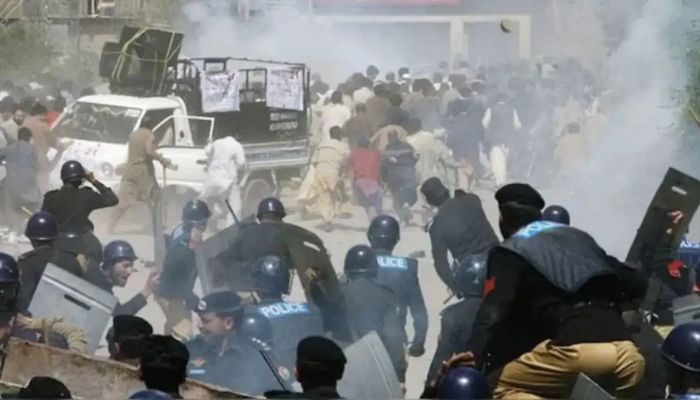
The first phase of the assembly elections in Pakistan-occupied Jammu and Kashmir (PoJK) turned violent after the Pakistani army opened fire on protesters, leaving at least 19 people dead and more than 30 seriously injured. The firing took place at different locations, including Rawalkot during polling, as thousands of people protested against the election process and the policies of the Pakistani government.
According to local media reports, the identities of 16 of those killed have been confirmed, while one body could not be identified because identity documents were not available. Among those killed was Usman Nazir, the brother of Jammu and Kashmir Joint Awami Action Committee (JAAC) leader Sardar Umar Nazir.
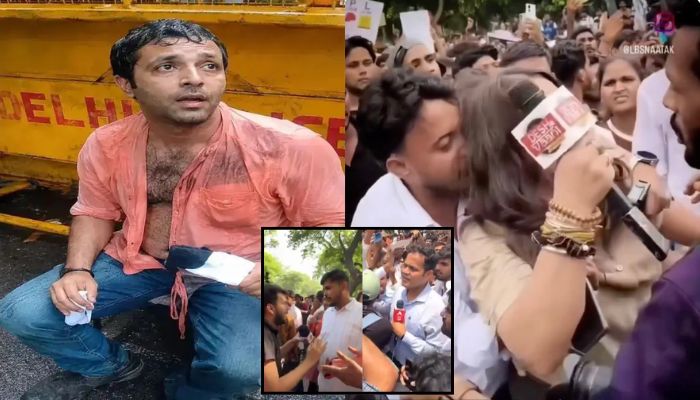
The violence has further increased tensions in the region, where protests have already been continuing for weeks. Videos shared on social media showed panic among voters, heavy deployment of security forces, and people running for safety after firing began. Another video showed armed men taking away ballot boxes from a polling station, adding to concerns over the credibility of the election process.
Election day marked by violence
The violence broke out during voting for the first phase of the elections to the so-called legislative assembly in Pakistan-occupied Jammu and Kashmir. Polling was held in the Mirpur Division, but instead of a peaceful election, several areas witnessed clashes, firing, and reports of irregularities.
One of the major flashpoints was the Ramloha polling station in the Samahni constituency, where residents gathered after reports spread that polling staff had been confined inside the polling station. Soon after, clashes broke out between protesters and security personnel. Gunfire was reported from the area, leaving many people dead and injured.
At several polling booths, people also reported bogus voting and voting under the threat of weapons. A widely circulated video from the Samahni area showed armed individuals carrying away ballot boxes from a polling station. Election officials said such incidents would be examined, and a decision on re-polling would be taken if required.
Violence was also reported from Kotli’s Nakayal area, where clashes between rival political supporters claimed the life of Pakistan People’s Party (PPP) worker Mukhtar Younus, while two others were injured. The PPP blamed supporters of the ruling Pakistan Muslim League-Nawaz (PML-N) for the attack, while the ruling party rejected the accusation. Both parties accused each other of manipulating the election in several constituencies.
What triggered the massive protests?
The unrest did not begin on polling day. The protests had been building for nearly two months before the elections.
The movement has been led by the Jammu and Kashmir Joint Awami Action Committee (JAAC), which has been protesting against the Pakistani government’s policies, governance issues, rising inflation, electricity charges, and what it describes as an unfair electoral system.
Before a major demonstration planned for 5th June, the Pakistani government banned the JAAC and arrested several of its leaders. Some leaders went underground to avoid arrest, while others continued leading demonstrations from protest sites, especially in Rawalakot, the headquarters of the Poonch Division.
Instead of calming the situation, the ban further intensified public anger. Demonstrations spread across different towns, with protesters organising sit-ins, blocking roads, and demanding political reforms. Security forces repeatedly confronted protesters, leading to violent clashes in which dozens of people, including security personnel, lost their lives over the past several weeks.
During the election period, the JAAC also organised the “Muzaffarabad Chalo” march, calling on people to march towards Muzaffarabad after talks with the government failed. Reports from Rawalakot said Pakistani forces opened fire on protesters participating in the march, resulting in heavy casualties.
The dispute over the 12 refugee seats
At the centre of the movement is a long-running dispute over 12 refugee seats in the legislative assembly.
The legislative assembly of Pakistan-occupied Jammu and Kashmir has 53 seats. Out of these, 45 seats are filled through direct elections, while eight seats are reserved for women, technocrats and religious representatives.
Among the 45 directly elected seats, 12 are reserved for Kashmiri refugees who migrated to Pakistan from Indian-administered Jammu and Kashmir.
The JAAC argues that people living in different parts of Pakistan should not have the power to decide who governs PoJK. According to the organisation, these reserved refugee seats reduce the influence of local voters and give an advantage to national political parties, especially the Pakistan Muslim League-Nawaz (PML-N) and the Pakistan Peoples Party (PPP).
The Pakistani government and the courts, however, maintain that these seats are part of the constitutional framework and can only be removed through a constitutional amendment. The government refused to accept JAAC’s demand to abolish these seats, making the issue one of the biggest reasons behind the ongoing protests.
Why the election was divided into three phases
The assembly election was originally scheduled to be completed in a single phase on 27th July. However, the deteriorating security situation forced authorities to change the plan. The election is now being conducted in three phases:
27th July – Mirpur Division
2nd August – Muzaffarabad Division and the 12 refugee seats
10th August – Poonch Division, where tensions remain the highest.
The decision to split the election came after continuous protests and fears that conducting voting across the entire region on one day could lead to more violence.
The protests severely affected normal life across the region
Roads remained blocked in several districts for weeks, making transport difficult. Banks remained closed for nearly two weeks, while mobile and internet services were suspended in many areas.
The Poonch Division, which borders India and has seen some of the biggest demonstrations, remained almost cut off for several weeks. The disruption also affected supplies of flour and other essential commodities, creating difficulties for ordinary residents.
People continued to stage sit-ins despite restrictions, demanding political reforms and changes in the election system.
Besides the violence, several reports questioned the fairness of the polling process. People from different constituencies reported bogus voting and intimidation. In some places, voters claimed polling was being influenced by armed individuals. At another polling station, ballot boxes were reportedly snatched and later set on fire, destroying the ballot papers inside.
The incidents have added to public concerns over whether the election reflects the will of residents. The PPP and the ruling PML-N also exchanged accusations of election rigging across multiple constituencies, further increasing political tensions.
India’s response
India has said that the ongoing protest in Pakistan-occupied Jammu and Kashmir reflects the consequences of Pakistan’s long-standing policies in the region.
According to India’s position, the ongoing protests are the result of decades of systematic exploitation and administrative repression under Pakistan’s control. India also criticised the use of force against protesters and said Pakistan was trying to suppress the democratic voice of the people living in the territory.
India has consistently maintained that the entire region of Jammu and Kashmir and Ladakh is an integral and inalienable part of India, while Pakistan continues to occupy parts of the region illegally.
Tension continues ahead of the remaining polling phases
Although the first phase of voting has ended, the situation in Pakistan-occupied Jammu and Kashmir remains highly sensitive.
The next two phases of voting are scheduled for 2nd August and 10th August, including polling in the troubled Poonch Division, where protests have been strongest.
With the refugee seat dispute still unresolved, demonstrations continuing in several towns, and political parties accusing each other of manipulating the election, uncertainty remains high. The latest violence has deepened public anger and raised fresh questions over whether the remaining phases of the election can be conducted peacefully.
The deaths of at least 19 protesters, injuries to more than 30 people, and reports of firing, ballot box snatching, clashes, and continued unrest have made this one of the most violent election periods witnessed in Pakistan-occupied Jammu and Kashmir in recent years.