Exclusive: Madras High Court scraps illegal sale of temple land, orders restoration to deity after three decades; read judgment details
On 15th December, the Madras High Court set aside the sale of 3.93 acres of land that belongs to Arulmigu Annamalainathar Temple. The Court held that the sale of temple property carried out in the 1990s was illegal, procedurally flawed, and against the very purpose of safeguarding religious endowments. Out of the long list of respondents, around 90 of them were of the Muslim community including at least two mosques. OpIndia accessed judgment copy in the matter. The Court, in its judgment, ruled that temple land cannot be treated as disposable private property. It must be preserved for the benefit of the deity and devotees. The Court further directed that the land must be restored to the temple. The judgment has brought closure to a dispute that had lingered for over 30 years. Background:The 3.93 acres of lands belonged to Sri Annamalainathar Temple, Kadayanallur, (now Tenkasi District) and August 19, 1992, trustees allegedly passed a resolution to sell temple lands. The trustees then submitted this proposal to the Temple Administration Board to… pic.twitter.com/MsUW2q9Foc— trramesh (@trramesh) January 4, 2026 In its judgment, the court made it clear that trustees and officials under the Hindu Religious and Charitable Endowments Department (HR&CE) act only as custodians of temple property. Any deviation from statutory safeguards, even if backed by subsequent government orders, cannot legitimise an otherwise illegal sale. The judgment reaffirmed that the mandatory provisions under the HR&CE Act are not procedural formalities. These provisions are substantive protections meant to prevent misuse and erosion of religious assets. What land was involved and why it belonged to the temple The dispute revolved around 3.93 acres of land situated in Kadayanallur. It had long been recorded as land belonging to the Arulmigu Annamalainathar Temple. The land formed part of the temple’s endowed properties and was meant to generate income or utility for religious and charitable purposes connected with the temple. Notably, these endowments are vested in the deity, not in any individual trustee or administrator of the temple. The court noted that temple lands enjoy a special legal status. They are not commercial properties that can be freely monetised at will. These lands are religious properties protected by law, tradition, and public trust. Any decision to sell such land must pass strict tests of necessity, transparency, and demonstrable benefit to the temple. It was against this backdrop that the sale of the land over 30 years ago was examined. During the hearing, the court scrutinised how the land came to be sold and whether the law was followed at any stage. How the hereditary trustee initiated the decision to sell temple land The controversy began in the early 1990s when the hereditary trustee, V Subramaniya Iyer, of the temple took a decision to sell a portion of the temple land. The justification given for the sale was that the sale proceeds would be deposited and the interest earned would be used to meet temple expenses. However, this reasoning later came under close scrutiny, as the law governing temple properties permits sale only if it is unavoidable and clearly beneficial to the institution. The court observed that there was no material on record to show that the temple was in any financial distress that would have compelled the sale of part of its land. Instead, the proposal appeared to be driven by administrative convenience rather than genuine need. The court emphasised that the role of the trustee was not to maximise short term liquidity but to preserve temple assets for future generations of devotees. The 1995 public auction and allegations of undervaluation After the trustee decided to sell the land, a public auction was conducted in 1995. On paper, the process appeared compliant. However, the manner in which it was carried out soon raised serious concerns. The highest bidder, R Subramaniam, was nephew of the hereditary trustee. This revelation immediately triggered allegations of conflict of interest. At the time, the land was sold for around Rs 10.17 lakh. Several stakeholders stated that this was far below its prevailing market value. The current value of the land is around Rs 110 crore. The court later noted that when temple land is sold, authorities are duty bound to ensure that the institution receives the best possible price. Any sale that appears to benefit private individuals at the cost of the temple undermines the very purpose of the protective framework under the HR&CE Act. Why objections after the auction became a legal problem There was a critical flaw in the entire sale process, particularly in the timing of objections. Ideally, objections must be invited from devotees, tenants, and interested persons before finalising the auction. However, in this case, objections were called only after the bidding had already been conducted. This reversal of proce
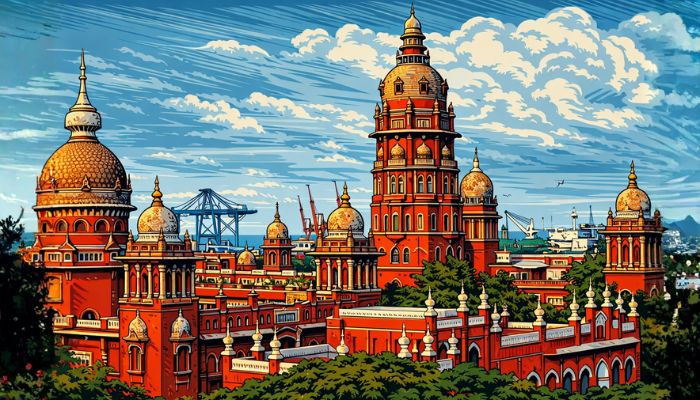

On 15th December, the Madras High Court set aside the sale of 3.93 acres of land that belongs to Arulmigu Annamalainathar Temple. The Court held that the sale of temple property carried out in the 1990s was illegal, procedurally flawed, and against the very purpose of safeguarding religious endowments. Out of the long list of respondents, around 90 of them were of the Muslim community including at least two mosques. OpIndia accessed judgment copy in the matter.
The Court, in its judgment, ruled that temple land cannot be treated as disposable private property. It must be preserved for the benefit of the deity and devotees. The Court further directed that the land must be restored to the temple. The judgment has brought closure to a dispute that had lingered for over 30 years.
Background:
— trramesh (@trramesh) January 4, 2026
The 3.93 acres of lands belonged to Sri Annamalainathar Temple, Kadayanallur, (now Tenkasi District) and August 19, 1992, trustees allegedly passed a resolution to sell temple lands. The trustees then submitted this proposal to the Temple Administration Board to… pic.twitter.com/MsUW2q9Foc
In its judgment, the court made it clear that trustees and officials under the Hindu Religious and Charitable Endowments Department (HR&CE) act only as custodians of temple property. Any deviation from statutory safeguards, even if backed by subsequent government orders, cannot legitimise an otherwise illegal sale. The judgment reaffirmed that the mandatory provisions under the HR&CE Act are not procedural formalities. These provisions are substantive protections meant to prevent misuse and erosion of religious assets.
What land was involved and why it belonged to the temple
The dispute revolved around 3.93 acres of land situated in Kadayanallur. It had long been recorded as land belonging to the Arulmigu Annamalainathar Temple. The land formed part of the temple’s endowed properties and was meant to generate income or utility for religious and charitable purposes connected with the temple. Notably, these endowments are vested in the deity, not in any individual trustee or administrator of the temple.
The court noted that temple lands enjoy a special legal status. They are not commercial properties that can be freely monetised at will. These lands are religious properties protected by law, tradition, and public trust. Any decision to sell such land must pass strict tests of necessity, transparency, and demonstrable benefit to the temple. It was against this backdrop that the sale of the land over 30 years ago was examined. During the hearing, the court scrutinised how the land came to be sold and whether the law was followed at any stage.
How the hereditary trustee initiated the decision to sell temple land
The controversy began in the early 1990s when the hereditary trustee, V Subramaniya Iyer, of the temple took a decision to sell a portion of the temple land. The justification given for the sale was that the sale proceeds would be deposited and the interest earned would be used to meet temple expenses. However, this reasoning later came under close scrutiny, as the law governing temple properties permits sale only if it is unavoidable and clearly beneficial to the institution.
The court observed that there was no material on record to show that the temple was in any financial distress that would have compelled the sale of part of its land. Instead, the proposal appeared to be driven by administrative convenience rather than genuine need. The court emphasised that the role of the trustee was not to maximise short term liquidity but to preserve temple assets for future generations of devotees.
The 1995 public auction and allegations of undervaluation
After the trustee decided to sell the land, a public auction was conducted in 1995. On paper, the process appeared compliant. However, the manner in which it was carried out soon raised serious concerns. The highest bidder, R Subramaniam, was nephew of the hereditary trustee. This revelation immediately triggered allegations of conflict of interest.
At the time, the land was sold for around Rs 10.17 lakh. Several stakeholders stated that this was far below its prevailing market value. The current value of the land is around Rs 110 crore. The court later noted that when temple land is sold, authorities are duty bound to ensure that the institution receives the best possible price. Any sale that appears to benefit private individuals at the cost of the temple undermines the very purpose of the protective framework under the HR&CE Act.
Why objections after the auction became a legal problem
There was a critical flaw in the entire sale process, particularly in the timing of objections. Ideally, objections must be invited from devotees, tenants, and interested persons before finalising the auction. However, in this case, objections were called only after the bidding had already been conducted. This reversal of procedure struck at the root of legality.
The High Court stated that inviting objections after an auction is not a curable defect but a fundamental violation of the safeguards in place. The purpose of calling for objections before the auction is to allow concerns about valuation, necessity, and fairness to be addressed before irreversible decisions are taken. By bypassing these steps, the authorities effectively denied stakeholders a meaningful opportunity to be heard.
Civil court verdict in 2001 declaring the sale void
The irregularities in the auction eventually led to litigation before a civil court. In 2001, the civil court declared the sale deeds executed in favour of the auction purchaser null and void. The court held that the sale had been conducted in violation of mandatory legal requirements and could not be sustained merely because it had been presented as a public auction.
The civil court’s judgment was significant as it was never challenged by the purchasers or the authorities. As a result, it attained finality. In legal terms, this meant that the sale stood cancelled and the land continued to belong to the temple. The High Court later noted that once a competent civil court had invalidated the transaction, there was no legal basis for reviving or re validating it through administrative or executive action.
How the matter resurfaced despite an existing civil court judgment
Although the civil court’s judgment was never challenged, the dispute refused to end. Years later, the auction purchaser approached the government seeking intervention under the HR&CE framework. In a surprising move, the government issued an order directing the department to proceed with the execution of sale deeds. The government effectively attempted to resurrect a transaction that had already been struck down by a civil court.
The High Court took a dim view of this development. It observed that executive authorities cannot sit in appeal over a judicial decision, particularly one that has attained finality. Allowing a government order to override a civil court judgment would not only undermine the rule of law but also create a dangerous precedent for the management of religious properties.
Government intervention under Section 34 and its legal implications
The government order was sought to be justified by invoking provisions under Section 34 of the HR&CE Act. This section empowers authorities to permit the sale of temple property under specific circumstances. However, the High Court rejected the justification and clarified that this power is circumscribed by strict conditions and cannot be exercised in a manner that bypasses statutory safeguards or judicial findings.
The court emphasised that Section 34 does not grant blanket authority to validate illegal sales retrospectively. Any government approval must be preceded by compliance with all mandatory requirements, including proof of necessity, prior notice, and consideration of objections. In the present case, none of these foundational steps had been lawfully completed.
High Court examination of HR&CE safeguards and statutory violations
While examining the case, the High Court undertook a detailed analysis of the safeguards built into the HR&CE Act. The court reiterated that these provisions exist precisely because temple properties are vulnerable to misuse by those entrusted with their management. Trustees and officials are expected to act as fiduciaries. This means they must protect the interests of the deity and devotees rather than treating temple assets as disposable property.
According to the court, the mandatory sequence prescribed under the law had been turned on its head. Public notice, consideration of objections, and an assessment of necessity were either missing or conducted in a mechanical manner. Such deviations were not minor irregularities but substantive violations that struck at the root of the transaction’s legality.
Court findings on necessity, benefit, and misuse of trustee powers
The primary question before the court was whether the sale of the land was genuinely necessary or beneficial to the temple. The justification offered by the trustee was that the sale proceeds would be deposited and the interest used for temple expenses. The court found this reasoning wholly inadequate. It observed that if such reasoning were accepted, any temple land could be sold on the pretext of earning interest, rendering statutory protections meaningless.
The judgment clarified that trustees do not have unfettered discretion to sell temple property. Their powers are tightly regulated because temple lands are held in trust for religious and charitable purposes. Any action that results in permanent loss of such property, without compelling necessity, amounts to a breach of trust.
Status of occupants on temple land and steps taken by authorities
In its judgment, the court took note of the fact that several individuals were occupying portions of the land by the time the dispute reached its final stages. Rather than ordering a blanket eviction, the authorities adopted a pragmatic approach after the court’s intervention. Occupants were given the option to regularise their occupancy by becoming tenants of the temple or to vacate the land.
According to the records placed before the court, many occupants agreed to continue as tenants under the temple administration. In cases where occupants refused to cooperate, eviction proceedings were initiated with the support of local authorities. The High Court recorded these developments to demonstrate that the restoration of temple property was not merely a theoretical exercise but was being implemented on the ground.
In this context, the identity of those in possession has also drawn attention, though it was not legally determinative for the court.
The case records show that the persons arrayed as respondents were those who came into possession of the disputed land as purchasers or subsequent purchasers following the original transaction. The names reflected in the proceedings indicate that most of these individuals belong to the local Muslim community, and the land in question also includes at least two mosques, which were impleaded as respondents in the litigation.
The presence of these religious structures and occupants was not treated by the court as determinative of title. Instead, the High Court confined itself to examining the legality of the original sale and the validity of permissions relied upon, holding that identity or subsequent development on the land could not override statutory safeguards governing temple property.
Final directions issued by the court and their practical impact
While concluding the matter, the High Court upheld the cancellation of the sale and affirmed that the land must remain with the temple. It set aside the government orders that had sought to revive the illegal transaction and reinforced the principle that executive actions cannot override statutory mandates or judicial verdicts.
The court sent a clear message that time does not cure illegality when it comes to religious endowments. Even decades old transactions can be scrutinised and struck down if they violated the law.
Conclusion
The judgment must be seen as a reminder that temple properties are not administrative assets. They are sacred trusts governed by law. By striking down an illegal sale even after three decades, the court reaffirmed that statutory safeguards under the HR&CE Act exist to prevent the quiet erosion of religious endowments through procedural manipulation. The judgment reinforced that trustees and governments alike are accountable to the deity and devotees, and that illegality does not gain legitimacy merely with the passage of time.