From JeM posters in Kashmir to 2900 kg of explosives and a massive blast: The timeline of a conspiracy and terror module of doctors
The probe into the fatal blast near Delhi’s Red Fort on 10 November has now unraveled one of the most disturbing terror networks unearthed in recent years. What initially appeared to be an isolated car explosion killing at least 15 people and injuring about 2 dozen others has now unfolded into a detailed, multi-state terror plot linked to Jaish-e-Mohammad (JeM). As investigators dug deeper, the trail led back to mid-October, weeks before the attack, when posters praising JeM surfaced in a Srinagar neighbourhood. Those posters, which many then dismissed as routine propaganda, became the first big clue that helped piece together the chain of events behind the blast. The bomber was later identified as Dr Umar Un Nabi, 36-year-old doctor-turned-terrorist from Pulwama who was employed with Al-Falah University in Faridabad. His role of a suicide bomber shocked the investigators, particularly when they found that at least three other members of the module were also doctors or medical interns at the same university. Over the next few weeks, arrests, raids and forensic tests revealed how young, educated professionals had been radicalised and turned into a tightly coordinated terror cell that operated between Kashmir, Haryana and Delhi, and maintained links with foreign handlers in Afghanistan and Pakistan-occupied Kashmir. Prelude: Posters that sparked the investigation October 18: The first indications of what would later become the Red Fort blast investigation cropped up in mid-October. On the night of 18th October, Jammu and Kashmir Police received information about posters pasted on the walls of houses in Nowgam, a middle-class neighbourhood on the outskirts of Srinagar. These posters were in Urdu and carried threats of imminent “spectacular attacks” on security forces and “outsiders” (non-locals) in Kashmir. October 19: The next morning, the police came across the same posters again in the Bunpora Nowgam area. These posters openly praised the Jaish-e-Mohammad (JeM) terror group and carried warnings that anyone “sheltering Indian predators” would face strict action. They were signed by a man identifying himself as Commander Hanzala Bhai, dated 17th October. The posters might have been dismissed as another attempt at fearmongering, but their content and timing raised suspicion. The police filed an FIR under the Unlawful Activities Prevention) Act (UAPA) and started an investigation in detail. CCTV footage was scanned and three young men were picked up. Upon interrogation, they confessed to having put up the posters on the directions of a local cleric from Srinagar’s Chanpora area, Moulvi Irfan. This interrogation marked the beginning of the unraveling of the larger network behind the Delhi blast. Confronted with evidence, cleric Moulvi Irfan identified one of the main brains behind the poster campaign as Dr Adeel Ahmed Rather, a doctor from the south Kashmir district of Kulgam. A resident doctor at GMC Anantnag before shifting to Al-Falah Medical College in Faridabad, Rather was arrested in October. October 30: Adeel disclosed during interrogation the name of another doctor in the network: Dr Muzammil Shakeel Ganai, a GMC Srinagar resident doctor who subsequently shifted to Al-Falah University. Muzammil was arrested on 30th October. Muzammil’s confession proved to be a turning point. He led the police to another young doctor at Al-Falah University, namely Dr Umar Un Nabi-who would eventually prove to be the suicide bomber. Muzammil also confessed to keeping an illegal AK-47 rifle, which he claimed was kept in the car of his colleague, another doctor at Al-Falah University, Dr Shaheen Shahid. Several leads that pointed to Faridabad resulted in coordination between the Jammu and Kashmir Police and Haryana Police in conducting a series of crucial raids in November. Chain of events: From posters to blast November 8: Based on the interrogation of Muzammil, the Jammu and Kashmir Police informed Haryana Police that weapons and explosives might be hidden in Faridabad. A search operation was launched inside the Al-Falah University campus and nearby areas like Dhauj and Khandawali. The police recovered an AK-47 rifle, a pistol, 83 rounds, three rifle magazines, two pistol magazines, and seven live cartridges from a Swift car on campus. The vehicle was seized, and 12 crime branch teams were assigned to sweep the surrounding areas. November 9: The breakthrough got bigger the next day when police recovered 358 kg of ready-to-use explosives stored in 12 suitcases inside a room in a building in Dhauj village. Timers, cutters, batteries, detonators, face masks, disguises and IED-making material were also recovered. A bomb squad collected the material and handed it over to the J&K Police. Indeed, this confirmed that the group had been stockpiling explosives on a large scale and was preparing multiple attacks. November 10: On the morning of 10th November, searches continued an
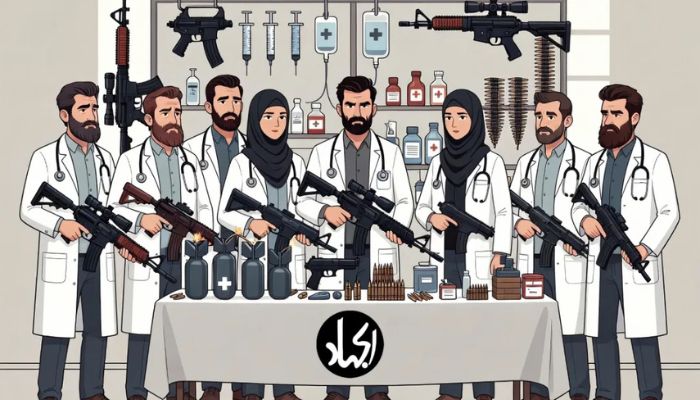

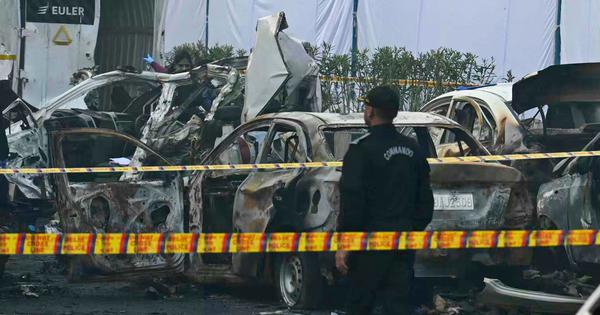
The probe into the fatal blast near Delhi’s Red Fort on 10 November has now unraveled one of the most disturbing terror networks unearthed in recent years. What initially appeared to be an isolated car explosion killing at least 15 people and injuring about 2 dozen others has now unfolded into a detailed, multi-state terror plot linked to Jaish-e-Mohammad (JeM).
As investigators dug deeper, the trail led back to mid-October, weeks before the attack, when posters praising JeM surfaced in a Srinagar neighbourhood. Those posters, which many then dismissed as routine propaganda, became the first big clue that helped piece together the chain of events behind the blast.
The bomber was later identified as Dr Umar Un Nabi, 36-year-old doctor-turned-terrorist from Pulwama who was employed with Al-Falah University in Faridabad. His role of a suicide bomber shocked the investigators, particularly when they found that at least three other members of the module were also doctors or medical interns at the same university.
Over the next few weeks, arrests, raids and forensic tests revealed how young, educated professionals had been radicalised and turned into a tightly coordinated terror cell that operated between Kashmir, Haryana and Delhi, and maintained links with foreign handlers in Afghanistan and Pakistan-occupied Kashmir.
Prelude: Posters that sparked the investigation
October 18: The first indications of what would later become the Red Fort blast investigation cropped up in mid-October. On the night of 18th October, Jammu and Kashmir Police received information about posters pasted on the walls of houses in Nowgam, a middle-class neighbourhood on the outskirts of Srinagar. These posters were in Urdu and carried threats of imminent “spectacular attacks” on security forces and “outsiders” (non-locals) in Kashmir.
October 19: The next morning, the police came across the same posters again in the Bunpora Nowgam area. These posters openly praised the Jaish-e-Mohammad (JeM) terror group and carried warnings that anyone “sheltering Indian predators” would face strict action. They were signed by a man identifying himself as Commander Hanzala Bhai, dated 17th October.
The posters might have been dismissed as another attempt at fearmongering, but their content and timing raised suspicion. The police filed an FIR under the Unlawful Activities Prevention) Act (UAPA) and started an investigation in detail. CCTV footage was scanned and three young men were picked up. Upon interrogation, they confessed to having put up the posters on the directions of a local cleric from Srinagar’s Chanpora area, Moulvi Irfan.
This interrogation marked the beginning of the unraveling of the larger network behind the Delhi blast.
Confronted with evidence, cleric Moulvi Irfan identified one of the main brains behind the poster campaign as Dr Adeel Ahmed Rather, a doctor from the south Kashmir district of Kulgam. A resident doctor at GMC Anantnag before shifting to Al-Falah Medical College in Faridabad, Rather was arrested in October.
October 30: Adeel disclosed during interrogation the name of another doctor in the network: Dr Muzammil Shakeel Ganai, a GMC Srinagar resident doctor who subsequently shifted to Al-Falah University. Muzammil was arrested on 30th October.
Muzammil’s confession proved to be a turning point. He led the police to another young doctor at Al-Falah University, namely Dr Umar Un Nabi-who would eventually prove to be the suicide bomber. Muzammil also confessed to keeping an illegal AK-47 rifle, which he claimed was kept in the car of his colleague, another doctor at Al-Falah University, Dr Shaheen Shahid.
Several leads that pointed to Faridabad resulted in coordination between the Jammu and Kashmir Police and Haryana Police in conducting a series of crucial raids in November.
Chain of events: From posters to blast
November 8: Based on the interrogation of Muzammil, the Jammu and Kashmir Police informed Haryana Police that weapons and explosives might be hidden in Faridabad. A search operation was launched inside the Al-Falah University campus and nearby areas like Dhauj and Khandawali.
The police recovered an AK-47 rifle, a pistol, 83 rounds, three rifle magazines, two pistol magazines, and seven live cartridges from a Swift car on campus. The vehicle was seized, and 12 crime branch teams were assigned to sweep the surrounding areas.
November 9: The breakthrough got bigger the next day when police recovered 358 kg of ready-to-use explosives stored in 12 suitcases inside a room in a building in Dhauj village. Timers, cutters, batteries, detonators, face masks, disguises and IED-making material were also recovered. A bomb squad collected the material and handed it over to the J&K Police.
Indeed, this confirmed that the group had been stockpiling explosives on a large scale and was preparing multiple attacks.
November 10: On the morning of 10th November, searches continued and led to the seizure of 2,553 kg of ammonium nitrate from the home of a man named Imam Ishtiyaq in Fatehpur Taga, Haryana. This chemical is widely used in IEDs.
Investigators noted that the material found in Dhauj was only “one step away” from becoming a complete bomb.
At 6:52 pm, the terror plot turned deadly.
A car exploded near Red Fort in Delhi’s Chandni Chowk area, killing at least 15 people. CCTV footage later showed that the bomber, Dr Umar Un Nabi, had travelled through multiple parts of Delhi earlier that day. He was last seen entering the Red Fort area moments before the explosion.
Initially, his body was too badly damaged to be identified. Only a DNA match from samples collected from his family in Pulwama confirmed that Umar was the suicide bomber.
Authorities also discovered that the blast car, a Hyundai i20, had been sold by a man named Sonu from Royal Car Dealers who was arrested on 12th November.
November 12: Intelligence reports suggested that a red Ford EcoSport carrying explosives might travel from Faridabad’s Khandawali village. Although the car was intercepted, no explosives were found initially. Forensic tests were ordered to detect residue.
Meanwhile, during interrogation, Dr Shaheen Shahid confessed that she and the other doctors had been collecting explosives for nearly two years and were planning attacks across India.
CCTV footage showed the i20 visiting multiple parts of Delhi, including Connaught Place, before heading to the Red Fort.
November 13: The Ford EcoSport was seized, and a man named Wasib from Dhauj was arrested. Wasib, who worked as a computer operator at Al-Falah University, had parked the EcoSport and was in touch with Umar before the attack.
A Brezza SUV belonging to Dr Shaheen was also seized. The National Security Guard (NSG) reached the campus for forensic testing, although no suspicious items were found in the Brezza.
DNA tests by this date had fully confirmed Umar’s identity as the suicide bomber.
November 14: Another suspect named Mustaqil, an MBBS graduate from China and an intern at Al-Falah University, was detained from Rajasthan’s Mewat. He was reportedly in touch with Umar.
On the same day, Umar’s house in Pulwama was demolished in a controlled explosion using an IED. This was done as part of the crackdown on the module.
VIDEO | Delhi terror blast: The residence of Dr Umar Nabi, accused in the Red Fort blast, has been demolished in Pulwama, Jammu and Kashmir.#Delhiblast #Pulwama #Terror
— Press Trust of India (@PTI_News) November 14, 2025
(Full video available on PTI Videos – https://t.co/n147TvrpG7) pic.twitter.com/xJSVxkAZkY
Investigators also traced the purchase of explosives to Basai Meo village in Nuh and surrounding regions, confirming that the entire blast was planned and executed using locally procured material.
November 15: The National Medical Commission cancelled the medical licences of four doctors linked to the terror plot, Dr Muzaffar Ahmad, Dr Adeel Rather, Dr Muzammil Shakeel and Dr Shaheen Saeed. Their names were removed from the national medical registers.
In view of the FIR registered under relevant Sections of the UAPA, the National Medical Commission has removed the names of:
— Ministry of Health (@MoHFW_INDIA) November 15, 2025
• Dr. Muzaffar Ahmad (Reg. No. 14680/2017)
• Dr. Adeel Ahmad Rather (Reg. No. 15892/2019)
• Dr. Muzamil Shakeel (Reg. No. 15130/2018)
• Dr. Shaheen… pic.twitter.com/SdPF8p1wkR
November 16: Dr Priyanka Sharma, a woman doctor from Haryana, was detained at GMC Anantnag for questioning as she was suspected to be connected with the “white-collar” terror network. Later that night, she was released after questioning. Her family confirms that she has returned home safely.
November 17: The National Investigation Agency (NIA) has arrested a Kashmiri assistant of Red fort bomber Dr Umar Un Nabi in its first arrest in the Delhi bomb investigation. According to the agency, Amir Rashid Ali was the registered owner of the Hyundai i20 that was used in the assault.
Investigations also reached Mhow in Madhya Pradesh, where Hamood Siddiqui, the younger brother of the Al-Falah University Chancellor, was arrested from Hyderabad.
November 18: Forensic reports revealed that Umar hid the bomb trigger in his shoe, making him a “shoe bomber.” Metal fragments from the shoe and traces of TATP (a high-power explosive) were recovered.
That same day, Jasir Bilal Wani, a technical aide to the terror module, was sent to judicial custody.
November 19: The Enforcement Directorate arrested Jawad Ahmed Siddiqui, the founder of the Al-Falah Group, for money laundering. His arrest came after searches at 25 locations.
Investigators also found over 70 radicalisation videos, including 12 recorded by Umar himself, which he had been sending to young recruits. Some targets were from Kashmir, while others were from Uttar Pradesh, Kerala and Karnataka.
November 20: The investigative agencies had identified three foreign handlers, Faisal Ishfaq Bhat, Hashim, and Dr Ukasha, operating from Afghanistan and Pakistan-occupied Kashmir. Bank accounts with more than ₹2 lakh were frozen, and financial trails were examined.
November 23: Investigators discovered that Muzammil had purchased a Russian rifle worth ₹5 lakh through a contact linked to Dr Shaheen. The rifle was later found in a locker belonging to Dr Adeel.
November 26: The NIA arrested Soyab, a resident of Dhauj, for sheltering Umar shortly before the blast and providing logistical support.
The National Investigation Agency (NIA) has arrested a Faridabad resident for harbouring terrorist Umar Un Nabi immediately before the Delhi terror bomb blast.
— ANI (@ANI) November 26, 2025
Soyab of Dhauj, Faridabad (Haryana) is the 7th accused to be arrested in the case. NIA investigations have revealed…
November 29: Delhi Police issued notices to all private hospitals seeking details of doctors who completed their MBBS in Pakistan, Bangladesh, UAE and China. This was done to prevent similar terror networks from forming within medical institutions.
December 1: The National Investigation Agency (NIA) conducted raids at several places in the districts of Pulwama, Shopian and Kulgam of Kashmir in relation to the Jaish-e-Mohammed (JeM) terror module responsible for the car explosion near Delhi’s Red Fort.
A terror network hiding in plain sight
The Red Fort blast exposed something more than a terror strike; it revealed how a clutch of highly educated people, many working as doctors, established a deeply entrenched network across Kashmir, Haryana and Delhi. The poster incident in mid-October turned out to be the thread that guided investigators through weapons caches, massive explosive stockpiles, foreign handlers, financial trails and ideological radicalisation.
The NIA has so far arrested 7 terror suspects in connection with the Red Fort blast, namely Dr Muzammil Shakeel Ganai of Pulwama, Dr Adeel Ahmed Rather of Anantnag, Mufti Irfan Ahmad Wagay of Shopian, all residents of Jammu and Kashmir, and Dr Shaheen Saeed of Lucknow in UP, Amir Rashid Ali, in whose name the car used in the blast was registered, Jasir Bilal Wani alias Danish, who had provided technical assistance to the terrorist involved in the attack, Soyab of Dhauj who provided shelter to terrorist Umar Un Nabi shortly before the November 10th blast near Red Fort in Delhi. Out of all the terror suspects arrested in connection with the case, three are doctors.