Islamists weaponise unrelated case of bail to UAPA accused to defend Delhi anti-Hindu riots accused Sharjeel Imam, Umar Khalid: False equivalence, lies and more
In recent days, a coordinated propaganda effort by Islamist handles on social media attempted to manufacture a false narrative of “Muslim victimhood” by equating an entirely unrelated UAPA case from Assam with the prosecution of the key conspirators behind the 2020 anti-Hindu Delhi riots. The trigger was a Supreme Court order granting bail to one Tonlong Konyak, arrested in 2023 under UAPA for alleged illegal funds possession, after more than two years in custody without a chargesheet. This legitimate bail decision in an isolated case became a tool for Islamist misinformation. A troll named Harun Khan posted: “Konyak (non-Muslim) gets bail under UAPA after 2+ years without chargesheet. Umar Khalid doesn’t get bail because he is Muslim.” The Accused is Tonlong Konyak (NON MUSLIM) arrested in Assam 2023 under UAPA for allegedly possessing illegal funds.SC granted bail noting his over 2 year detention without chargesheet was illegal and "appalling."Umar Khalid & others do not get bail because they are Muslims. pic.twitter.com/eUz2GhqUti— هارون خان (@iamharunkhan) December 5, 2025 Another user ranted: “Need I remind the honourables about Umar Khalid, Sharjeel Imam, Gulfisha Fatima…?” Need I remind these honorables about Umar Khalid, Sharjeel Imam, Gulfisha Fatima, Sanjeev Bhatt and others? https://t.co/CDk0R3110E— Aminuzz (@Ameenuzz) December 5, 2025 And one Razia Masood posted a collage of Delhi riot conspirators, claiming: “Being Muslim is the only reason for not getting justice in this country.” Being a Muslim is the only condition for not getting justice in this country & that too without being proven guilty. https://t.co/PdkeI1fxeg pic.twitter.com/fTjc8Dlr48— Razia Masood رضــــیہ (@Razia_Masood) December 5, 2025 This narrative is a calculated lie. Why the Assam case has zero parity with the Delhi riots conspiracy The effort by Islamist propagandists to draw a comparison between the Assam UAPA bail case and the Delhi riots conspiracy is fundamentally dishonest. In the Assam matter, the reason the Supreme Court granted bail was straightforward: the State failed to file a chargesheet for more than two years. The prolonged incarceration without progress in investigation constituted an undeniable violation of constitutional safeguards. There was no violence alleged, no network of conspirators, and no evidence of a planned upheaval against the nation’s institutions. It was, in essence, a detention based on suspicion that the authorities failed to substantiate within the required timeline. The situation in the 2020 Delhi anti-Hindu riot conspiracy case is the exact opposite. Here, the prosecution has filed an extensive main chargesheet along with supplementary chargesheets backed by multiple forms of evidence, including digital communications, eyewitness accounts, protected witnesses, public speeches motivating disruption, and the clear timing of the unrest to coincide with a high-profile State visit of the U.S. President. The courts, after reviewing the material, have concluded that there is a prima facie well-orchestrated conspiracy to trigger large-scale violence, disrupt the capital, and draw international attention by portraying the Indian government as anti-Muslim. Over fifty lives were lost, hundreds were attacked, public and private property was burnt, and citizens lived through days of terror. This is why Section 43D(5) of UAPA, which restricts bail when terrorism-linked conspiracy appears prima facie established, has repeatedly applied against Umar Khalid and Sharjeel Imam. Thus, the Assam case is an instance where bail was granted because the State failed to meet its legal responsibility. The Delhi conspiracy case involves accused for whom the law explicitly prevents bail due to the gravity of charges and credible material already on record. The only thing common between the two cases is the mention of UAPA, beyond that, every variable, from the scale of alleged crime to the evidence available and judicial assessment of culpability, is fundamentally different. Equating the two is not just intellectually bankrupt; it is a deliberate attempt to communalise a legal process and create a false narrative that Muslims are persecuted even when the facts, evidence, and court findings prove otherwise. The false claim of “lawful dissent” The defence teams for Imam and Khalid have long argued that they were only involved in peaceful, constitutional protest. They claimed that Imam was already in custody before the riots and that Khalid never appeared at riot sites. They dismissed protected witness statements as coerced and insisted that, even if accepted, the allegations amounted only to minor offences under Section 13 of UAPA. The prosecution, however, demonstrated that the riots were no spontaneous outburst. Khalid and Imam created and coordinated multiple WhatsApp groups after CAB was passed in December 2019. They delivered speeches encouraging road blockade
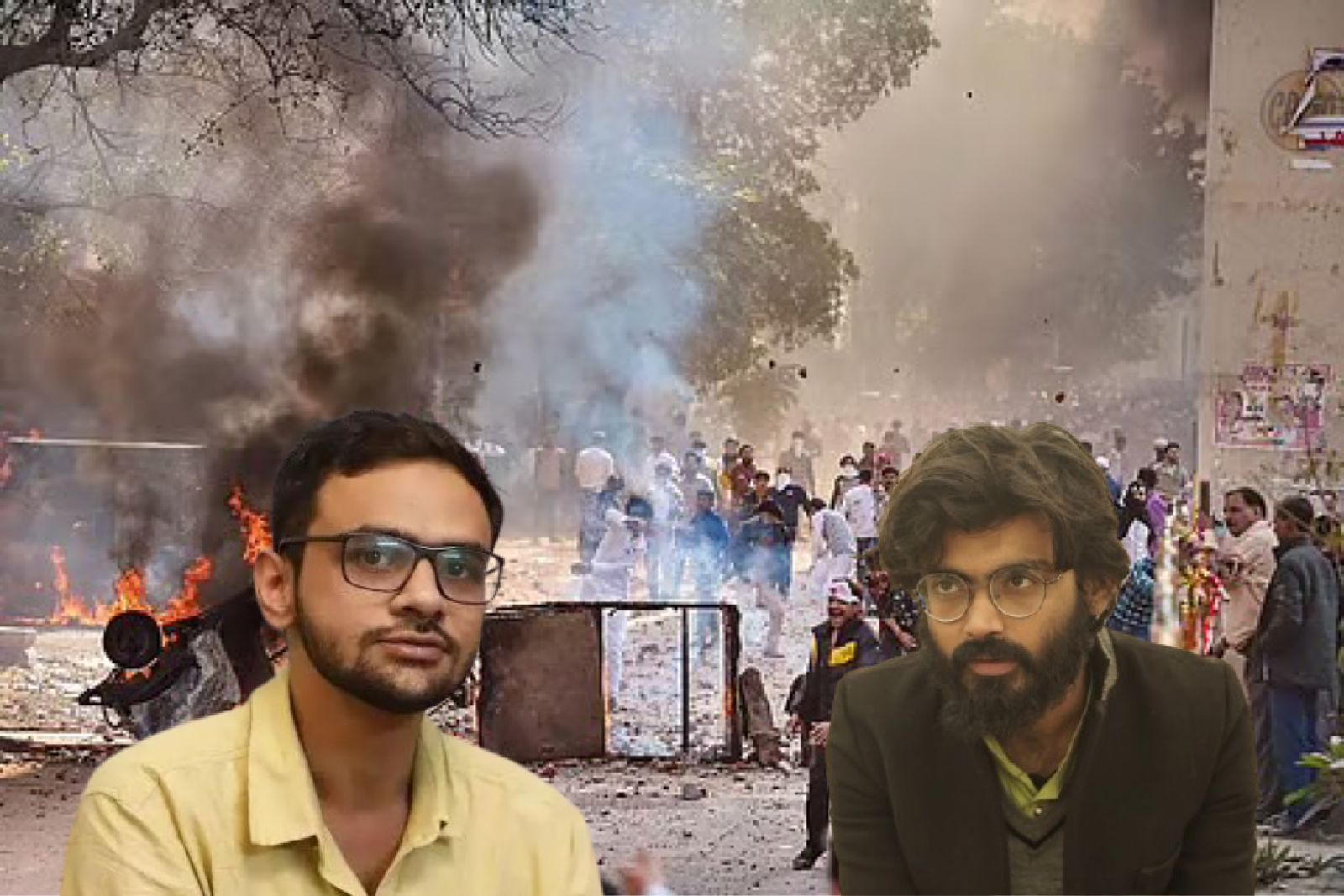

In recent days, a coordinated propaganda effort by Islamist handles on social media attempted to manufacture a false narrative of “Muslim victimhood” by equating an entirely unrelated UAPA case from Assam with the prosecution of the key conspirators behind the 2020 anti-Hindu Delhi riots. The trigger was a Supreme Court order granting bail to one Tonlong Konyak, arrested in 2023 under UAPA for alleged illegal funds possession, after more than two years in custody without a chargesheet.
This legitimate bail decision in an isolated case became a tool for Islamist misinformation.
A troll named Harun Khan posted: “Konyak (non-Muslim) gets bail under UAPA after 2+ years without chargesheet. Umar Khalid doesn’t get bail because he is Muslim.”
The Accused is Tonlong Konyak (NON MUSLIM) arrested in Assam 2023 under UAPA for allegedly possessing illegal funds.
— هارون خان (@iamharunkhan) December 5, 2025
SC granted bail noting his over 2 year detention without chargesheet was illegal and "appalling."
Umar Khalid & others do not get bail because they are Muslims. pic.twitter.com/eUz2GhqUti
Another user ranted: “Need I remind the honourables about Umar Khalid, Sharjeel Imam, Gulfisha Fatima…?”
Need I remind these honorables about Umar Khalid, Sharjeel Imam, Gulfisha Fatima, Sanjeev Bhatt and others? https://t.co/CDk0R3110E
— Aminuzz (@Ameenuzz) December 5, 2025
And one Razia Masood posted a collage of Delhi riot conspirators, claiming: “Being Muslim is the only reason for not getting justice in this country.”
Being a Muslim is the only condition for not getting justice in this country & that too without being proven guilty. https://t.co/PdkeI1fxeg pic.twitter.com/fTjc8Dlr48
— Razia Masood رضــــیہ (@Razia_Masood) December 5, 2025
This narrative is a calculated lie.
Why the Assam case has zero parity with the Delhi riots conspiracy
The effort by Islamist propagandists to draw a comparison between the Assam UAPA bail case and the Delhi riots conspiracy is fundamentally dishonest. In the Assam matter, the reason the Supreme Court granted bail was straightforward: the State failed to file a chargesheet for more than two years. The prolonged incarceration without progress in investigation constituted an undeniable violation of constitutional safeguards. There was no violence alleged, no network of conspirators, and no evidence of a planned upheaval against the nation’s institutions. It was, in essence, a detention based on suspicion that the authorities failed to substantiate within the required timeline.
The situation in the 2020 Delhi anti-Hindu riot conspiracy case is the exact opposite. Here, the prosecution has filed an extensive main chargesheet along with supplementary chargesheets backed by multiple forms of evidence, including digital communications, eyewitness accounts, protected witnesses, public speeches motivating disruption, and the clear timing of the unrest to coincide with a high-profile State visit of the U.S. President.
The courts, after reviewing the material, have concluded that there is a prima facie well-orchestrated conspiracy to trigger large-scale violence, disrupt the capital, and draw international attention by portraying the Indian government as anti-Muslim. Over fifty lives were lost, hundreds were attacked, public and private property was burnt, and citizens lived through days of terror. This is why Section 43D(5) of UAPA, which restricts bail when terrorism-linked conspiracy appears prima facie established, has repeatedly applied against Umar Khalid and Sharjeel Imam.
Thus, the Assam case is an instance where bail was granted because the State failed to meet its legal responsibility. The Delhi conspiracy case involves accused for whom the law explicitly prevents bail due to the gravity of charges and credible material already on record. The only thing common between the two cases is the mention of UAPA, beyond that, every variable, from the scale of alleged crime to the evidence available and judicial assessment of culpability, is fundamentally different. Equating the two is not just intellectually bankrupt; it is a deliberate attempt to communalise a legal process and create a false narrative that Muslims are persecuted even when the facts, evidence, and court findings prove otherwise.
The false claim of “lawful dissent”
The defence teams for Imam and Khalid have long argued that they were only involved in peaceful, constitutional protest. They claimed that Imam was already in custody before the riots and that Khalid never appeared at riot sites. They dismissed protected witness statements as coerced and insisted that, even if accepted, the allegations amounted only to minor offences under Section 13 of UAPA.
The prosecution, however, demonstrated that the riots were no spontaneous outburst. Khalid and Imam created and coordinated multiple WhatsApp groups after CAB was passed in December 2019. They delivered speeches encouraging road blockades and disruption, circulated pamphlets urging action that would force the government to “bend,” and coordinated with radical networks in universities and Muslim-majority localities. Their goal, according to the State, was to create bloodshed that would invite international condemnation.
The Court found this narrative credible. It emphasized that Khalid and Imam laid the groundwork for the violence, and their physical absence from riot areas did not absolve them. The conspiracy was hatched well before the events and executed through proxies.
Forum shopping and delay: A calculated legal strategy
Islamists on social media push a dramatic question: “How can Umar Khalid still be in jail after five years?” They deliberately avoid the factual answer: his legal team slowed down the judicial process. After the Delhi High Court denied bail in October 2022, Khalid waited nearly six months before approaching the Supreme Court. His lawyers then sought repeated adjournments, resisted specific benches, and even withdrew the petition when rulings appeared likely to go against them.
The High Court has now noted this as forum shopping, shifting courts in search of a favourable bench and then exploiting the resulting delays to argue prolonged incarceration. This strategy became especially visible after a Supreme Court ruling in January 2024 reaffirmed that under UAPA, “jail is the rule and bail is the exception.” Realising the legal climate was against them, Khalid’s lawyers avoided final adjudication.
How co-accused on bail deliberately stalled the trial
The defence repeatedly cited the right to a speedy trial, arguing it was unfair to continue incarceration with 700 witnesses yet to be examined. But records showed that those already released on bail, including Devangana Kalita and Natasha Narwal, actively obstructed commencement of charges by filing objections and disputing completion of investigation. The trial judge himself observed that the accused seemed interested in delaying arguments to later claim bail on grounds of delay.
The Delhi High Court concluded that the delay was not a failure of the judiciary, it was a tactic engineered by the accused camp to manipulate public sentiment and legal timelines. The propaganda narratives online conveniently omit this fact.
The Assam bail case is a story of delayed investigation. The Delhi riots conspiracy case is one of an intentional, pre-planned assault on national order. Equating the two is a deliberate falsehood meant to communalize judicial processes and provoke division.
Sharjeel Imam and Umar Khalid are not in jail because they are Muslims. They are in jail because courts have found their role in a major conspiracy prima facie evident. They are in jail because their lawyers dragged proceedings to avoid unfavourable rulings. They are in jail because when violence is weaponized as politics, accountability must follow.
The truth is clear. Only the propaganda is loud.