Kerala: 12 years on, court to finally deliver verdict in ABVP activist Vishal Kumar murder
Over 12 years have passed since Akhil Bhartiya Vidyarthi Parishad activist Vishal Kumar was brutally murdered by goons of the Campus Front of India (CFI). For those who are unaware, CFI was the student wing of the banned Islamist organisation Popular Front of India (PFI). The Ministry of Home Affairs had banned PFI and its linked organisations, including CFI, in September 2022. A single judge bench presided over by Judge PP Pooja of the Additional Sessions Court, Mavelikkara, will pronounce the judgment on 30th December. The court reserved the judgment after the final hearing held on 17th December. Vishal was brutally murdered in July 2012. He was only 19-year-old at that time. Initially, the case was investigated by the local police. However, due to delays in the investigation, it was transferred to the Crime Branch. Twenty individuals were made accused in the case, including a minor. OpIndia accessed several bail orders of Kerala High Court for details about the case. Who Vishal Kumar was and why he mattered Vishal Kumar was a 19-year-old ABVP activist and the Chengannur Nagar Samiti president of the organisation. He was born in Saudi Arabia and completed his early schooling in the United Kingdom. Despite the comfortable life his parents had built abroad, he insisted on returning to India to continue his education and work for the Sangh. Initially, his parents opposed his decision. However, Vishal remained firm and stated that he wished to serve the nation through organisational work. Over a short span of time, he became actively involved in ABVP activities in and around Chengannur and helped in strengthening the organisation’s network. He played a vital role in starting new shakhas at a very young age. Apart from political and organisational work, Vishal was also supporting the education of four students from economically weaker backgrounds. His ideological commitment stood out even within his own family. His father later stated that it was Vishal who altered his own understanding of the Sangh and its work. Events leading up to the attack at Chengannur Christian College On 16th July 2012, a programme was organised by student organisations to welcome first year undergraduate students. ABVP was one of the organisations welcoming the students. Vishal, being part of the organisation, reached Chengannur Christian College in Alappuzha district for the event. According to court documents, the programme was running smoothly. However, soon a group of men arrived at the college gate from outside. They began abusing ABVP members and made derogatory remarks about Goddess Saraswati. Vishal was among those who tried to intervene and alleviate the situation. However, the group of men suddenly, but in a pre planned manner, started assaulting Vishal and other ABVP activists. According to the prosecution, they used knives, daggers, and other deadly weapons to attack Vishal, Vishnuprasad and Sreejith. Around seven other ABVP members were abused and threatened when they tried to stop the assault. Vishal Kumar’s dying declaration and medical struggle Vishal sustained serious injuries in the attack. He was first rushed to Chengannur Government Hospital. When his condition deteriorated, he was shifted to Kottayam Medical College Hospital for advanced treatment. Despite efforts by doctors, Vishal succumbed to his injuries on the night of 17th July 2012. The prosecution placed on record that while being taken to the medical college, Vishal informed his friend that he was stabbed by PFI members. This statement was presented in court as an important piece of evidence, as it reflected Vishal’s awareness of his attackers even in his final moments. Nature of the attack and prosecution’s version According to the prosecution, the attack was not spontaneous. It was the result of a criminal conspiracy. As per the chargesheet, the accused formed an unlawful assembly armed with deadly weapons with the common object of murdering Vishal Kumar and attacking other ABVP members. The incident took place at around 10:45 am in a public educational institution, showcasing the brazenness of the assault. Vishal was specifically targeted and repeatedly stabbed, while others present were attacked to prevent resistance and rescue. Initial police probe and transfer to Crime Branch The case was initially registered and investigated by the local police. However, the investigation faced delays, particularly in tracing and arresting the accused. Given the seriousness of the crime and allegations of organised involvement, the probe was later transferred to the Crime Branch. A fresh case was registered, and further investigation was carried out. Eventually, a chargesheet against 20 individuals, including a minor, was submitted in court. The prosecution stated that several accused had gone into hiding after the crime, taking shelter at various locations, including a Popular Front office in Kayamkulam
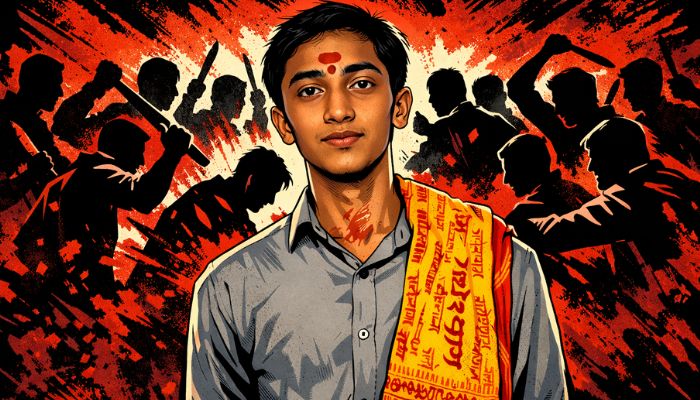

Over 12 years have passed since Akhil Bhartiya Vidyarthi Parishad activist Vishal Kumar was brutally murdered by goons of the Campus Front of India (CFI). For those who are unaware, CFI was the student wing of the banned Islamist organisation Popular Front of India (PFI). The Ministry of Home Affairs had banned PFI and its linked organisations, including CFI, in September 2022.
A single judge bench presided over by Judge PP Pooja of the Additional Sessions Court, Mavelikkara, will pronounce the judgment on 30th December. The court reserved the judgment after the final hearing held on 17th December.
Vishal was brutally murdered in July 2012. He was only 19-year-old at that time. Initially, the case was investigated by the local police. However, due to delays in the investigation, it was transferred to the Crime Branch. Twenty individuals were made accused in the case, including a minor.
OpIndia accessed several bail orders of Kerala High Court for details about the case.
Who Vishal Kumar was and why he mattered
Vishal Kumar was a 19-year-old ABVP activist and the Chengannur Nagar Samiti president of the organisation. He was born in Saudi Arabia and completed his early schooling in the United Kingdom. Despite the comfortable life his parents had built abroad, he insisted on returning to India to continue his education and work for the Sangh.
Initially, his parents opposed his decision. However, Vishal remained firm and stated that he wished to serve the nation through organisational work. Over a short span of time, he became actively involved in ABVP activities in and around Chengannur and helped in strengthening the organisation’s network. He played a vital role in starting new shakhas at a very young age.
Apart from political and organisational work, Vishal was also supporting the education of four students from economically weaker backgrounds. His ideological commitment stood out even within his own family. His father later stated that it was Vishal who altered his own understanding of the Sangh and its work.
Events leading up to the attack at Chengannur Christian College
On 16th July 2012, a programme was organised by student organisations to welcome first year undergraduate students. ABVP was one of the organisations welcoming the students. Vishal, being part of the organisation, reached Chengannur Christian College in Alappuzha district for the event.
According to court documents, the programme was running smoothly. However, soon a group of men arrived at the college gate from outside. They began abusing ABVP members and made derogatory remarks about Goddess Saraswati. Vishal was among those who tried to intervene and alleviate the situation.
However, the group of men suddenly, but in a pre planned manner, started assaulting Vishal and other ABVP activists. According to the prosecution, they used knives, daggers, and other deadly weapons to attack Vishal, Vishnuprasad and Sreejith. Around seven other ABVP members were abused and threatened when they tried to stop the assault.
Vishal Kumar’s dying declaration and medical struggle
Vishal sustained serious injuries in the attack. He was first rushed to Chengannur Government Hospital. When his condition deteriorated, he was shifted to Kottayam Medical College Hospital for advanced treatment.
Despite efforts by doctors, Vishal succumbed to his injuries on the night of 17th July 2012. The prosecution placed on record that while being taken to the medical college, Vishal informed his friend that he was stabbed by PFI members. This statement was presented in court as an important piece of evidence, as it reflected Vishal’s awareness of his attackers even in his final moments.
Nature of the attack and prosecution’s version
According to the prosecution, the attack was not spontaneous. It was the result of a criminal conspiracy. As per the chargesheet, the accused formed an unlawful assembly armed with deadly weapons with the common object of murdering Vishal Kumar and attacking other ABVP members.
The incident took place at around 10:45 am in a public educational institution, showcasing the brazenness of the assault. Vishal was specifically targeted and repeatedly stabbed, while others present were attacked to prevent resistance and rescue.
Initial police probe and transfer to Crime Branch
The case was initially registered and investigated by the local police. However, the investigation faced delays, particularly in tracing and arresting the accused. Given the seriousness of the crime and allegations of organised involvement, the probe was later transferred to the Crime Branch. A fresh case was registered, and further investigation was carried out. Eventually, a chargesheet against 20 individuals, including a minor, was submitted in court.
The prosecution stated that several accused had gone into hiding after the crime, taking shelter at various locations, including a Popular Front office in Kayamkulam.
Recovery of weapons and evidence cited by prosecution
During the investigation, the Crime Branch recovered weapons allegedly used in the crime from near Karakkad in Chengannur. These recoveries were based on confessional statements made by the accused.
The prosecution relied heavily on eyewitness testimonies, recovery of weapons, and documentary evidence. The identity card of accused Shefik was also cited as a crucial link connecting the accused to the scene of the crime.
Special Prosecutor Pratap G Padikkal argued that the cumulative evidence established that the accused acted out of ideological hostility towards ABVP activities and in retaliation against what they described as opposition to Popular Front operations in the region.
Campus Front of India, Popular Front of India and ideological context
The prosecution maintained that the attackers were members of the Campus Front of India, the student wing of the Popular Front of India. Campus Front later functioned under the banner of the Confederation of Indian Muslims, which was part of the broader Popular Front ecosystem.
The Popular Front of India was banned by the Union government on 28th September 2022 for its involvement in extremist and terrorist activities across the country.
Charges framed against the accused
The accused in the case were charged under Sections 120B, 143, 144, 147, 148, 212, 302, 307, 324, 323 and 342 read with Section 149 of the Indian Penal Code.
The prosecution said that all accused shared a common object and were liable for the acts committed by members of the unlawful assembly, including the murder of Vishal Kumar and the attempted murder and grievous injury of other ABVP activists.
Bail proceedings, accused roles, subsequent crimes and how the case reached judgment stage
In the immediate aftermath of the murder, several accused approached the Kerala High Court seeking bail. Among the earliest applications were those filed by Ansar Faizal and Shafeek. In an order dated 24th September 2012, the High Court declined to grant bail, noting the gravity of the offences and the fact that the investigation was still in progress.
The court recorded the prosecution’s contention that the attack was carried out under the leadership of Nassim and Ashiq and that the accused had formed an unlawful assembly armed with deadly weapons with the common object of committing culpable homicide. At that stage, the court held that releasing the accused would adversely affect the investigation, given the seriousness of the allegations and the political rivalry underlying the crime.
Shift in judicial approach as investigation progressed
A noticeable shift occurred less than a month later. By 16th October 2012, the Kerala High Court, presided over by Justice P Bhavadasan, granted bail to Ansar Faizal and Shafeek. The court observed that a substantial portion of the investigation had already been completed and that the prosecution had not expressed apprehension that the accused would abscond if released.
While allowing bail, the court imposed stringent conditions, including regular appearance before the investigating officer, surrender of passports, restrictions on entering Chengannur Police Station limits, and a clear warning against influencing witnesses or tampering with evidence. This marked the beginning of a phase where multiple accused were enlarged on bail on grounds of parity and prolonged custody.
Bail granted to other accused on grounds of parity
Following the grant of bail to Ansar Faizal and Shafeek, other accused began securing relief from the High Court on similar grounds. Althaj alias Tha was granted bail on 30th October 2012. The court noted that he had been in custody since 20th August 2012 and that a good part of the investigation had already been completed. The order specifically recorded that the prosecution had not raised any apprehension regarding absconding.
Subsequently, on 6th November 2012, Sabooj and Shameer Ravuthar were granted bail. The principle of parity weighed heavily in the court’s decision, with identical conditions imposed to ensure continued cooperation with the investigation.
Safeer, another accused, was granted bail on 13th December 2012, again on parity with co accused who had already been released. By the end of 2012, a significant number of the accused had secured bail, even as the investigation continued.
The case of Afsal and the High Court’s strong observations
A distinct and legally significant chapter in the bail history of the case relates to Afsal. Unlike several others, Afsal was arrested much later, on 29th June 2013, after the investigation had been taken over by the Crime Branch.
In its order dated 20th September 2013, the Kerala High Court recorded the prosecution’s submission that Afsal was not merely a peripheral participant but the brain behind the entire incident. The Public Prosecutor argued that releasing him would seriously affect the investigation, even though his name did not figure in the original FIR.
The court acknowledged the gravity of the allegations and made strong observations on the misuse of religion for committing crimes. It noted with concern that religion had been turned into a weapon, contrary to its foundational purpose. At the same time, the court also weighed the length of pre trial detention, Afsal’s age, as he was 19 years old, and the fact that he was a student.
Balancing these factors, the court granted bail with stringent conditions. The court made it clear that the offence alleged was serious and ideologically driven.
Sanuj and involvement in a subsequent criminal case
Sanuj presented a particularly important aspect of the case’s later developments. He was originally granted bail on 18th November 2012 in the Vishal Kumar murder case. However, in 2022, Sanuj was implicated in another criminal case involving allegations of assault on public servants and damage to public property.
Following his involvement in the 2022 case, the prosecution moved for cancellation of his bail in the Vishal Kumar murder case, arguing that he had violated the conditions of his earlier release. The bail was subsequently cancelled, and Sanuj was taken into custody on 3rd December 2022.
In an order dated 16th December 2022, the Kerala High Court granted him fresh bail, while noting both his earlier involvement in the 2012 murder case and the subsequent criminal allegations. The court imposed stringent conditions and warned that any further violation would invite cancellation of bail.
Prosecution’s final arguments before judgment
In the final phase of the trial, the prosecution highlighted Vishal’s dying declaration, eyewitness accounts, recovery of weapons, and the conduct of the accused before and after the incident, including attempts to hide in Popular Front locations.
Case reaching its final legal moment
With arguments concluded and judgment reserved on 17th December, the case has now reached its final legal moment. On 30th December, the Additional Sessions Court at Mavelikkara will decide the fate of the accused and determine whether the prosecution has succeeded in establishing guilt beyond reasonable doubt.
For Vishal Kumar’s family and supporters, the verdict will mark the end of a twelve year wait for judicial closure. However, as this will be a judgment by the Sessions Court, the accused will have judicial remedies available to contest the verdict in higher courts.